ISLAMABAD: Pakistani troops shot out the tires of a vehicle carrying a kidnapped US-Canadian couple and their children in a raid that led to the family’s release, a Pakistani security official said on Friday.
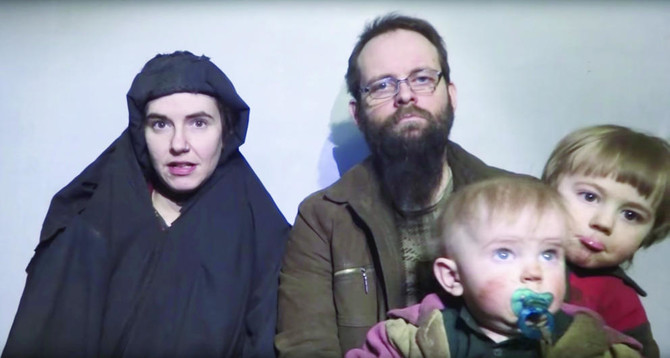
The operation late on Wednesday freed American Caitlan Coleman, her Canadian husband Joshua Boyle and their three children who were born in captivity following five years as hostages of the Taliban-linked Haqqani network.
The operation, which came after years of US pressure on Pakistan for assistance, unfolded quickly and ended with what some described as a dangerous raid, a shootout and a captor’s final, terrifying threat to “kill the hostage.” Boyle suffered only a shrapnel wound, his family said. US officials did not confirm the details.
“Today they are free,” US President Donald Trump said in a statement, crediting the US-Pakistani partnership for securing the release. Trump later praised Pakistan for its willingness to “do more to provide security in the region” and said the release suggests other “countries are starting to respect the United States of America once again.”
Trump hailed it as a “positive moment” for the relations, which have frayed in recent years amid Washington’s assertions that Islamabad was not doing enough to tackle Haqqani militants who are believed to be on Pakistani soil.
Taliban sources said the family spent most of their captivity at Haqqani strongholds inside Pakistan, and not in Afghanistan as early Pakistani reports had indicated.
A senior Pakistani security source detailed how the family, who have now left Pakistan on Friday, were freed following a car chase in Pakistan’s northwestern tribal region bordering Afghanistan.
He said Pakistani troops and intelligence agents, acting on a US intelligence tip, zeroed in on a vehicle holding the family, as they were being moved in Kurram agency.
Agents from Pakistan’s Inter Services Intelligence (ISI) spy-agency and army soldiers attempted to intercept the vehicle, but it sped away and was chased into a district in northwest Pakistan, according to the security source.
“Our troops fired at the vehicle and burst its tires,” he said, declining to be identified because he is not authorized to speak openly to the media.
The kidnappers managed to escape, the security official added, saying the troops would not fire at the fleeing captors for fear of harming the hostages. The army recovered the hostages safely from the car.
The family’s rescue has been hailed by US President Donald Trump as a “positive moment” for US-Pakistan relations, which have frayed in recent years amid Washington’s assertions that Islamabad was not doing enough to tackle Haqqani militants who are believed to be on Pakistani soil.
Trump, in a statement, said the release of the hostages indicates Pakistan was acquiescing to “America’s wishes for it to do more to provide security in the region.”
Pakistani officials bristle at claims Islamabad is not doing enough to tackle Islamist militants. After the release of the family, they emphasised the importance of co-operation and intelligence sharing by Washington, which has threatened to cut military aid and other punitive measures against Pakistan.
Hostages location
Pakistan’s military said the family were rescued after entering Pakistan from Afghanistan, but two Taliban sources with knowledge of the family’s captivity said they had been kept in Pakistan in recent years.
A US government source in Washington also said there was no indication the family had been in Afghanistan.
The Haqqani network operates on both sides of the porous Afghan-Pakistani border but senior militants have acknowledged they moved a major base of operations to Kurram agency in the tribal areas.
Two US officials, speaking on condition of anonymity, on Thursday told Reuters that the US military had been ready to fly the family out of the country after they were freed but said Boyle, who is Canadian, had refused to board the aircraft.
Canada’s Toronto Star newspaper reported that Boyle told his parents that he asked to be taken to the Canadian High Commission in Islamabad after their rescue.
Boyle had been a staunch critic of the human rights abuses in the US war on terror after the attacks on Sept. 11, 2001 and was previously married for a year to the sister of an inmate at the US military detention center at Guantanamo Bay.
The Star reported that Boyle said he sustained minor shrapnel wounds during the shootout.