AIN ISSA, Syria: As US-backed forces fight to oust the Daesh group from its last hideouts in Syria’s Raqqa, a city council-in-exile is already working to bring life back to its devastated home town.
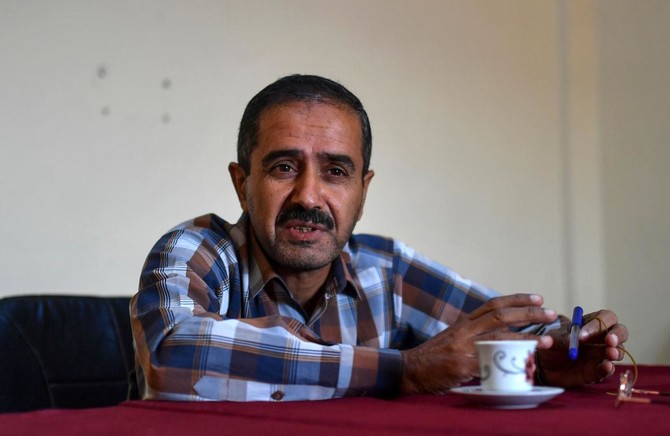
From a buzzing headquarters in Ain Issa, 50 kilometers (30 miles) north of Raqqa, Syrian engineers and lawyers are setting priorities for rebuilding their battle-scarred city.
“We know every inch of Raqqa. All we need is the announcement of liberation — which we expect to hear in the coming days,” said 27-year-old Mohammad Hassan, an engineer and member of the Raqqa Civil Council.
He laid out a map of the city, pointing out a pair of water pumping stations requiring restoration and major thoroughfares that will need to be cleared of rubble.
“We’ll start on the outside and work our way in,” Hassan said energetically.
Around 90 percent of Raqqa has been recaptured by the US-backed Syrian Democratic Forces since June, but much of the city has been reduced to ruins by heavy bombardment that has rendered whole streets unrecognizable.
Almost like a symbol of the RCC’s eagerness to get to work, bulldozers for removing debris are parked outside its humble two-story office building.
Founded six months ago by the Syrian Democratic Forces, the Kurdish-Arab alliance fighting for Raqqa, the RCC boasts more than 100 volunteers from the city and its outskirts.
Men and women of various ages, ethnicities, religious sects, and professional backgrounds, they are divided into 14 committees working on everything from re-opening schools to restoring water and electricity supplies and repairing hospitals and homes.
The first priority, said the head of the council’s reconstruction committee, is removing a sea of explosive devices the jihadists have left in Raqqa’s streets, public institutions, and even private homes.
“This is a huge challenge — we can’t do anything else before getting rid of the mines,” Ibrahim Al-Hassan, a silver-haired engineer with thick-rimmed glasses, said as he sat in his sparse office.
“The second phase is restoring the water and electricity networks. After all that, we can turn to the schools. These are the essential priorities.”
Hassan said most building material would likely be imported from the neighboring Kurdish region of Iraq, although he did not rule out supplies coming in from Syrian government-held areas in Aleppo or Damascus.
The bulldozers parked outside, Hassan said, were the first of a total of 56 machines the council is set to receive in the coming weeks as part of a grant from the US State Department.
Both the American government and the US-led coalition backing the offensive to recapture Raqqa are involved in “short-term, quick impact projects” to bring Raqqa back to life, said a US official involved in civilian operations in Syria.
They would include supporting de-mining operations in and around critical buildings like schools and hospitals, and providing food and health support once Raqqa is recaptured.
“But we’re not here forever to fix everything. We have no money or desire to spend 20 years here demining the homes,” the official said.
A second US official involved in emergency aid operations for Syria said the US had helped the RCC “pre-position” more than 900 tons of food — including rice, beans, and wheat — for immediate delivery once the Raqqa offensive is over.
The operation has also earmarked water tanks, sewage trucks, and hygiene kits for tens of thousands of civilians expected to flood back into the city.
The EU has also pledged some $3.5 million to fund de-mining projects, said RCC member Abdullah Arian, a lawyer from Raqqa who visited Rome last month with other council members to solicit international funds.
“Raqqa was destroyed so that terror would not hit Washington, Paris, or London,” Arian said.
Raqqa gained a reputation as a key Daesh launchpad for overseas attacks.
“Those who took part in its destruction should be partners in its development,” Arian said.
But RCC members say they cannot yet set a price tag for rebuilding Raqqa because the ongoing offensive means they have yet to enter the city itself.
Arian and his six children, who were smuggled out of the Daesh-held city around 15 months ago, are waiting to see what is left of their home.
“Raqqa won’t be the same city that I left five years ago. There’s been a lot of pain,” says engineer Laila Mustafa, the RCC’s co-chair.
She also urged the international community to shoulder the responsibility for rebuilding her home town, but ruled out a role for the government of President Bashar Assad.
“On a personal level or working with companies (in government-held areas), we don’t have any problems,” she said. “But we won’t deal with the regime, neither politically nor economically.”


![]()
Far from front line, volunteers prepare to rebuild Raqqa
Far from front line, volunteers prepare to rebuild Raqqa


Latest updates


© 2026 SAUDI RESEARCH & PUBLISHING COMPANY, All Rights Reserved And subject to Terms of Use Agreement.