WASHINGTON: Group of Seven finance leaders agreed to co-operate in countering North Korean attempts to avert UN sanctions, a senior Japanese finance ministry official said on Thursday.
It is rare for G7 finance leaders to disclose they had met on the sidelines of a G20 gathering, which was a show of resolve among advanced economies to boost pressure on North Korea in the wake of its recent provocations, said Masatsugu Asakawa, Japan’s vice finance minister for international affairs.
“The G7 agreed on the need to apply maximum economic pressure on North Korea by cutting its revenue source and preventing it from abusing the global financial system,” Asakawa told reporters after attending the G7 gathering.
“We agreed to strengthen co-operation, including by (taking) steps to counter North Korean attempts to avert United Nations sanctions,” he said.
The UN Security Council voted unanimously in September to boost sanctions on North Korea, after the country conducted its sixth and largest nuclear test that month.
It was the ninth Security Council sanctions resolution over North Korea’s ballistic missile and nuclear programs since 2006, highlighting the struggle the United Nations faces in containing North Korea.
Asakawa attended the usually informal meeting of G7 advanced economies and a dinner session of G20 major countries on behalf of Finance Minister Taro Aso.
At the G20 meeting, Asakawa said Japan explained premier Shinzo Abe’s pledge to keep up Tokyo’s efforts to restore fiscal health and achieve its budget-balance target.
The G20 meeting also discussed prospects for global growth and potential risks, including repercussions from an expected steady withdrawal of monetary stimulus measures by the Federal Reserve and the European Central Bank, Asakawa said.
“There was talk of various spill-over effects as central banks of advanced economies normalize monetary policy, and a shared understanding that such effects were among risks to the global economy,” he said.


![]()
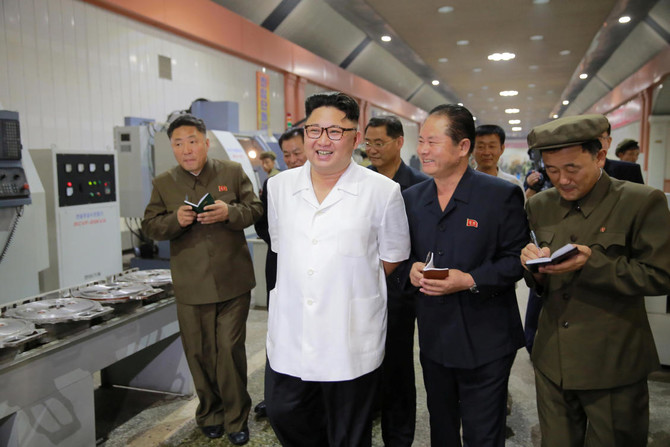
G7 agrees to ramp up economic pressure on North Korea
G7 agrees to ramp up economic pressure on North Korea


Latest updates



© 2026 SAUDI RESEARCH & PUBLISHING COMPANY, All Rights Reserved And subject to Terms of Use Agreement.