BAGHDAD: Iraq issued arrest warrants on Wednesday for the chairman of the Kurdistan Region’s referendum commission and two aides over last month’s vote for Kurdish independence.
A spokesman for the Supreme Judicial Council said the warrants for Hendreen Mohammed and his assistants were issued by a Baghdad court for “violating a valid court ruling which considered the independence vote invalid.”
A Justice Ministry official in the Kurdistan Regional Government (KRG) dismissed the decision as “politically motivated.” He said the KRG’s judiciary was independent of Baghdad and did not recognize its legal rulings.
The Iraqi central government has taken punitive measures over the independence vote. It imposed an international flight ban, stopped financial transactions with the region, and filed formal requests to Turkey and Iran to stop trade with the KRG and deal exclusively with Baghdad on oil exports.
On Tuesday, the oil ministry ordered state oil companies to begin restoring the crude oil pipeline from Kirkuk to the Mediterranean port of Ceyhan in Turkey, bypassing Kurdistan. The pipeline has been out of commission since it was blown up by militants in 2014.
“The Iraqi government is serious … and has no regrets relative to its position,” Ali Al-Alaq, a Shiite member of parliament and one of Prime Minister Haider Al-Abadi’s political advisers, told Arab News.
“The government has become more assertive in dealing with many matters such as the financial violations, the smuggling of oil, airports, and the land border crossings.”
Baghdad sent special military units and federal Border Patrol officers to Turkey and Iran this month for deployment near the joint crossings. The three countries established a joint operations room to discuss related details; senior security officials have exchanged visits since the referendum took place. Iraqi officials said a senior Turkish official would visit Iraq today to discuss alternatives to the crossings.
“It is not easy for Turkey or Iran to shut down the crossings, despite the threats that the referendum represents to their national security,” a senior Iraqi federal official involved in talks told Arab News.
“The sessions are continuing and all sides are looking to find appropriate alternatives, so we can move to either shut down the crossings or regain control of them. We have to be pragmatic, and finding appropriate alternatives to these crossings needs time.”
Iraqi Kurdistan region has two official crossings with Turkey and Iran, Ebrahim Al-Khalil in Dehuk and Hajj Omran in Sulaimaniya. Kurdistan has refused to hand over control of the crossings, but the KRG has said nothing about creating new ones outside Kurdistan.
“There have been many attempts, but nothing so far but talks,” Lt. Gen. Jabar Yaour, general secretary of the Peshmerga Ministry in the KRG, told Arab News. “Opening new crossings needs a long time.
“Up to now, the crossing ports in Kurdistan are working and the export of oil has not stopped.”


![]()
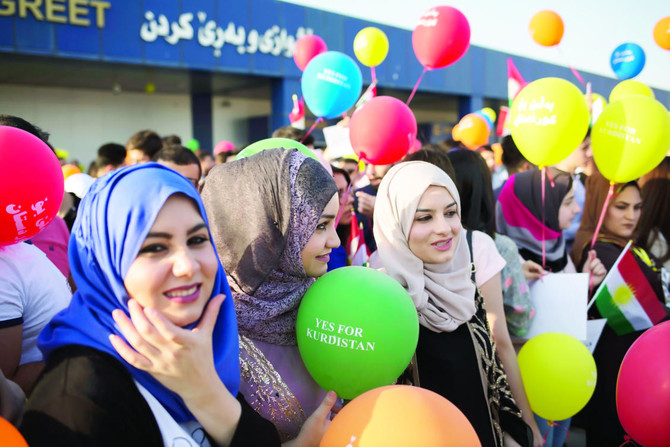
Iraq ‘has no regrets’ about getting tough with Kurds
Iraq ‘has no regrets’ about getting tough with Kurds
Latest updates




© 2026 SAUDI RESEARCH & PUBLISHING COMPANY, All Rights Reserved And subject to Terms of Use Agreement.