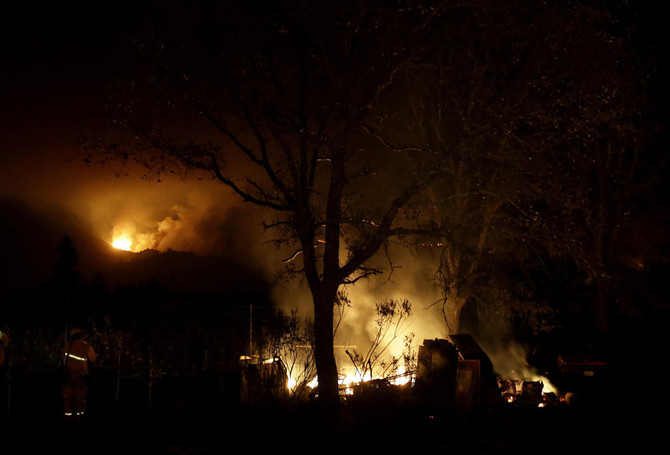
SANTA ROSA, California: Fast-moving wildfires raging across Northern California’s wine country have killed 17 people, left about 150 missing and destroyed 1,500 homes, wineries and other structures, state fire officials said on Tuesday.
The flames from 17 major blazes have blackened more than 115,000 acres (46,500 hectares) since fires broke out on Sunday amid hot, dry conditions and high winds.
The Sonoma County Sheriff’s Office said 11 of the fatalities were in its jurisdiction, where 155 people were still missing, although 45 others had been found and some of those unaccounted for may be due to confusion surrounding evacuations.
In Napa County, the dead included 100-year-old Charles Rippey and his wife, Sarah,, 98, according to the county sheriff’s office. No other details on that incident or the other fatalities were immediately available.
Crews took advantage of cooler temperatures, lower winds and coastal fog on Tuesday to make headway against the fires but cautioned that homes, wineries and other structures remained at risk.
“We need to jump on it and take advantage of this lull before any other wind jumps up,” said Steve Crawford, a CAL FIRE operations chief, at an afternoon briefing. “There’s a lot of devastation out there, people running around who just lost everything.”
North of San Francisco, the fires reduced houses to ashes in several communities. The city of Santa Rosa was particularly hard hit by the so-called Tubbs Fire, which damaged a Hilton hotel and destroyed a mobile home park.
Tens of thousands of residents were forced to flee, as schools closed and at least two hospitals in Sonoma County were temporarily shuttered.
Napa Valley Vintners, a trade group with 550 members, said it was too early to estimate the economic impact of the fires. At least four wineries had suffered “total or very significant losses,” and at least nine reported damage to their winery, outbuildings or surrounding vineyards, the group said.
Ninety percent of grapes had been picked before the fires started, with almost all of those still on the vine Cabernet Sauvignon, a thick-skinned variety that is not expected to be impacted by smoke from the fires.
In addition to potential damage to vineyards from fire itself, sustained exposure to heavy smoke can taint unpicked grapes, according to wine-making experts.
More than 91,000 homes and businesses served by Pacific Gas & Electric were without power, with most of those customers in Northern California’s Sonoma and Napa counties, and gas was shut off to 28,000 customers, representatives for the utility company said.
California Governor Jerry Brown declared a state of emergency in Napa, Sonoma and five other counties.
In Southern California, the so-called Canyon Fire 2 has spread to 7,500 acres (3,035 hectares) in Orange County, destroying 14 structures and damaging 22, fire spokesman Thanh Nguyen said.
The blaze triggered the evacuation of 5,000 people in the communities of Anaheim Hills and Orange Hills as it spread through grass and oak trees, he said, and was only 25 percent contained as of Tuesday afternoon.


![]()
Wildfires kill 15, destroy 1,500 homes and other buildings in California
Wildfires kill 15, destroy 1,500 homes and other buildings in California


Latest updates


© 2026 SAUDI RESEARCH & PUBLISHING COMPANY, All Rights Reserved And subject to Terms of Use Agreement.