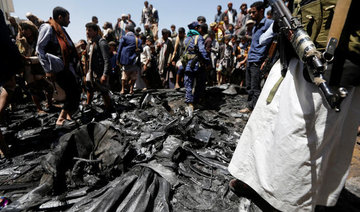
JEDDAH: “The annual report by Secretary-General Antonio Guterres on children in armed conflict, and the allegations it included against the Saudi-led coalition to restore legitimacy in Yemen, requires more precision, investigation and research,” Mahmoud Afifi, the official spokesman of the Arab League secretary-general, has said.
In a statement released on Monday, Afifi expressed his appreciation for this important report since it addressed violations against children in armed conflict, but he also believed a more meticulous approach should have been adopted by the report’s authors — including better monitoring and documentation of the violations of which the Arab coalition has been accused.
According to Afifi, the report should have taken into consideration the complications of the Yemeni situation, as well as the responsibility that lies upon the criminal militias fighting there, “and this demands seeking information from the legitimate government in Yemen.”
“The deterioration of the humanitarian situation in Yemen requires, in the first place, taking real steps to address the crisis as soon as possible, provided that the most important element of this move is the establishment of constructive dialogue between the international community and the legitimate government and its allies,” Afifi explained.
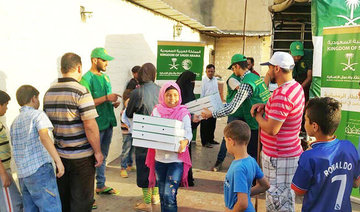
He also pointed out that the work undertaken by the Saudi-led Arab coalition, namely by the King Salman Center for Relief and Humanitarian Aid, to improve child protection and rehabilitation in Yemen must not be overlooked.
For his part, Dr. Abdel Hamid Metwally, president of the Supreme Council of Imams and Islamic Affairs in Brazil, denounced parts of what was stated in the UN secretary-general’s report on Yemen and said it was full of misleading information and that he still supports the Saudi-led Arab coalition to restore legitimacy in Yemen.
“The Supreme Council of Imams and Islamic Affairs in Brazil is carefully and objectively following the Arab coalition’s operations in Yemen since its launch on March 25, 2015,” Dr. Abdel Hamid added, “and the Arab countries’ efforts and sacrifices in this cause are highly appreciated, as well as their fight against the crimes of the Houthi militias and Ali Abdullah Saleh’s forces.”
He also said that numerous intellectual and political forums have hailed the coalition’s operations in Yemen and their results which are being achieved in coordination with the UN and the Security Council.
“Sadly, the UN’s recent report is bursting with contradictions and is clearly biased against the Arab coalition forces as it makes them and the criminal Houthi militias equally responsible for causing the deaths of children and civilians in Yemen,” he said.
“I call on the UN secretary-general to review the report and hold the Houthis responsible for exploiting children, civilians, minors and inhabited buildings and using them as human shields in their crimes, as well as looting property and money, kidnapping the innocent and displacing them, then accusing the Arab coalition of these crimes.”
Hamid emphasized that the Supreme Council of Imams and Islamic Affairs in Brazil strongly denounces the UN’s misleading report, and highly supports the Arab coalition.


![]()

Arab League secretary-general spokesman: UN report on Yemen requires more precision
Arab League secretary-general spokesman: UN report on Yemen requires more precision
Latest updates


© 2026 SAUDI RESEARCH & PUBLISHING COMPANY, All Rights Reserved And subject to Terms of Use Agreement.