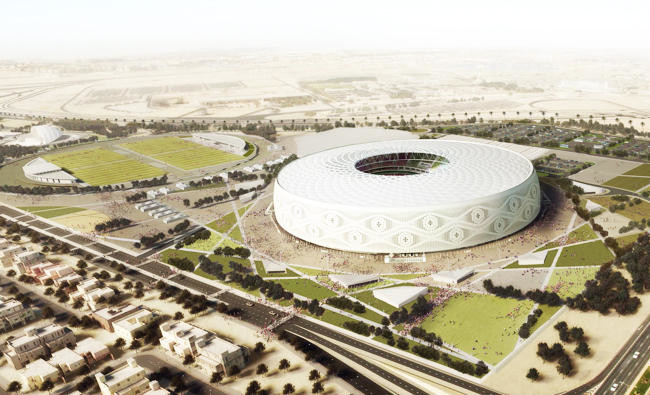
LONDON: The Qatar World Cup could be moved to another country due to “political risks,” according to a report looking into the problems surrounding the tournament.
The study by management consultants Cornerstone Global, obtained by the BBC, evaluated the impact of the current rift between Qatar and the Anti-Terror Quartet.
It concluded that there are many reasons — ranging from allegations of corruption, to the current regional political crisis, to the possible knock-on effects of that to infrastructure projects — to predict that the event will not take place in the country.
The report, titled “Qatar in focus: Is the FIFA World Cup 2022 in danger?” claims that “tournament insiders and regional experts have both stated to us that it is far from certain Doha will actually host the tournament” and that “Western diplomats have privately stated they do not know whether or not the tournament will take place as planned.”
It also highlighted corruption allegations — both in the bidding process and in the infrastructure development.
But while the charge of corruption has been leveled at the Qatar bid since it was awarded the hosting rights to the 2022 tournament, the report makes plain that the current political crisis in the Gulf is what could ultimately see the tournament shown the red card.
“Qatar is under greater pressure regarding its hosting of the tournament ... the current political crisis has seen – or at least raised the possibility of – a Qatari opposition movement emerging,” the report states.
“This means an increased risk for those working on, or seeking contracts for World Cup 2022 infrastructure.”
“Any cancelation of Qatar hosting the World Cup 2022 will likely be abrupt and will leave contractors involved in a precarious situation that may not be easily resolved.”
The report also states that costs have risen between “20 and 25 percent due to logistical reasons.”
Cornerstone also said: “Sources within the project have indicated that several members of the Qatar 2022 Supreme Committee have threatened to resign over excessive interference by senior officials on spending and allegations of corruption.”
The Qatari response to the allegations in the report was swift, insisting there was no chance the tournament would not go ahead as planned and questioning the motives behind the study.
In a statement to the BBC, Qatar’s Supreme Committee for Delivery & Legacy said: “There is absolutely no risk to the future of the first World Cup in the Middle East.”
The body went on to claim that there has been “no impact on preparations as a result of the ongoing and illegal blockade against Qatar,” and questioned the motives of the report.
“The intention to create doubt regarding the tournament, while attempting to cause resentment among Qatari citizens and anxiety among foreign businesses and residents, is as transparent as it is laughable.
“Despite the ambitious title of this report, there is absolutely no risk to the future of the first World Cup in the Middle East.”


![]()
Qatar World Cup in danger of being shown a red card
Qatar World Cup in danger of being shown a red card


Latest updates


© 2026 SAUDI RESEARCH & PUBLISHING COMPANY, All Rights Reserved And subject to Terms of Use Agreement.