MADRID: Big banks threatened to abandon Catalonia over vows by regional leaders to break away from Spain after the national government rejected calls for mediation in the volatile standoff.
With Catalan leaders warning they could proclaim independence in the tourist-friendly region as early as Monday, the economic stakes were rising in Spain’s worst political crisis in decades.
Catalonia is the country’s richest region, accounting for a fifth of Spain’s economy and home to thousands of domestic and foreign companies employing millions of people.
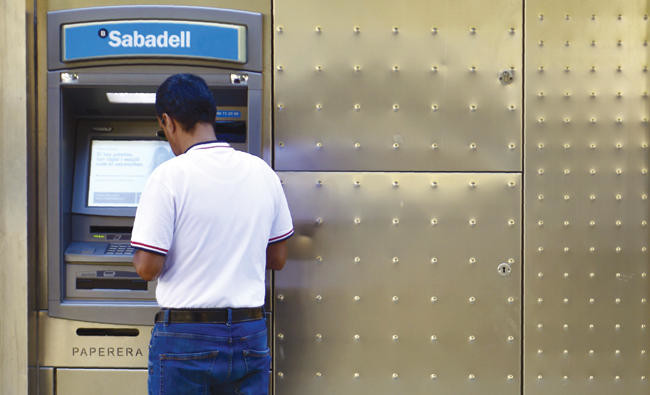
Spain’s fifth-biggest bank Sabadell was set to discuss whether to shift its legal domicile away from Catalonia in response to the crisis, a spokesman said.
Catalan lender Sabadell, the second-biggest bank in the northeastern region, saw its stocks plunge by 10 percent this week as the rhetoric between Barcelona and Madrid intensified.
Sabadell executives called a board meeting yesterday to discuss a possible shift of domicile.
Media reports said Catalonia’s biggest bank, CaixaBank, was also considering shifting its legal domicile away from the region.
If Catalan regional president Carles Puigdemont follows through on his threat to declare independence next week, Spain could respond by suspending Catalonia’s existing autonomous status and imposing direct rule from Madrid.
That could fan unrest in a region already shocked by a violent police crackdown against unarmed voters in Sunday’s independence referendum.
The EU has urged dialogue to ease the standoff, but the sides dug into their positions on Thursday.
The tone sharpened with Puigdemont accusing Spain’s King Felipe VI of siding with the government in the crisis and “ignoring” the Catalan people.
Shocking images of police beating voters with batons, or dragging them by the hair on Sunday sparked international concern.
European Commission Vice President Frans Timmermans on Wednesday defended Madrid’s right to “the proportionate use of force” to keep the peace.
But he said it was “time to talk, finding a way out of the impasse.”
With its own language and cultural traditions, claims for independence in Catalonia date back centuries but have surged during recent years of economic crisis.
But Spanish media coverage on Thursday was dominated by concerns for the eurozone’s fourth biggest economy.
Leading daily El Pais headlined that the stock market drop was “the worst since Brexit” was approved in a June 2016 referendum.
International credit rating agency Standard and Poor’s announced it may downgrade the sovereign debt rating of Catalonia in the next three months.
“We see a risk that this escalation may damage the coordination and communication between the two governments, which is essential to Catalonia’s ability to service its debt on time and in full,” it said.
The overall Ibex 35 index of leading Spanish shares recovered slightly by about one percent in midday trading on Thursday, following a sharp fall of nearly three percent the day before.
Catalan authorities claim that out of the 2.2 million people who voted on Sunday, 90 percent backed independence although turnout was around 42 percent.


![]()
Catalonia crisis hits banking sector
Catalonia crisis hits banking sector



Latest updates


© 2026 SAUDI RESEARCH & PUBLISHING COMPANY, All Rights Reserved And subject to Terms of Use Agreement.