RAMU, Bangladesh: As thousands of Rohingya flee ethnic violence in Myanmar, Bangladesh’s small Buddhist community fears the crisis could spark a violent backlash from their Muslim neighbors.
Many Bangladeshis are angry over the treatment in Buddhist-majority Myanmar of the Rohingya, a persecuted stateless minority who they see as Muslim brethren.
The anger is particularly acute in the southern district of Cox’s Bazar near the border with Myanmar, where many people have close links with the Rohingya and share linguistic and cultural roots.
But the area is also home to a sizeable Buddhist minority that has suffered hate attacks in the past.
Authorities in Cox’s Bazar have deployed 550 extra police in Buddhist areas to prevent a repeat of religious unrest in 2012, when Muslim mobs attacked temples and Buddhist homes.
Buddhist monk Proggananda Bhikkhu vividly remembers the night a Muslim mob torched a 300-year-old temple he looks after.
He fled when between 30 and 40 Muslims broke into his temple and began looting statues and other valuable artefacts, but he watched the violence from a nearby field.
“When the looting was over, they set fire to the temple,” he told AFP at the Kendriya Shima Bihar temple, which had to be largely rebuilt after the 2012 attack.
“We never imagined this could happen, we had good relations with the local Muslims.”
Bhikkhu said the monks had not received any direct threats, but he had seen some on the Internet.
“People on social media are trying to portray this as a religious conflict. But like the Muslims, we are citizens of Bangladesh, and we condemn these actions (in Myanmar),” he said.
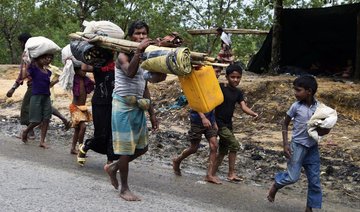
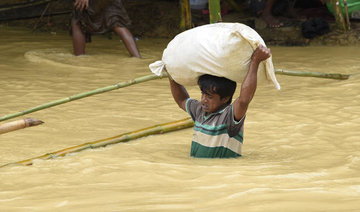
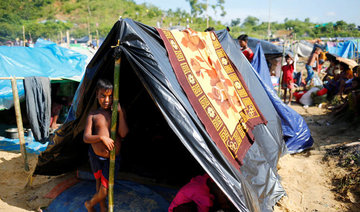
Many of the more than 420,000 refugees have accused Myanmar’s ethnic Rakhine Buddhists of participating in the attacks on their villages that forced them to seek refuge in Bangladesh.
On Monday at least 20,000 Islamist hard-liners took part in a demonstration in Dhaka to demand an end to what they termed a “genocide.”
Buddhists make up less than one percent of Bangladesh’s 160 million people and are broadly well integrated.
But there have been attacks on the community in the past. Last year an elderly Buddhist monk was hacked to death, one of a series of gruesome murders targeting religious minorities that police blamed on Islamist extremists.
At a small food stall near the Kendriya Shima Bihar temple in Ramu, a cluster of villages in Cox’s Bazar, a group of elderly men recalled the night Muslims angered by images on Facebook showing a desecrated Qur'an went on a violent rampage.
But they said the two communities now lived in harmony and blamed outsiders for the violence.
“These people are Muslims,” said Manoda Barua, a retired businessman who lives in a large house next to the temple, as he gestured to two men standing nearby.
“We eat together, we study together. There are Muslim villages all around us.”
Mohammad Ismail, a Muslim carpenter from the next village who had come for a plate of vegetable curry, said the two communities had “very good relations” and claimed the 2012 violence had been started by outsiders.
But some Buddhists in the village are quietly worried.
Prokriti Barua, a housemaid, said she had heard rumors of rising anger in the local Muslim community.
“We are feeling threatened,” she said. “People are saying that the Muslims want to kill us.”
Bangladesh’s Buddhist leaders have said they will tone down celebrations for an upcoming religious festival and donate the money saved to the relief cause.
Last week, monks at the Kendriya Shima Bihar temple organized a blood donation drive for the Rohingya refugees.
But Barua, the businessman, said the Rohingya were “uneducated people” and expressed anger that their plight had brought difficulties to his community.
“There are differences between us and the moghs,” he said, using a local term for ethnic Rakhine Buddhists.
“We are just innocent Buddhists.”
Some of the Rohingya who cross into Bangladesh travel to refugee camps through the Rakhine villages, where small Buddhist stupas dot the green paddy fields and line the banks of the Naf river that divides the two countries.
Ranga Babu Chakma, a Rakhine Buddhist, said some had tried to settle near his farming village of Dunga Khatta, but had been moved on by police who feared communal tensions.
“Bangladesh is a small country that is already overpopulated,” he said.
“If they (Rohingya) settle here it will cause big problems.”


![]()

Rohingya crisis sparks fear among Bangladeshi Buddhists
Rohingya crisis sparks fear among Bangladeshi Buddhists
Latest updates


© 2026 SAUDI RESEARCH & PUBLISHING COMPANY, All Rights Reserved And subject to Terms of Use Agreement.