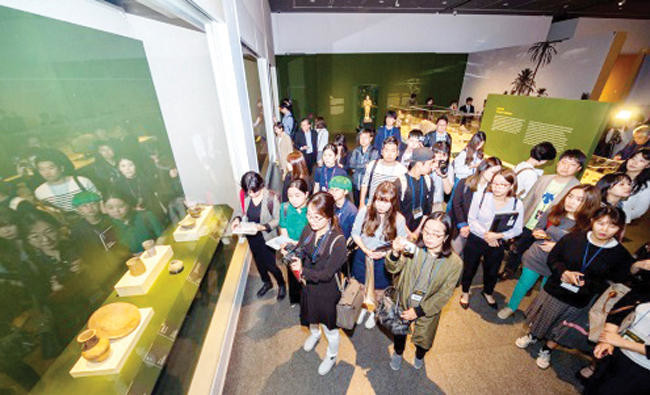
RIYADH: This year’s stop for the “Roads of Arabia” exhibition of Saudi archaeological treasures at the National Museum in Seoul drew a good turnout of visitors.
The “Roads of Arabia” exhibition that lasted for three months and concluded recently in the South Korean capital, was visited by over 126,000 visitors, said the event’s organizer, the Saudi Commission for Tourism and National Heritage (SCTH), on Monday.
The exhibition had put on display 466 rare artifacts highlighting the Kingdom’s cultural and historical dimensions and the successive civilizations in the Arabian peninsula through various ages, the media department said.
Impressed with the artifacts on display, visitors expressed their admiration for the archaeological pieces, saying they gave the Korean people an opportunity to learn first-hand about Arab culture.
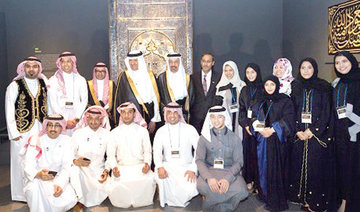
Besides the Korean visitors, the exhibition also offered an opportunity for Saudi scholarship program students in Korea to see the history and culture of their homeland through the ages.
Archaeological objects shown in the exhibition covered a wide period of time extending from the Stone Age, the prehistoric times to pre-Islam, early, middle and late Arab kingdoms, early and middle Islamic eras, and until the emergence of the Saudi state in its three phases up to the reign of King Abdul Aziz, said the commission.
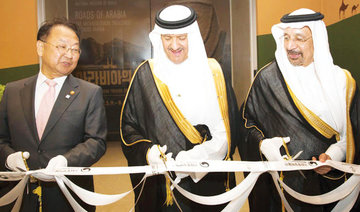
The premier heritage and cultural exhibition was inaugurated at the Seoul National Museum on May 8 by Prince Sultan bin Salman, president of the SCTH, and South Korea’s then Deputy Prime Minister Yoo Il-ho.
Seoul was the second stop for the Roads of Arabia on its Asian tour after Beijing last year, and the twelfth stop on its international tour, during which it was hosted by four European cities, five cities in the United States besides its national stop at King Abdul Aziz International Cultural Center in Dhahran.


![]()
Saudi ‘Roads of Arabia’ exhibition a big hit in Seoul
Saudi ‘Roads of Arabia’ exhibition a big hit in Seoul

Latest updates




© 2026 SAUDI RESEARCH & PUBLISHING COMPANY, All Rights Reserved And subject to Terms of Use Agreement.