NEW YORK: France has raised the possibility of strengthening the provisions of the international accord on Iran’s nuclear program that expire in 2025 and defended the pact against the Trump administration’s misgivings, saying its collapse would risk a regional arms race.
The 2015 nuclear deal between Iran and world powers faces a stern test at the UN this week as Europeans try to persuade the US to keep it, while Israel lobbies to turn up the pressure on Tehran.
US President Donald Trump, who must make a decision by mid-October that could undermine the agreement, last Thursday repeated his view that Iran was violating “the spirit” of the deal under which sanctions were loosened on Tehran in return for curbing its nuclear program.
The Republican president has called the agreement, struck under his Democratic predecessor, Barack Obama, “the worst deal ever negotiated.”
The prospect of Washington reneging on the agreement has worried some of the US allies that helped negotiate it, especially as the world grapples with another nuclear crisis, North Korea’s nuclear and ballistic missile development.
“It is essential to maintain it to avoid proliferation. In this period when we see the risks with North Korea, we must maintain this line,” French Foreign Minister Jean-Yves Le Drian told reporters.
“France will try to convince President Trump of the pertinence of this choice (keeping the accord) even if work can be done to complement the accord after 2025,” he said.
Trump must decide in October whether to certify that Iran is complying with the agreement, known as the Joint Comprehensive Plan of Action (JCPOA). If he does not, Congress has 60 days to decide whether to reimpose sanctions waived under the deal.
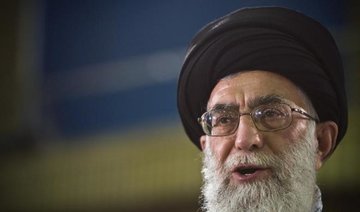
Iran’s Supreme Leader Ayatollah Ali Khamenei warned on Sunday that Tehran would react strongly to any “wrong move” by Washington on the nuclear deal.
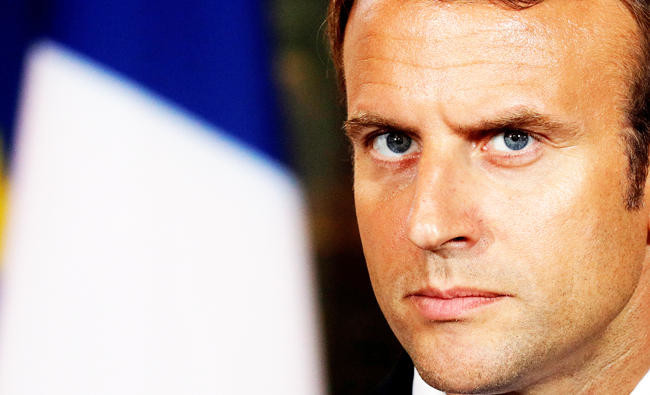
French President Emmanuel Macron will meet Iranian President Hassan Rouhani immediately after Trump to tell him that Tehran must play its role in not stoking American anger through its activities in Syria, Lebanon and Yemen, a French presidential source said.
At the UN General Assembly on Monday, Trump was planning to meet Israeli Prime Minister Benjamin Netanyahu followed by Macron, who like Trump, was making his inaugural appearance at the annual gathering of world leaders.
Both have very different messages to deliver.
“Our position is straightforward. This is a bad deal. Either fix it — or cancel it. This is Israel’s position,” Netanyahu said in Argentina last Tuesday as he toured Latin America.
Israeli officials said he would also relay concerns over what Israel describes as Tehran’s growing military entrenchment in Syria and its post-civil war role in that country.
They said changes that Israel was seeking in JCPOA included lengthening the 10-year freeze on Iran’s nuclear development program or even making that suspension permanent and destroying centrifuges rather than temporarily halting their operation.
No alternative
The deal was brokered by the US, Russia, China, Britain, Germany and France. The six will meet with Iran at the ministerial level on Wednesday.
Paris took one of the hardest lines against Tehran in the negotiations, but has been quick to restore trade ties and Macron has said repeatedly there is no alternative to the deal.
French officials say Iran is respecting the JCPOA and that were the International Atomic Energy Agency (IAEA) to say otherwise, a mechanism exists to reimpose sanctions.
The IAEA is the body ensuring the accord is carried out, but the United States and Iran quarrelled over how Tehran’s nuclear activities should be policed at an IAEA meeting on Monday after a call by Washington last month for wider inspections.
New policy
US Secretary of State Rex Tillerson argued on Sept. 15 that Washington must consider the full threat it says Iran poses to the Middle East when crafting its new policy toward Tehran.
A senior French diplomat underlined that the nuclear deal was achieved in large part because it was not linked to all the other grievances the US may have had with Iran.
With Europeans not on the same page as the Trump administration, Iranian officials say they have an opportunity to divide the P5+1 group that negotiated the deal with Iran.
A senior Iranian diplomat and a former nuclear negotiator said he believed the Europeans had no intention in following Trump’s overtly aggressive Iran policy.
“They are wise. Look at the region. Crisis everywhere. From Iraq to Lebanon. Iran is a reliable regional partner for Europe, not only a trade partner but a political one as well,” the diplomat said.
“European powers have been committed to the deal. The IAEA has repeatedly confirmed Iran’s commitment to the deal. Trump’s insistence on his hostile policy toward Iran will further deepen the gap among the P5+1 countries,” the diplomat said.