

Saudi to launch Future Investment Initiative event

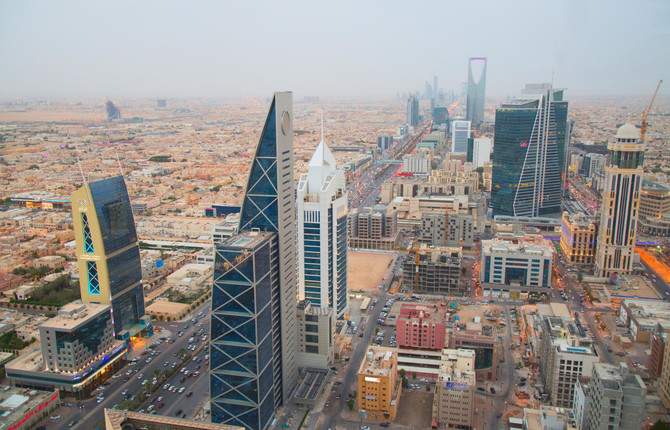
Riyadh where the two-day event will be taking place (Shutterstock)
Updated 23 October 2017
Follow

Saudi to launch Future Investment Initiative event

DUBAI: The Public Investment Fund of the Kingdom of Saudi Arabia (PIF) announced Monday the launch of the Future Investment Initiative (FII) under the patronage of King Salman.
Hosted and organized by PIF, the Kingdom’s main investment arm and one of the world’s leading sovereign wealth funds, the FII will take place from Oct. 24 to 26, 2017, in Riyadh.
The event has been billed as a game-changing platform exploring the new trends, opportunities, challenges and emerging industries that will shape the world economy and investment environment over the coming decades.

This inaugural FII will be held under the leadership Crown Prince Mohammed bin Salman who is also the chairman of the PIF.

The invitation-only event will bring together internationally-renowned business and investment leaders. There will also be a number of high profile speakers, covering major investors, global financial institutions and established and emerging businesses, including: Larry Fink, BlackRock chairman and CEO; Stuart Gulliver, HSBC group chief executive; Joe Kaeser, Siemens president and CEO; Tong Li, Bank of China CEO; Masayoshi Son, SoftBank Group chairman and CEO; George Whitesides, Virgin Galatic CEO.

Yasir bin Othman Al-Rumayyan, managing director of the PIF said: “The Future Investment Initiative will provide an unprecedented opportunity for many leaders and influencers around the world to better understand the future of the global investment landscape.
“It will also act as a platform to showcase the PIF’s redefined investment mandate and strategy, as it progresses toward becoming the world’s largest sovereign wealth fund.”
Through a highly collaborative and interactive program, over 2,000 attendees will discuss long-term investment and global trends across a broad range of topics. The event is designed around three key pillars: Shifting centers of power; the new investment paradigm and innovation for a better world.

The FII is being organized in the context of Saudi Arabia’s Vision 2030, a blueprint that is already charting the path for the Kingdom to harness its strategic location and strong investment capabilities.
The core principles of the event are aligned with the strategic objectives and targets of the Kingdom’s National Transformation Plan, which is key to achieving the targets set for Vision 2030.
Saudi minister at Davos urges collaboration on minerals

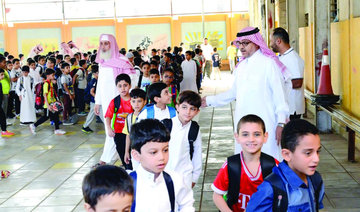
Global collaboration on minerals essential to ease geopolitical tensions and secure supply, WEF hears. (Supplied)
Updated 20 January 2026
Follow

Saudi minister at Davos urges collaboration on minerals

  • The reason of the tension of geopolitics is actually the criticality of the minerals

LONDON: Countries need to collaborate on mining and resources to help avoid geopolitical tensions, Saudi Arabia’s minister of industry and mineral resources told the World Economic Forum on Tuesday.

“The reason of the tension of geopolitics is actually the criticality of the minerals, the concentration in different areas of the world,” Bandar Alkhorayef told a panel discussion on the geopolitics of materials.

“The rational thing to do is to collaborate, and that’s what we are doing,” he added. “We are creating a platform of collaboration in Saudi Arabia.”

Bandar Alkhorayef, Saudi Minister of Industry and Mineral Resources 

The Kingdom last week hosted the Future Minerals Forum in Riyadh. Alkhorayef said the platform was launched by the government in 2022 as a contribution to the global community. “It’s very important to have a global movement, and that’s why we launched the Future Minerals Forum,” he said. “It is the most important platform of global mining leaders.”

The Kingdom has made mining one of the key pillars of its economy, rapidly expanding the sector under the Vision 2030 reform program with an eye on diversification. Saudi Arabia has an estimated $2.5 trillion in mineral wealth and the ramping up of extraction comes at a time of intense global competition for resources to drive technological development in areas like AI and renewables.

“We realized that unlocking the value that we have in our natural resources, of the different minerals that we have, will definitely help our economy to grow to diversify,” Alkhorayef said. The Kingdom has worked to reduce the timelines required to set up mines while also protecting local communities, he added. Obtaining mining permits in Saudi Arabia has been reduced to just 30 to 90 days compared to the many years required in other countries, Alkhorayef said.

“We learned very, very early that permitting is a bottleneck in the system,” he added. “We all know, and we have to be very, very frank about this, that mining doesn’t have a good reputation globally.

“We are trying to change this and cutting down the licensing process doesn’t only solve it. You need also to show the communities the impact of the mining on their lives.”

Saudi Arabia’s new mining investment laws have placed great emphasis on the development of society and local communities, along with protecting the environment and incorporating new technologies, Alkhorayef said. “We want to build the future mines; we don’t want to build old mines.”