DUBAI: There is no dearth of restaurants in Dubai with big ticket celebrity chefs’ names embossed on the door. However, when one has been eight years in the making, expectations run high. That is particularly so when it is coming from not one but two renowned chefs who run Michelin-starred restaurants in London.
The Galvin brothers, Chris and Jeff, have been exploring entering this market for a while now, but wanted to wait until they had the right partners and team in place. It was about three years ago that that they finally committed, when they found that Dubai-based holding company Meraas’ vision for the Citywalk complex aligned perfectly with their “family-led” ethos.
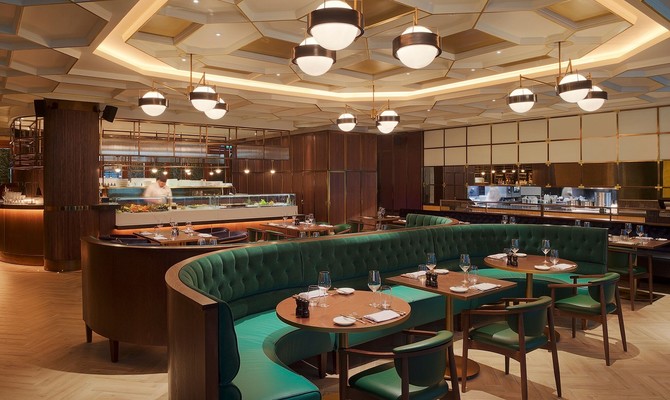
The duo’s French brasserie and patisserie concept, Demoiselle, is located in the complex and it is soon to be joined by their newest restaurant, Galvin Dubai.
The older of the two brothers, Chris Galvin, is in Dubai to launch the restaurant and spoke to Arab News on the upcoming launch and the pair’s dining style.
“I’m a big family person, I like the thought of people having lunch or dinner, catching up, celebrating things together, that’s what our restaurants are about.”
This affinity with family may have something to do with their uniqueness — they are the only brother-duo celebrity chef brand with multiple awards and Michelin-starred restaurants to their credit. What most people do not know is that there is a third (middle) brother who also works with them in the business, but stays behind the scenes handling procurement and supplies.
Chris describes his relationship with Jeff as balanced and credits their individual humility for perfecting this dynamic. “I’m more of a dreamer, he’s more of a technician,” he said. “But the best thing about working together is knowing you’re always there for each other. We love each other desperately and we don’t talk an awful lot, but we have that funny thing where we know what the other one is doing.”
So, what did they jointly conjure up for their first fine dining restaurant outside the UK? For one, they have created a wholly bespoke concept for this region, instead of simply transplanting one of their existing successful brands.
Explaining the inspiration behind the concept, Chris said: “As soon as I step off the plane here, I immediately start to think of lighter foods, salads, carpaccio and so on — that’s what I want to eat here, I think Mediterranean flavors work well. We started thinking about the Mediterranean basin, which I don’t think I’ve ever heard of anyone else using before — this is a first. We’ve drawn influences from the west coast of Italy, south of France, Spain’s eastern coast and even North Africa — all of those flavors, you will find here. It’s light, sun-kissed, with hints of the spices of southern Europe.”
The menu will evolve according to the seasons, with seasonal ingredients — another key pillar of the Galvin brand — playing a big part. Chris defined the culinary philosophy as “market-led ingredients, carefully and simply cooked, humbly served in a highly professional but relaxed environment with first-class service.”
All of these boxes seem to have been successfully ticked in the Dubai restaurant. Whether it is the pretty-as-a-picture organic beetroot salad, with a delicate truffle goat’s curd texturally complemented by candied walnuts and chard, or the succulent pot roast chicken with puy lentils and pearl barley risotto, dripping with flavor, the menu seems to effectively capture the “flavors of the sun” that it set out to, underpinned by the finesse of French technique that the brothers have built their reputation on.
Some Galvin signature dishes are on offer as well, including their not-to-be-missed lasagna of Devon crab — a mousse-like confection of crab and scallop meat encased in a light pasta parcel atop a buttery, flavor-packed bisque, drizzled with lobster oil as a finishing touch.
It is masterful dishes such as this that will help the new restaurant stand out in a competitive market with discerning diners. “There’s a lot of energy here, I’ve always thought the Middle East was exciting,” Chris said. “Diners here really know what they want. I find there’s a lot of interest in what restaurants offer, and there’s a broad spectrum of different concepts to explore.”
And explore they will. Chris believes than a country like Saudi Arabia could be a successful new home for a concept like Demoiselle, in particular.
“I don’t know enough about the rest of the region yet, we haven’t really looked at it properly, but now I think we really should,” he said. “I just had a friend who is an international restaurant consultant suggest to me as well that we ought to explore Saudi Arabia. We’d be open to looking into it, as long as we can find the right ingredients and people… and feel like we can honestly, competently deliver something that we’d be proud of.”
This emphasis on having the right people on the ground resonates throughout our conversation. While the hand-picked Dubai team is ably led by head chef Luigi Vespero (who formerly worked with the brothers in London), Chris promises that theirs will not be yet another “soulless” restaurant with just their name above the door. “It has to bear scrutiny,” he says. “Whatever we do has to be there for a reason.”

Celebrity chef brothers bring their signature cooking to the Mideast
Recipes for Success: Chef Aniket Chatterjee offers advice and a mutton curry recipe
DUBAI: Aniket Chatterjee — currently chef de cuisine at Atrangi by Ritu Dalmia in Dubai — says his cooking is shaped as much by memory and personal history as it is by technique.
Working closely with celebrity chef and restaurateur Dalmia, Chatterjee has developed a style that looks at Indian food not through trends, he says, but through stories — from home kitchens and street food to lesser-known regional traditions.
Many of his dishes at Atrangi are contemporary adaptations of familiar Indian flavors and everyday recipes. His approach reflects how Indian cuisine in Dubai, and beyond, is shifting, with more diners interested in regional cooking, comfort food and the stories behind where dishes come from, he tells Arab News.
When you started out, what was the most common mistake you made?
I put a lot of stress and pressure on myself, which was leading to my passion getting depleted.
What’s your top tip for amateur chefs?
Always cook with intuition and intent. Cooking depends a lot on your mindset. Once you start cooking not because someone wants to eat, but because you want to feed them, that’s a game changer.
What one ingredient can instantly improve any dish?
Simple: salt. Seasoning is key. Someone once said: “The difference between good food and great food is a pinch of salt,” and I strongly believe that. And love, of course.
When you go out to eat, do you find yourself critiquing the food?
Obviously it’s a mechanism, after working for so many years, that I try to analyze anything that I eat. But it’s just for understanding or inspiration purposes. I do believe in giving feedback because I genuinely want the restaurant or the cook to be better.
What’s the most common issue that you find in other restaurants?
The thing that ticks me off is anything which starts with “viral.” I’m out. I don’t like it when restaurants follow trends and don’t do what they are actually capable of doing or love to do.
What’s your favorite cuisine or dish?
I love Japanese food. It’s simple yet complex. But my favorite dish changes weekly. It is like that one song that you listen to on a loop and then you get sick of it. I do the same with food. Last week it was mandi with haneeth ribs — the fat, the freshness from the tomato, rice and laban is so beautifully balanced. This week, it’s mostly ramen.
What’s your go-to dish if you have to cook something quickly at home?
I love to make a nice bowl of pasta. Usually, back home, in my pantry, we always have the ingredients, because even my mom loves it. It’s usually a nice simple tomato and basil spaghetti with some fresh mozzarella or a ragu or an aglio e olio.
What customer behavior most annoys you?
When they tell us they are allergic to something but later turns out they just don’t like the particular thing. That has happened multiple times.
What’s your favorite dish to cook and why?
A nice spicy curry — chicken or lamb. It’s therapeutic. Making curry, for me, is the most beautiful thing in the world. It’s very complex and layered, and it’s completely based on understanding, not a recipe.
What’s the most difficult dish for you to get right?
It’s not a dish, it’s two ingredients: doodhi (bottle gourd) and karela (bitter gourd). I absolutely despised both those vegetables with all my heart, until I took on a challenge to work around it. It worked out and I have had a lot of my fellow haters end up liking both.
As a head chef, what are you like? Are you a disciplinarian? Or are you more laid back?
I don’t like shouting; I feel that’s a very weak approach to leading a team. You have to be calm and composed. I’m a firm believer in energies and that it transpires into the food, so I don’t want a stressful work environment and having fun in the kitchen is mandatory. Of course, there are some non-negotiables, and that’s where the discipline kicks in.
Chef Aniket’s lazy Sunday mutton curry
(serves 4)
Ingredients
Marination:
Mutton or lamb curry cut – 600g
Mutton or lamb fat (preferably in cubes) – 100g
Full fat yoghurt – 50g
Red onion (sliced) – 450g
Ginger and garlic paste – 80g
Coriander stems (whole) – 15g
Mustard oil – 30ml
Kashmiri red chilli powder – 16g
Turmeric powder – 8g
Coriander powder – 14g
Roasted cumin powder – 14g
Black salt – to taste
Garam masala:
Cumin – 8g
Cinnamon – 4g
Cloves – 2g
Green cardamom – 6g
Black cardamom – 2g
Bay leaf – 2 pcs
Whole dried red chilli – 1 pc
Black pepper – 3g
Fennel seeds – 6g
For the tempering:
Mustard oil – 80ml
Whole dried red chilli – 2 to 3 pcs
Bay leaf – 2 to 3 pcs
Black pepper (whole) – 6g
Cinnamon sticks – 2 to 3 pcs
Instructions:
Take a bowl and combine all the ingredients listed under marination. Let it sit for at least three hours, preferably overnight in the fridge.
For the spice mix, combine all the ingredients listed under garam masala in a cold non-stick pan and slowly bring to heat. Toss the spices as they warm so they roast evenly without burning. Once cooled, blend into a coarse powder.
Take a pressure cooker and add the mustard oil from the tempering. Once hot, add the dry spices and saute for a minute.
Add the marinated mutton or lamb directly into the oil. The marinade will have released some water, so separate it and add only the meat, onions and fat first. This helps the meat and onions sear and caramelize properly.
Once browned, add the remaining marinade liquid and cook for another 10 to 15 minutes. Cover and cook for two whistles plus 30 minutes for mutton, or two whistles plus 15 minutes for lamb. Let it rest for 15 to 20 minutes until the steam releases naturally.
Once the meat is tender, adjust the consistency and seasoning to taste.
Turn off the heat and add one tablespoon of the garam masala. At this point, add one tablespoon clarified butter or ghee, julienned ginger (5 g), lemon juice to taste and a pinch of sugar.
Finish with plenty of fresh chopped coriander and serve hot with rice or parathas.