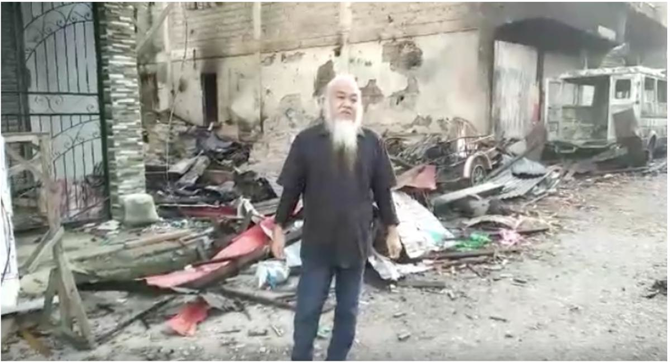
MANILA: Philippine security forces continue to make gains in the battle to retake Marawi City from Daesh-backed Maute militants.
A Catholic priest was rescued from the Maute group, which lost two more strongholds. Armed Forces of the Philippines (AFP) Chief of Staff Gen. Eduardo Año said government troops dislodged Maute fighters strategically positioned in and around Bato Mosque and the Aljaitul Islamiya Marawi Foundation (JIMF) on Saturday, after heavy fighting that lasted around five hours.
Año said this AFP gain has deprived Maute of a command-and-control center. Bato is the second major mosque in Marawi City to be liberated.
“As follow-up and clearing operations continue, we expect the enemy to yield more positions, but not without a fight. We’re ready for that. The AFP will press on relentlessly,” he added, urging the remaining Maute members to surrender “while they still have time.”
Priest rescued
Presidential advisor Jesus Dureza announced the rescue of Fr. Teresito “Chito” Suganob, who was seized by Maute when the Marawi crisis broke out.
Dureza said he received information that Suganob and another hostage were rescued by government forces near Bato Mosque on Saturday.
Dureza declined to give further information, telling Arab News. “Let us wait for official announcements from the AFP and the presidential palace so we don’t jeopardize military operations.”
The Catholic Bishops Conference of the Philippines (CPCP) said it was also informed about the rescue of Suganob and another hostage, who is a teacher, according to sources. Archbishop Martin Jumoad of Ozamiz said their “liberation is the result of our faith in prayer.”
Marawi resident Intesar Aba-Conding told Arab News: “Last night, around midnight, there was again intense fighting and aerial bombing. We’re praying all this will soon be over.”
On Suganob’s rescue, she said: “Allahu akbar (God is the greatest)! I feel like crying. I wish all will be released safe.”
Suganob, vicar general of the Cathedral of Our Lady Help of Christians, and several parishioners were seized in St. Mary’s Cathedral when Maute attacked Marawi on May 23.
More fighting expected
The military said more fighting is expected in the city as it tries to regain more ground and capture Maute leaders, particularly Isnilon Hapilon and Omar Maute.
Col. Romeo Brawner Jr., deputy commander of Task Force Ranao, said according to intelligence information, the two are still in the main battle zone.
“It’s very important that we capture them... We don’t want this to happen in any other city,” Brawner Jr. said, adding the military still has at least 200 structures to clear in the main battle zone.
Defense Secretary Delfin Lorenza earlier said the battle to retake the city is drawing to a close after almost four months of intense fighting. The militants are now contained in a small geographical area, he added.
The conflict has so far resulted in the deaths of 670 Maute militants, 147 government troops and 47 civilians.

Philippine security forces make further gains in Marawi
A Greenland sled dog champion fears for his culture as climate change melts the ice
ILULISSAT: Growing up in a village in northern Greenland, Jørgen Kristensen’s closest friends were his stepfather’s sled dogs. Most of his classmates were dark-haired Inuit; he was different. When he was bullied at school for his fair hair — an inheritance from the mainland Danish father he never knew — the dogs came to him.
He first went out to fish on the ice with them alone when he was 9 years old. They nurtured the beginning of a life-long love affair and Kristensen’s career as a five-time Greenlandic dog sled champion.
“I was just a small child. But many years later, I started thinking about why I love dogs so much,” Kristensen, 62, told The Associated Press.
“The dogs were a great support,” he said. “They lifted me up when I was sad.”
For more than a thousand years, dogs have pulled sleds across the Arctic for Inuit seal hunters and fishermen. But this winter, in the town of Ilulissat, around 300km (186 miles) north of the Arctic Circle, that’s not possible.
Instead of gliding over snow and ice, Kristensen’s sled bounces over earth and rock. Gesturing to the hills, he said it’s the first time he can remember when there has been no snow — or ice in the bay — in January.
The rising temperatures in Ilulissat are causing the permafrost to melt, buildings to sink and pipes to crack but they also have consequences that ripple across the rest of the world.
The nearby Sermeq Kujalleq glacier is one of the fastest-moving and most active on the planet, sending more icebergs into the sea than any other glacier outside Antarctica, according to the United Nations cultural organization UNESCO. As the climate has warmed, the glacier has retreated and carved off chunks of ice faster than ever before — significantly contributing to sea levels that are rising from Europe to the Pacific Islands, according to NASA.
The melting ice could reveal untapped deposits of critical minerals. Many Greenlanders believe that’s why US President Donald Trump turned their island into a geopolitical hotspot with his demands to own it and previous suggestions that the US could take it by force.
In the 1980s, winter temperatures in Ilulissat regularly hovered around -25 Celsius (-13 Fahrenheit) in winter, Kristensen said.
But nowadays, he said, there are many days when the temperature is above freezing — sometimes it can be as warm as 10 Celsius (50 Fahrenheit.)
Kristensen said he now has to collect snow for the dogs to drink during a journey because there isn’t any along the route.
Although Greenlanders have always adapted — and could make dog sleds with wheels in future — the loss of the ice is affecting them deeply, said Kristensen, who now runs his own company showing tourists his Arctic homeland.
“If we lose the dog sledding, we have large parts of our culture that we’re losing. That scares me,” he told AP, pressing his lips together and becoming tearful.
The sea ice is disappearing
In winter, hunters should be able to take their dogs far out on the sea ice, Kristensen told AP. The ice sheets act like “big bridges,” connecting Greenlanders to hunting grounds but also to other Inuit communities across the Arctic in Canada, the United States and Russia.
“When the sea ice used to come, we felt completely open along the entire coast and we could decide where to go,” Kristensen said.
This January, there was no ice at all.
Driving a dog sled on ice is like being “completely without boundaries — like on the world’s longest and widest highway,” he said. Not having that is “a very great loss.”
Several years ago, Greenland’s government had to provide financial support to many families in the far north of the island after the sea ice did not freeze hard enough for hunting, said Sara Olsvig, chair of the Inuit Circumpolar Council, which represents Inuit people from across Arctic nations.
The warming weather also makes life more dangerous for fishermen who have swapped their dog sleds for boats, because there is more rain instead of snow, said Morgan Angaju Josefsen Røjkjær, Kristensen’s business partner.
When snow falls and is compressed, air is trapped between the flakes, giving the ice its brilliant white color. But when rain freezes, the ice that forms contains little air and looks more like glass.
A fisherman can see the white ice and try to avoid it, but the ice formed from rain takes on the color of the sea – and that’s dangerous because “it can sink you or throw you off your boat,” said Røjkjær.
Climate change, Olsvig said, “is affecting us deeply,” and is amplified in the Arctic, which is “warming three to four times faster than the global average.”
The glaciers are melting
Over the course of his lifetime, the Sermeq Kujalleq glacier has retreated by about 40 kilometers (25 miles) said Karl Sandgreen, 46, the head of Ilulissat’s Icefjord Center which is dedicated to documenting the glacier and its icebergs.
Looking out of the window at hills which would normally be covered with snow, Sandgreen described mountain rock revealed by melting ice and a previously ice-covered valley inside the fjord where “there’s nothing now.”
Pollution is also speeding up the ice melt, Sandgreen said, describing how Sermeq Kujalleq is melting from the top down, unlike glaciers in Antarctica which largely melt from the bottom up as sea temperatures rise.
This is exacerbated by two things: black carbon, or soot spewed from ship engines, and debris from volcanic eruptions. They blanket the snow and ice with dark material and reduce reflection of sunlight, instead absorbing more heat and speeding up melting. Black carbon has increased in recent decades with more ship traffic in the Arctic, and nearby Iceland has periodic volcanic eruptions.
Many Greenlanders told AP they believe the melting ice is the reason Trump — a leader who has called climate change “the greatest con job ever” — wants to own the island.
“His agenda is to get the minerals, ” Sandgreen said.
Since Trump returned to office, fewer climate scientists from the US have visited Ilulissat, Sandgreen said. The USpresident needs to “listen to the scientists,” who are documenting the impact of global warming, he said.
Teaching children about climate change
Kristensen said he tries to explain the consequences of global warming to the tourists who he takes out on dog sled rides or on visits to the icebergs. He said he tells them how Greenland’s glaciers are as important as the Amazon rainforest in Brazil.
International summits, such as the United Nations climate talks in November in the Amazon gateway city of Belem, play a role, but it’s just as important to “teach children all over the world” about the importance of ice and oceans, alongside subjects like math, Kristensen said
“If we don’t start with the children, we can’t really do anything to help nature. We can only destroy it,” Kristensen said.
He first went out to fish on the ice with them alone when he was 9 years old. They nurtured the beginning of a life-long love affair and Kristensen’s career as a five-time Greenlandic dog sled champion.
“I was just a small child. But many years later, I started thinking about why I love dogs so much,” Kristensen, 62, told The Associated Press.
“The dogs were a great support,” he said. “They lifted me up when I was sad.”
For more than a thousand years, dogs have pulled sleds across the Arctic for Inuit seal hunters and fishermen. But this winter, in the town of Ilulissat, around 300km (186 miles) north of the Arctic Circle, that’s not possible.
Instead of gliding over snow and ice, Kristensen’s sled bounces over earth and rock. Gesturing to the hills, he said it’s the first time he can remember when there has been no snow — or ice in the bay — in January.
The rising temperatures in Ilulissat are causing the permafrost to melt, buildings to sink and pipes to crack but they also have consequences that ripple across the rest of the world.
The nearby Sermeq Kujalleq glacier is one of the fastest-moving and most active on the planet, sending more icebergs into the sea than any other glacier outside Antarctica, according to the United Nations cultural organization UNESCO. As the climate has warmed, the glacier has retreated and carved off chunks of ice faster than ever before — significantly contributing to sea levels that are rising from Europe to the Pacific Islands, according to NASA.
The melting ice could reveal untapped deposits of critical minerals. Many Greenlanders believe that’s why US President Donald Trump turned their island into a geopolitical hotspot with his demands to own it and previous suggestions that the US could take it by force.
In the 1980s, winter temperatures in Ilulissat regularly hovered around -25 Celsius (-13 Fahrenheit) in winter, Kristensen said.
But nowadays, he said, there are many days when the temperature is above freezing — sometimes it can be as warm as 10 Celsius (50 Fahrenheit.)
Kristensen said he now has to collect snow for the dogs to drink during a journey because there isn’t any along the route.
Although Greenlanders have always adapted — and could make dog sleds with wheels in future — the loss of the ice is affecting them deeply, said Kristensen, who now runs his own company showing tourists his Arctic homeland.
“If we lose the dog sledding, we have large parts of our culture that we’re losing. That scares me,” he told AP, pressing his lips together and becoming tearful.
The sea ice is disappearing
In winter, hunters should be able to take their dogs far out on the sea ice, Kristensen told AP. The ice sheets act like “big bridges,” connecting Greenlanders to hunting grounds but also to other Inuit communities across the Arctic in Canada, the United States and Russia.
“When the sea ice used to come, we felt completely open along the entire coast and we could decide where to go,” Kristensen said.
This January, there was no ice at all.
Driving a dog sled on ice is like being “completely without boundaries — like on the world’s longest and widest highway,” he said. Not having that is “a very great loss.”
Several years ago, Greenland’s government had to provide financial support to many families in the far north of the island after the sea ice did not freeze hard enough for hunting, said Sara Olsvig, chair of the Inuit Circumpolar Council, which represents Inuit people from across Arctic nations.
The warming weather also makes life more dangerous for fishermen who have swapped their dog sleds for boats, because there is more rain instead of snow, said Morgan Angaju Josefsen Røjkjær, Kristensen’s business partner.
When snow falls and is compressed, air is trapped between the flakes, giving the ice its brilliant white color. But when rain freezes, the ice that forms contains little air and looks more like glass.
A fisherman can see the white ice and try to avoid it, but the ice formed from rain takes on the color of the sea – and that’s dangerous because “it can sink you or throw you off your boat,” said Røjkjær.
Climate change, Olsvig said, “is affecting us deeply,” and is amplified in the Arctic, which is “warming three to four times faster than the global average.”
The glaciers are melting
Over the course of his lifetime, the Sermeq Kujalleq glacier has retreated by about 40 kilometers (25 miles) said Karl Sandgreen, 46, the head of Ilulissat’s Icefjord Center which is dedicated to documenting the glacier and its icebergs.
Looking out of the window at hills which would normally be covered with snow, Sandgreen described mountain rock revealed by melting ice and a previously ice-covered valley inside the fjord where “there’s nothing now.”
Pollution is also speeding up the ice melt, Sandgreen said, describing how Sermeq Kujalleq is melting from the top down, unlike glaciers in Antarctica which largely melt from the bottom up as sea temperatures rise.
This is exacerbated by two things: black carbon, or soot spewed from ship engines, and debris from volcanic eruptions. They blanket the snow and ice with dark material and reduce reflection of sunlight, instead absorbing more heat and speeding up melting. Black carbon has increased in recent decades with more ship traffic in the Arctic, and nearby Iceland has periodic volcanic eruptions.
Many Greenlanders told AP they believe the melting ice is the reason Trump — a leader who has called climate change “the greatest con job ever” — wants to own the island.
“His agenda is to get the minerals, ” Sandgreen said.
Since Trump returned to office, fewer climate scientists from the US have visited Ilulissat, Sandgreen said. The USpresident needs to “listen to the scientists,” who are documenting the impact of global warming, he said.
Teaching children about climate change
Kristensen said he tries to explain the consequences of global warming to the tourists who he takes out on dog sled rides or on visits to the icebergs. He said he tells them how Greenland’s glaciers are as important as the Amazon rainforest in Brazil.
International summits, such as the United Nations climate talks in November in the Amazon gateway city of Belem, play a role, but it’s just as important to “teach children all over the world” about the importance of ice and oceans, alongside subjects like math, Kristensen said
“If we don’t start with the children, we can’t really do anything to help nature. We can only destroy it,” Kristensen said.
© 2026 SAUDI RESEARCH & PUBLISHING COMPANY, All Rights Reserved And subject to Terms of Use Agreement.