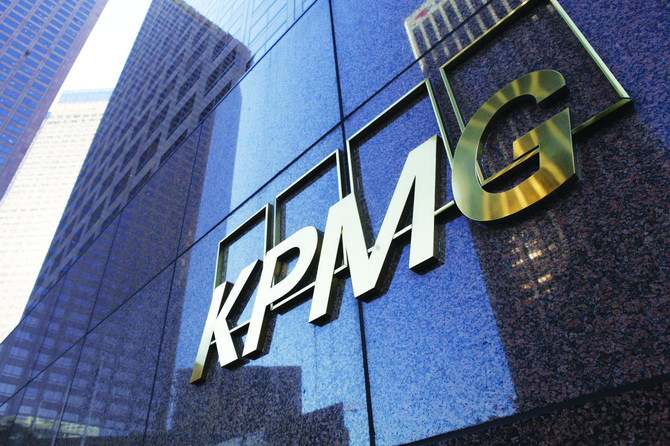
KPMG South Africa clears out top leadership over Gupta scandal

KPMG said it would donate the $3 million it earned in fees from Gupta-controlled firms to charity. (Reuters)
Updated 16 September 2017
Follow

KPMG South Africa clears out top leadership over Gupta scandal

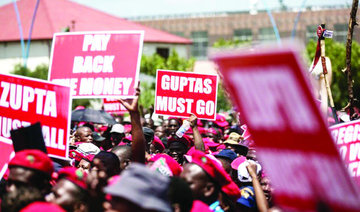
JOHANNESBURG: Global auditor KPMG cleared out its South African leadership on Friday after damning findings of an internal investigation into work done for the Guptas, businessmen friends of President Jacob Zuma accused of improperly influencing government contracts.
KPMG’s investigation did not identify any evidence of illegal behavior or corruption but it did find that work done for Gupta family firms “fell considerably short of KPMG’s standards,” the auditor said in a statement.
“This has been a painful period and the firm has fallen short of the standards we set for ourselves, and that the public rightly expects from us,” new South African CEO Nhlamu Dlomu said.
“I want to apologize to the public, our people and clients for the failings that have been identified by the investigation.”
KPMG said it would donate the 40 million rand ($3 million) it earned in fees from Gupta-controlled firms to charity and refund 23 million rand it earned compiling a controversial report for the South African tax service.
South African chief executive Trevor Hoole, chairman Ahmed Jaffer, chief operating officer Steven Louw and five senior partners all resigned.
“I absolutely understand that ultimate responsibility lies with me,” Hoole said in a statement.
KPMG is also seeking to take disciplinary action to dismiss Jacques Wessels, the lead partner on audits of Gupta-linked firms, it said. Wessels did not answer a call to his mobile phone seeking comment.
Andrew Cranston, former CEO of KPMG in Russia, has been appointed as interim chief operating officer.
KPMG is one of several global firms to be dragged into the Gupta scandal.
Zuma and the Guptas deny any wrongdoing and say they are the victims of a politically motivated witch-hunt.
The British arm of Bell Pottinger collapsed this week after the London-based global public relations agency’s clients deserted it because of a backlash over a racially charged political campaign it ran for the Guptas.
Global consultancy McKinsey is also being investigated by South Africa’s Parliament over whether it knowingly let funds from state power utility Eskom be diverted to a Gupta company as a way of securing a $78 million contract to advise Eskom, the state power utility.
McKinsey is carrying out its own investigation, but has denied wrongdoing.
— Reuters


Gulf-EU value chain integration signals shift toward long-term economic partnership: GCC secretary general

Updated 03 February 2026
Follow

Gulf-EU value chain integration signals shift toward long-term economic partnership: GCC secretary general

RIYADH: Value chains between the Gulf and Europe are poised to become deeper and more resilient as economic ties shift beyond traditional trade toward long-term industrial and investment integration, according to the secretary general of the Gulf Cooperation Council.

Speaking on the sidelines of the World Governments Summit 2026 in Dubai, Jasem Al-Budaiwi said Gulf-European economic relations are shifting from simple commodity trade toward the joint development of sustainable value chains, reflecting a more strategic and lasting partnership.

His remarks were made during a dialogue session titled “The next investment and trade race,” held with Luigi Di Maio, the EU’s special representative for external affairs.

Al-Budaiwi said relations between the GCC and the EU are among the bloc’s most established partnerships, built on decades of institutional collaboration that began with the signing of the 1988 cooperation agreement.

He noted that the deal laid a solid foundation for political and economic dialogue and opened broad avenues for collaboration in trade, investment, and energy, as well as development and education.

The secretary general added that the partnership has undergone a qualitative shift in recent years, particularly following the adoption of the joint action program for the 2022–2027 period and the convening of the Gulf–European summit in Brussels.

Subsequent ministerial meetings, he said, have focused on implementing agreed outcomes, enhancing trade and investment cooperation, improving market access, and supporting supply chains and sustainable development.

According to Al-Budaiwi, merchandise trade between the two sides has reached around $197 billion, positioning the EU as one of the GCC’s most important trading partners.

He also pointed to the continued growth of European foreign direct investment into Gulf countries, which he said reflects the depth of economic interdependence and rising confidence in the Gulf business environment.

Looking ahead, Al-Budaiwi emphasized that the economic transformation across GCC states, driven by ambitious national visions, is creating broad opportunities for expanded cooperation with Europe. 

He highlighted clean energy, green hydrogen, and digital transformation, as well as artificial intelligence, smart infrastructure, and cybersecurity, as priority areas for future partnership.

He added that the success of Gulf-European cooperation should not be measured solely by trade volumes or investment flows, but by its ability to evolve into an integrated model based on trust, risk-sharing, and the joint creation of economic value, contributing to stability and growth in the global economy.

GCC–EU plans to build shared value chains look well-timed as trade policy volatility rises.

In recent weeks, Washington’s renewed push over Greenland has been tied to tariff threats against European countries, prompting the EU to keep a €93 billion ($109.7 billion) retaliation package on standby. 

At the same time, tighter US sanctions on Iran are increasing compliance risks for energy and shipping-related finance. Meanwhile, the World Trade Organization and UNCTAD warn that higher tariffs and ongoing uncertainty could weaken trade and investment across both regions in 2026.