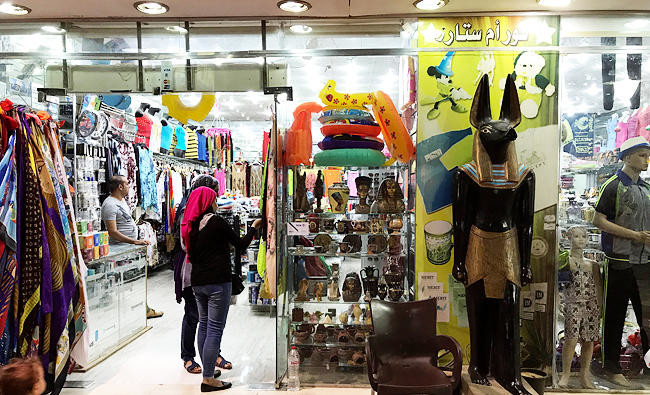
CAIRO: Parents across Egypt are up in arms over increased tuition fees and a rise in the cost of school supplies, as children prepare to return to the classroom after their summer break.
Parents interviewed by Arab News argued that the increased cost of school items, uniforms, transport and fees had got to the point where they were now feeling “exploited,” claiming the cost of everything had doubled.
“I transferred my son from his school after they had increased their tuition and transportation fees this year,” parent Dina El-Sheribini said.
Nada Ahmad complained about her child’s transportation fees.
“In addition to the annual tuition fee increase, my son’s bus payment witnessed a 50 percent increase this year,” she said.
Regarding the prices of school items, El-Sherbini said: “The cost of school bags has doubled compared to last year.”
Ahmad added: “I’ve seen bags that at least would cost from 200 ($11) to 1,000 Egyptian pounds.”
Hanan, who has two sons, said that the cheapest school bags cost 200 Egyptian pounds “despite their poor quality.”
“When it comes to stationery, the cost is much higher compared to last year,” she added.
Ahmad said: “It’s this time of the year when parents feel most exploited. They have to cope with an increase in everything, not only school supplies and school installments, but also the prices of goods increase during this time.”
Egyptian TV show host Amr Adib explained how bad it must be for parents with low incomes by showcasing school items at their lowest prices on his show. The host concluded that a family with a low income would have to pay around 800 Egyptian pounds per child to buy everything they need for school.
It was reported on social media recently that angry parents stormed the campus of a high-end German private school in New Cairo due to an increase in fees.
To add to the feeling of discontent, an Egyptian actress posted a video on social media in which she was ranting to President Abdel Fattah El-Sisi over the hike in prices of private schools.
In May, the Education Ministry announced that international school fees will increase 14 percent for the 2017-2018 school year and then another 7 percent per year.

Increased cost of education upsets Egyptian parents

Syria’s leader set to visit Berlin with deportations in focus
- Sharaa is scheduled to meet his counterpart Frank-Walter Steinmeier, the German president’s office said
BERLIN: Syrian President Ahmed Al-Sharaa is expected in Berlin on Tuesday for talks, as German officials seek to step up deportations of Syrians, despite unease about continued instability in their homeland.
Sharaa is scheduled to meet his counterpart Frank-Walter Steinmeier, the German president’s office said.
Chancellor Friedrich Merz’s office has yet to announce whether he would also hold talks with Sharaa during the visit.
Since ousting Syria’s longtime leader Bashar Assad in late 2024, Sharaa has made frequent overseas trips as the former Islamist rebel chief undergoes a rapid reinvention.
He has made official visits to the United States and France, and a series of international sanctions on Syria have been lifted.
The focus of next week’s visit for the German government will be on stepping up repatriations of Syrians, a priority for Merz’s conservative-led coalition since Assad was toppled.
Roughly one million Syrians fled to Germany in recent years, many of them arriving in 2015-16 to escape the civil war.
In November Merz, who fears being outflanked by the far-right AfD party on immigration, insisted there was “no longer any reason” for Syrians who fled the war to seek asylum in Germany.
“For those who refuse to return to their country, we can of course expel them,” he said.
- ‘Dramatic situation’ -
In December, Germany carried out its first deportation of a Syrian since the civil war erupted in 2011, flying a man convicted of crimes to Damascus.
But rights groups have criticized such efforts, citing continued instability in Syria and evidence of rights abuses.
Violence between the government and minority groups has repeatedly flared in multi-confessional Syria since Sharaa came to power, including recent clashes between the army and Kurdish forces.
Several NGOs, including those representing the Kurdish and Alawite Syrian communities in Germany, have urged Berlin to axe Sharaa’s planned visit, labelling it “totally unacceptable.”
“The situation in Syria is dramatic. Civilians are being persecuted solely on the basis of their ethnic or religious affiliation,” they said in a joint statement.
“It is incomprehensible to us and legally and morally unacceptable that the German government knowingly intends to receive a person suspected of being responsible for these acts at the chancellery.”
The Kurdish Community of Germany, among the signatories of that statement, also filed a complaint with German prosecutors in November, accusing Sharaa of war crimes, genocide and crimes against humanity.
There have also been voices urging caution within government.
On a trip to Damascus in October, Foreign Minister Johann Wadephul said that the potential for Syrians to return was “very limited” since the war had destroyed much of the country’s infrastructure.
But his comments triggered a backlash from his own conservative Christian Democratic Union party.