BEIRUT: The UN High Commissioner for Refugees (UNHCR) said it has halted cash assistance to 20,000 Syrian families in Lebanon due to a shortage of international aid.
Some 20,000 “more needy” Syrian families will receive cash assistance instead, UNHCR spokeswoman Lisa Abu Khaled told Arab News. “We’re making tough decisions, but we have to deal with limited resources,” she said.
The spokesman for Syrian refugees in Arsal, Lebanon, said about 10,000 of them received text messages from the UNHCR saying they will be removed from its cash assistance program from November.
“This will be a disaster for these families, who are already living under the poverty threshold and have no other resources apart from what they get from the UNHCR,” he told Arab News.
Lebanon’s state minister for refugee affairs, Mouin Merehbi, warned on Thursday that the shortage of international aid will worsen the circumstances of Syrian refugees in his country.
The rise in tensions between them and Lebanese host communities is due to “many factors, including pressure on public services and employment competition,” he told the new head of the International Monetary Fund (IMF) in Lebanon, Chris Jarvis.
Meanwhile, a Human Rights Watch (HRW) report published on Thursday said: “Millions of dollars in aid money pledged to get Syrian refugee children in school last year did not reach them, arrived late, or could not be traced due to poor reporting practices.”
The report noted the lack of transparency in financing the education of Syrian refugees. It said HRW “followed the money trail from the largest donors to education in Lebanon, Turkey, and Jordan, the three countries with the largest number of Syrian refugees, but found large discrepancies between the funds that the various parties said were given and the reported amounts that reached their intended targets in 2016. The lack of timely, transparent funding contributed to the fact that more than 530,000 Syrian schoolchildren in those three countries were still out of school at the end of the 2016-2017 school year.”
The report added: “Donors and host countries have promised that Syrian children will not become a lost generation, but this is exactly what is happening. More transparency in funding would help reveal the needs that aren’t being met so they could be addressed and get children into school.”


![]()
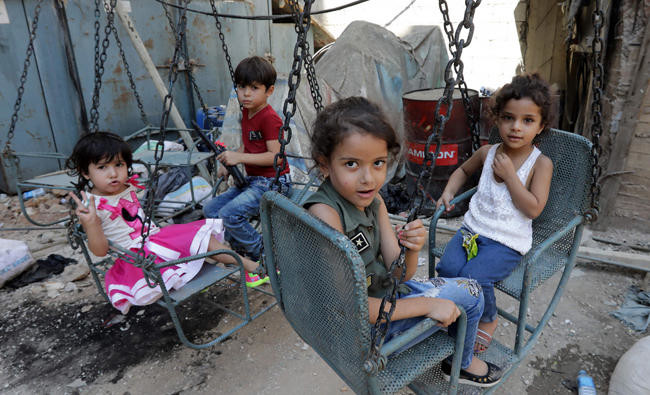
UNHCR stops cash aid to 20,000 Syrian families in Lebanon
UNHCR stops cash aid to 20,000 Syrian families in Lebanon

Latest updates


© 2026 SAUDI RESEARCH & PUBLISHING COMPANY, All Rights Reserved And subject to Terms of Use Agreement.