TUNIS: Tunisia’s Prime Minister Youssef Chahed has called on citizens to “join hands” to defeat both terrorism and the economic obstacles threatening the country’s budding democracy.
Chahed announced before lawmakers on Monday a battery of ambitious reforms aimed at pulling Tunisia out of its economic crisis by 2020.
Chahed says until then he will lead “a government of war against terrorism and corruption, a government that works for development and fights unemployment” and helps to erase disparities between the capital and the country’s inland regions.
To do so, he told Tunisians that they must “join hands” and make “shared sacrifices.”
Chahed, the youngest premier in the country’s post-independence history, said he wanted to raise the retirement age and increase the social charges Tunisians contribute to their benefits.
President Beji Caid Essebsi has strengthened his grip on power with Parliament approving a Cabinet reshuffle ahead of key elections.
Chahed said his new Cabinet would respect the “national unity” needed to pass much-needed reforms.
Observers say the new Cabinet, which places Essebsi allies in key positions, consolidates the 90-year-old president’s hold on the executive, months ahead of Tunisia’s first post-revolution municipal polls.
“It is the president who pulls the strings,” French language daily Le Quotidien said.
The premier easily won a confidence vote for his new line-up, backed by lawmakers from his own Nidaa Tounes party and its ally in government, Ennahdha, which together dominate Parliament.
He announced the new line-up last week after talks with Essebsi, who founded secular Nidaa Tunes and later became prime minister before being elected president in the wake of a revolution in 2011.
The prime minister played up his government’s economic achievements and said he had appointed new interior and defense ministers “to strengthen our country’s capacities in the fight against terrorism, organized crime and smuggling.”
But observers say the new team consolidates the clout of Essebsi’s Nidaa Tounes.
The new Cabinet includes former advisers to the president as ministers of finance and health, while the nominee for the Defense Ministry, Abdelkrim Zbidi, held the same post when Essebsi was prime minister.
Analyst Selim Kharrat said Essebsi had the government under his control well before the reshuffle.
“The only difference is that it is much more blatant... and that the presidency hardly hides,” he said.
Essebsi has yet to give any indication of his intentions when his five-year term ends in 2019.
Many of his detractors have voiced concern about the intentions of his son, Hafedh Caid Essebsi, the influential leader of Nidaa Tounes.
In a country still marked by decades of dictatorship, many have also criticized the nomination of ministers who served under former President Ben Ali.


![]()
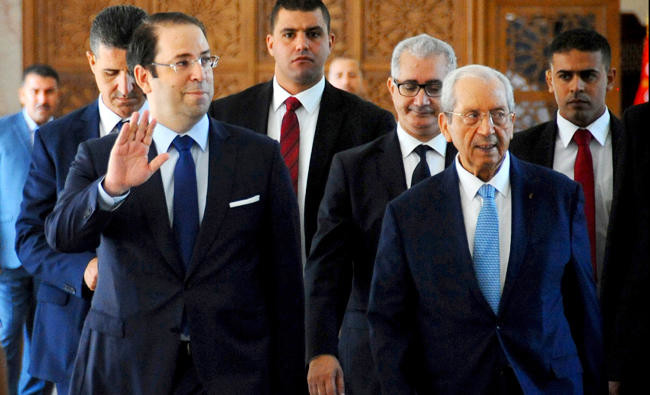
Tunisian PM asks citizens to make ‘shared sacrifices’
Tunisian PM asks citizens to make ‘shared sacrifices’

Latest updates


© 2026 SAUDI RESEARCH & PUBLISHING COMPANY, All Rights Reserved And subject to Terms of Use Agreement.