HEMEIMEEM AIR BASE, Syria: Russia’s military said Tuesday that Syrian troops have liberated about 85 percent of the war-torn country’s territory from militants, a major turn-around two years after Moscow intervened to land a hand to its embattled long-time ally.
Russia has been providing air cover for President Bashar Assad’s troops since 2015, changing the tide of the war and giving Syrian and allied troops an advantage over opposition fighters and Daesh group militants.
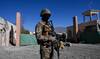
Speaking to reporters at the Hemeimeem air base in Syria’s province of Latakia, Lt. Gen. Alexander Lapin said Syrian government still must clear the remaining 15 percent, approximately 27,000 square kilometers (10,425 square miles), from the extremists.
Syrian troops, along with strong support from Iranian-backed ground fighters, have in recent weeks pushed Daesh
militants out of central Homs province, near the border with Lebanon, and are now fighting them in the oil-rich Deir Ezzor province in the east.
Russian air power has been instrumental in recent successes of the Syrian military. With Damascus facing major battlefield defeats, Moscow signed a deal with the Syrian government in August 2015 to deploy an air force contingent and other military assets at the Hemeimeem base, in the heartland of Assad’s Alawite religious minority.
In a matter of weeks, Russia’s military built up the base so it could host dozens of Russian jets. It delivered thousands of tons of military equipment and supplies by sea and heavy-lift cargo planes in an operation dubbed the “Syrian Express.” A month later, Moscow declared the launch of its air campaign in Syria — Russia’s first military action outside the former Soviet Union since the federation’s collapse.
In April 2016, Assad’s forces, relying on Russian air support, scored a major symbolic victory by taking the ancient town of Palmyra from the Daesh group. The Daesh militants out carried a counteroffensive but were finally driven out of the city in March 2017.
Assad’s greatest victory in the war, now in its seventh year, came in December last year when his troops and allied militia, with Russian air support, gained full control of the city of Aleppo.
Russia then deployed hundreds of military police to patrol the city’s former rebel-held eastern part. Senior Russian military officers as well as special forces were deployed alongside Syrian government troops, providing training, planning offensives and coordinating air strikes. Russia has also deployed its latest weapons to the Syrian conflict, including state-of-the art Kalibr cruise missiles launched by Russian strategic bombers, navy surface warships and submarines, mostly recently in Deir Ezzor province last week.
Russia’s Defense Ministry never said how many troops it has in Syria, but turnout figures in voting from abroad in the September 2016 parliamentary elections indicated Russian military personnel in the Arab nation at the time likely exceeded 4,300.
Russia has also co-sponsored talks with opposition fighters and the government to negotiate local cease-fires, and set up “de-escalation zones” in Syria, which were credited with reducing fighting around the country.
A new round starts later this week in the Kazakh capital of Astana, on local cease-fires and de-escalation zones.


![]()

Russia says Syria government controls 85 percent of country
Russia says Syria government controls 85 percent of country
Latest updates






© 2026 SAUDI RESEARCH & PUBLISHING COMPANY, All Rights Reserved And subject to Terms of Use Agreement.