LONDON: When Fahad Al-Muwallad fired in the winner that saw Saudi Arabia beat Japan last Tuesday, he not only sent the Green Falcons to next year’s World Cup but also gave a huge boost to the potential brand value of local football clubs.
That’s the view of industry insiders who claim there is nothing like a World Cup campaign to get the public not just behind their team, but also more focused on football in general.
As part of the country’s Vision 2030 plan, whereby dependence on oil is set to be reduced and the economy diversified, government-owned football clubs are to be put up for sale with profits set to be spent on promoting social well-being and healthy lifestyles.
Given the planned privatizations, the timing of the win over Japan — which will see coach Bert van Marwijk’s men set to fly the flag for the country in Russia next summer — could not have come at a better time.
“The World Cup is the biggest tournament in sport and attracts an unrivaled level of interest. Strong performances by the Saudi Arabian team will trigger excitement domestically and perhaps more importantly internationally for football in the country,” Finn Dowley, sports analyst at the London-based business consultancy Brand Finance, told Arab News.
“Football club brands are reliant on strong on-field performance and individual player brands. The World Cup will thrust Saudi Arabia’s star players into the spotlight which will directly benefit the brands of the clubs they play for.”
The Saudi national team has long been one of the most successful in the Middle East and Asia. The Green Falcons have played in the World Cup finals four times and won the Asian Cup three times.
But amid the boom in sports finances and growth of football into a megabucks business, Saudi Arabia’s national team has been somewhat sidelined, having last qualified for the World Cup in 2006.
Local clubs already have strong and solid support, but given the increased exposure during the World Cup tournament in Russia, could now see a boost ahead of the privatization plans.
“It is important to remember that sports clubs in Saudi Arabia include a number of sports — not only the football teams — however, it is fair to say that in terms of core support and fan appeal the football teams are the key assets,” Steve Bainbridge, head of Al Tamimi & Company’s Sports and Events Management practice, told Arab News.
“Assuming there is significant interest from the private sector and robust bidding, and there are many reasons to believe this will indeed be the case, we can anticipate that the private-sector bidders, having performed rigorous due diligence, will feel confident they can increase brand values and commercialize the associated assets to increase and diversify revenues.”
The key to making a success of any privatized clubs is to increase commercial revenue, specifically through merchandise and sponsorship. And once again World Cup qualification is predicted to help any plans the new club owners and their commercial teams may have. The model the owners would seek to copy is likely to be, as you would expect, that used by the big European clubs such as Real Madrid, Manchester United and Bayern Munich.
“The primary revenue-driver (will be) brand value, which should be maintained, enhanced and leveraged through multiple channels including ticket revenues, merchandise sales, broadcast revenues and club sponsorship, etc.” Bainbridge said.
“Subsequent to a privatization, we can anticipate that new owners may bring private-sector expertise to support their strategic investment in and development of the assets.”
Dowley added: “The growth of Saudi football club brands will depend on levels of investment and quality of brand management. Savvy owners will look to industry and market specialists to develop their brands in order to maximize financial return.”


![]()
![]()
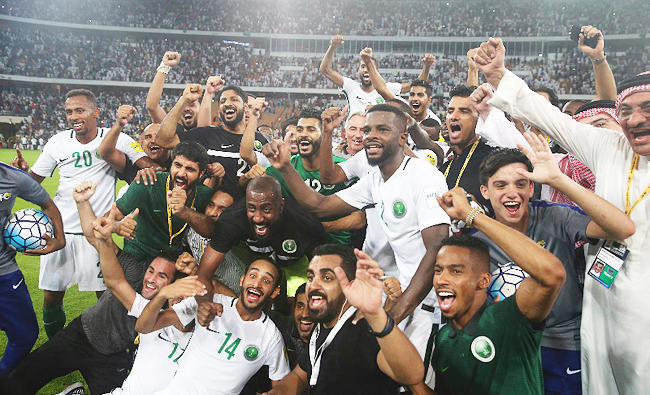
World Cup qualification to kick Saudi clubs’ brands into big leagues
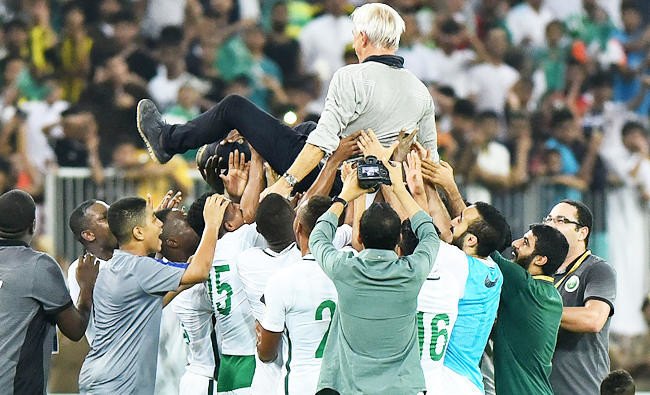
World Cup qualification to kick Saudi clubs’ brands into big leagues

Latest updates




© 2026 SAUDI RESEARCH & PUBLISHING COMPANY, All Rights Reserved And subject to Terms of Use Agreement.