KARACHI: For an estimated 300,000 Rohingya Muslims living in squalor in Pakistan’s largest city, the news from Myanmar in the past two weeks is reviving painful memories of the violence that drove many of them here half a century ago.
Some say they have got word of relatives being killed in Myanmar’s Rakhine state or are not being able to contact family members.
Karachi’s Rohingya community comprises migrants from an earlier era of displacement dating back to the 1960s and ‘70s. Despite decades in a foreign land, they have stayed in touch with family back home, especially in recent years through mobile phones and social media.
In the past two weeks, nearly 300,000 Rohingya have fled to Bangladesh after the Myanmar military launched an offensive in response to a series of attacks by Rohingya insurgents on police posts and an army base. Hundreds of homes in Rohingya villages have been burned and about 400 people have been killed.
The older members of Karachi’s Rohingya community fled from a repressive military regime that took power in 1962, escaping on foot or by boat to Bangladesh, which was then East Pakistan. Eventually, they made their way to Karachi.
Most of the people living in the slum called Arakanabad were born in Pakistan, or fled violence in their homeland decades ago. It’s named for Arakan, which was what Rakhine used to be called.
Raheela Sadiq, a more recent migrant who came to Pakistan 15 years ago, said she has been unable to contact relatives in Rakhine via mobile phone for nearly two weeks.
“I have seen what is happening to people over there on the Internet,” she said as tears filled her eyes.
Videos and pictures depicting violence in Rakhine and shared on social media are passed around quickly in Arakanabad, adding to fears and anxiety about relatives back home.
Fisherman Noor Mohammed, 50, said three members of his family in Rakhine were killed a few days ago.
“My brother, brother-in-law, and nephew were there (in Rakhine). They are all dead now. The army over there killed them,” he said, adding that he heard the news from another nephew who is still alive.
Hoor Bahar, 60, said she left Rakhine with her husband over 30 years ago when her mother and sister were killed.
“I have one sister left who went to Bangladesh seven to 10 days ago,” she added. However, she said, her sister is being held on a beach by boatmen who brought her from Rakhine and are demanding $350 as payment.
NO LEGAL STATUS
Arakanabad smells of fish. The Rohingya who live here largely work on fishing boats, or clean the catch brought by fishermen who set sail from the nearby Qur'angi Creek.
Most of them say they are not able to obtain Pakistani identity cards, essential for opening bank accounts, enrolling children in schools, using public hospitals, and even getting a job. Fishing boats, where identity cards are not asked for, are one of the few employment options left although fishermen can sometimes be asked for identification by coast guards.
“There is no policy in Pakistan for the Rohingya,” said Noor Hussain, the Pakistan head of the Rohingya Solidarity Organization, pointing out that the without state-issued identity cards the community cannot progress.
Thousands of Rohingya families are crammed into the one-room cement brick houses that line the narrow streets of Arakanabad.
Children play amidst knee-high garbage, and crowd around to share slices of jello topped with sugar, or other sweetmeats sold by hawkers.
“The community is living in extremely difficult circumstances, and our youth is being destroyed because they cannot get an education,” said Hussain.
Despite the poverty, the community raised around 1.5 million rupees ($15,000) over the Eid Al-Adha holidays earlier this month to help refugees fleeing Rakhine.
“Our community is not a burden on Pakistan,” Hussain said.
“The government of Pakistan is making millions of dollars by exporting the fish our people catch,” he said, adding that giving citizenship rights to the Rohingya would only benefit the country.


![]()
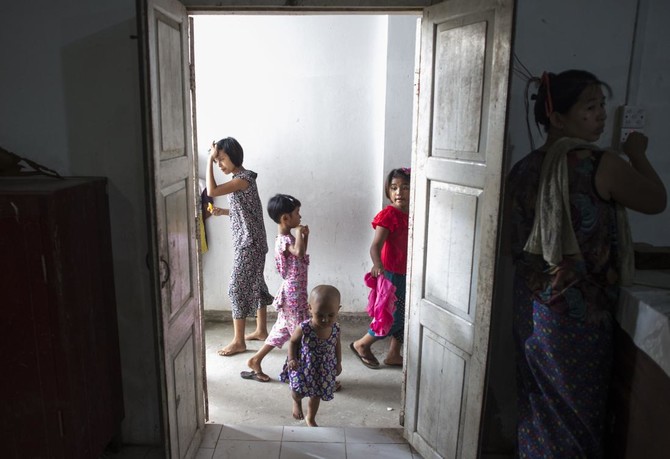
Rohingya refugees in Pakistan fear for relatives in Myanmar
Rohingya refugees in Pakistan fear for relatives in Myanmar


Latest updates


© 2026 SAUDI RESEARCH & PUBLISHING COMPANY, All Rights Reserved And subject to Terms of Use Agreement.