JERUSALEM: Israeli Prime Minister Benjamin Netanyahu’s wife has taken a voluntary lie detector test to try and dispel allegations she misused public funds, her lawyer said on Sunday.
National fraud squad detectives questioned Sara Netanyahu last month on suspicions she routinely claimed state payments for personal housekeeping expenses at the couple’s official and private residences.
Private broadcaster Channel Two reported at the weekend that the attorney general was expected to announce charges against her by Sept. 10.
“She took the test,” Netanyahu family lawyer Yossi Cohen told Israeli public radio. “It’s a very tough test. It’s humiliating and she did it wonderfully.”
He did not give details of the questions she was asked or the test results.
He said the decision to undergo the examination, at a privately operated polygraph facility, was taken “following the horrible mudslinging against her and after we heard that she is going to be put on trial.”
Results of polygraph testing are not admissible as evidence in Israeli criminal trials.
Netanyahu himself is also under investigation on suspicions of corruption, and last month his former chief of staff signed a deal to turn state’s witness in probes involving the premier.
One is based on suspicions Netanyahu unlawfully received gifts from wealthy supporters, including Australian billionaire James Packer and Hollywood producer Arnon Milchan.
Also under investigation is a suspicion that Netanyahu sought a secret deal with the publisher of top-selling daily Yediot Aharonot.
The proposed deal, which is not believed to have been finalized, would have seen Netanyahu receive positive coverage in return for him helping to scale down the operations of Israel Hayom, Yediot’s main competitor.
Netanyahu has been questioned about both cases.
The investigations have stirred Israeli politics and led to speculation over whether Netanyahu will eventually be forced to step down, which he is not formally obliged to do unless convicted.
He denies any wrongdoing.
Submarine graft probe
In another development, Israeli police said they detained six people Sunday for questioning over suspected corruption around a deal to buy submarines for Israel’s navy from Germany’s ThyssenKrupp.
They gave no further details but daily newspaper Haaretz said the roundup included “a former senior official” in the prime minister’s bureau and senior naval officers.
In July, Germany delayed signing a deal with Israel for the sale of three submarines, an Israeli official said, as the corruption probe gained momentum.
That followed the arrest of several people on suspicion of offenses including bribery and money laundering around the deal to buy the Dolphin submarines from the German industrial giant.
David Shimron, a relative of Netanyahu and his family lawyer who also represented ThyssenKrupp in Israel, was among those questioned and then released in July.
Israeli officials said Germany had not backed out of the deal but was waiting to see the outcome of the investigation, daily newspaper Yediot Aharonot reported.
In February, Israel’s Justice Ministry said it had launched an investigation into the affair, stressing that Netanyahu himself was not a suspect.


![]()
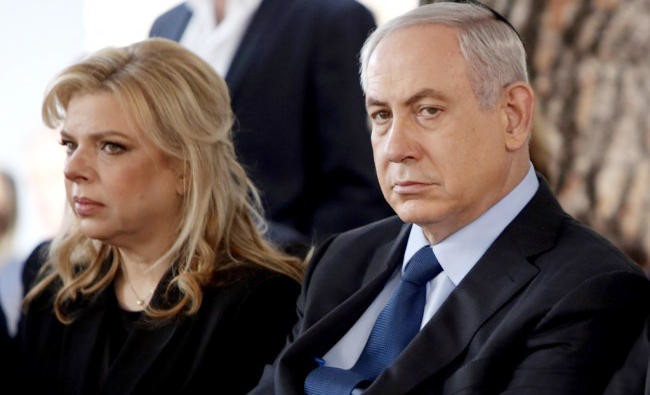
Netanyahu’s wife undergoes ‘humiliating’ polygraph test over graft
Netanyahu’s wife undergoes ‘humiliating’ polygraph test over graft

Latest updates


Recommended


© 2026 SAUDI RESEARCH & PUBLISHING COMPANY, All Rights Reserved And subject to Terms of Use Agreement.