JEDDAH: Many years ago, the journey to perform Hajj was long and difficult, during which pilgrims would be unable to communicate with their loved ones. But the development of means of communication has enabled pilgrims to not only stay in touch with their families but also with the whole world.
They can now film and photograph their experiences and themselves on mobile phones, and disseminate footage and photos via social media, which is now full of pilgrim selfies, particularly at the holy sites.
In the age of smartphones, social media and live video streaming, it's now also an experience to be shared in real time.
Across the holy city, pilgrims from around the world can be seen with their arms extended, showing off their surroundings to friends and family back home.
But as widespread and accepted as this phenomenon is, some say it deviates from the main goal of the pilgrimage, which is to communicate with God.
“It has angered a number of clerics and conservatives, claiming it may stop pilgrims from being preoccupied with worship in the most holy places of God,” said Sudanese pilgrim Mohammed Fadl Allah.
But Egyptian pilgrim Maryam El-Sayed said: “It is an opportunity to share Hajj feelings and motivate friends and family. There is a difference between those who take pictures to celebrate Hajj and share it with friends, and those who spend a lot of time on social media chatting with friends.”
Egyptian pilgrim Mohammed Nassar said Snapchat is his favorite app to communicate with relatives. “I share images of the holy places with relatives, who demand further pictures. All Islamic countries are attracted to the pilgrimage and holy places,” he said.
Saudi pilgrim Abdullah Al-Khorayf said such apps have contributed significantly to delivering a positive image of Islam and Muslims, especially during the holy month of Ramadan and the Hajj season.
“Pilgrims and worshippers share pictures and video clips of the rituals of prayer, fasting and Tawaf around the Kaaba,” he said.
“These pictures convey to non-Muslims different images of Muslims. They reveal the interconnection and unity of believers.”
Travel agencies in charge of organizing trips to the Hajj are now offering packages that include mobile Internet so they can avoid roaming fees, according to AFP.
For the faithful it is a deeply spiritual journey, which for centuries every capable Muslim has been required to make at least once in their lifetime.


![]()
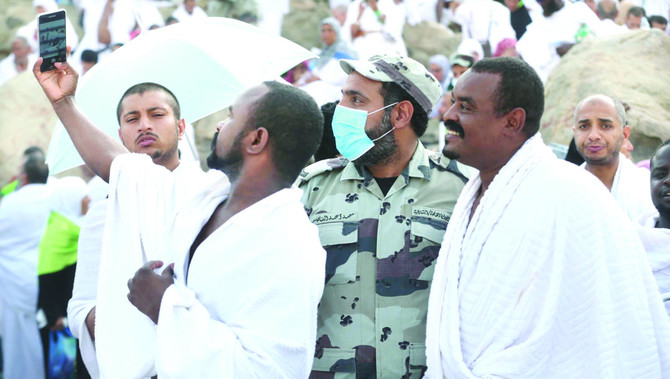
Smartphones, social media transforming Hajj experience
Smartphones, social media transforming Hajj experience


Latest updates




© 2026 SAUDI RESEARCH & PUBLISHING COMPANY, All Rights Reserved And subject to Terms of Use Agreement.