MIAMI: The largest asteroid in more than a century will whiz safely past Earth on Sept. 1 at a safe but unusually close distance of about 7 million km, NASA said.
The asteroid was discovered in 1981, and is named Florence after the famed 19th century founder of modern nursing, Florence Nightingale.
“Florence is the largest asteroid to pass this close to our planet since the first near-Earth asteroid was discovered over a century ago,” said a US space agency statement.
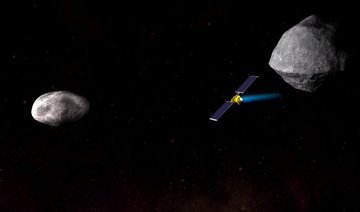
It is one of the biggest asteroids in the Earth’s vicinity, and measures about 4.4 km wide — or about the size of 30 Egyptian pyramids stuck together.
“While many known asteroids have passed by closer to Earth than Florence will on Sept. 1, all of those were estimated to be smaller,” said Paul Chodas, manager of NASA’s Center for Near-Earth Object Studies.
Scientists plan to study the asteroid up close when it passes, using ground-based radar imaging in California and Puerto Rico.
“The resulting radar images will show the real size of Florence and also could reveal surface details as small as about 30 feet,” said NASA.
This pass will be Florence’s closest “since 1890 and the closest it will ever be until after 2500,” added the US space agency.
Asteroids are small, natural rocky bodies that orbit the Sun.
Large asteroid collisions with Earth are rare.
A car-sized asteroid hits Earth’s atmosphere about once a year and burns up before reaching the surface.
“About every 2,000 years or so, a meteoroid the size of a football field hits Earth and causes significant damage to the area,” said NASA.
“Finally, only once every few million years, an object large enough to threaten Earth’s civilization comes along.”
Scientists are confident that Florence will not be one of them.

Largest asteroid in a century to whiz by Sept 1
Apple to update EU browser options, make more apps deletable
- iPhone maker came under pressure from regulators to make changes after the EU’s sweeping Digital Markets Act took effect on March 7
- Apple users will be able to select a default browser directly from the choice screen after going through a mandatory list of options
STOCKHOLM: Apple will change how users choose browser options in the European Union, add a dedicated section for changing default apps, and make more apps deletable, the company said on Thursday.
The iPhone maker came under pressure from regulators to make changes after the EU’s sweeping Digital Markets Act took effect on March 7, forcing big tech companies to offer mobile users the ability to select from a list of available web browsers on a “choice screen.”
The new rules require mobile software makers to show the choice screen where users can select a browser, search engine and virtual assistant as they set up their phones, which earlier came with preferred options from Apple and Google.
In an update later this year, Apple users will be able to select a default browser directly from the choice screen after going through a mandatory list of options.
A randomly ordered list of 12 browsers per EU country will be shown to the user with short descriptions, and the chosen one will be automatically downloaded, Apple said. The choice screen will also be available on iPads through an update later this year.
Apple released a previous update in response to the new rules in March, but browser companies criticized the design of its choice screen, and the Commission opened an investigation on March 25 saying it suspected that the measures fell short of effective compliance.
The company said it has been in dialogue with the European Commission and believes the new changes will address regulators’ concerns.
It also plans to introduce a dedicated area for default apps where a user will be able to set defaults for messaging, phone calls, spam filters, password managers and keyboards.
Users will also be able to delete certain Apple-made apps such as App Store, Messages, Camera, Photos and Safari. Only Settings and Phone apps would not be deletable.


