TAL AFAR: Iraqi Turkmen fighter Abbas Yussef is all smiles, clutching his Kalashnikov near the front lines in Tel Afar after his unit retook his home neighborhood from Daesh militants.
“I can’t describe my joy when I saw my house again,” Yussef said. “I can’t describe how it felt to take it back, a gun in my hand.”
Three years ago, Daesh seized nearly one-third of Iraq, including Tal Afar, in a sweeping offensive that forced tens of thousands of people to flee their homes. Yussef was among them, but quickly, along with thousands of others, he responded to a call by Grand Ayatollah Ali Sistani, the highest Shiite authority in Iraq, to take up arms against the militants.
Soon afterward he enrolled in the paramilitary Hashed Al-Shaabi, an umbrella organization, which is dominated by Iran-backed Shiite militias but which also includes Shiite Turkmen. The Hashed took part in the offensive to retake Iraq’s second city Mosul, which was liberated in July after a grueling nine-month onslaught, alongside US-backed Iraqi military, police and counter-terrorism forces.
Now the paramilitary group has been battling to recapture Tal Afar, where Daesh has been driven out of all 29 districts in the northern city a mere week into an assault by Iraqi forces.
With Iraqi forces poised to declare victory over Daesh, Hashed fighters like Yussef recall how three years ago they were driven from their homes by advancing militants.
“I had to leave with my family for Diwaniya” province south of Baghdad, “leaving behind the house I had spent a lifetime building,” Yussef tells AFP, wiping dust and sweat from his face.
The former Iraq army officer now in his 40s was battling Daesh holdouts in the western Tal Afar neighborhood of Al-Kifah when he saw his house — and that brought a smile to his face.
Akram Kambris was also driven out by Daesh from Al-Kifah. Sitting on a rock, the Hashed fighter points to an out-patient clinic. “I was posted there when I was in the local police,” he said before pointing to another rose-colored red-brick building. “That’s my sister’s house.”
Kambris recalls that three years ago he and his “entire family” fled south when Daesh militants swept into Tal Afar.
Now, he says, all of Tal Afar’s residents are involved in the offensive to rout Daesh from the city. “The younger ones fight and the older ones organize (food) convoys” for the militiamen.
Most of the city’s 200,000-strong population fled Tal Afar after IS seized it. According to Akram, “just a few families linked to Daesh” have stayed on in Tal Afar.
Yussef said that “most of the Daesh chiefs in Tal Afar” hail from prominent families. According to him, “there are Kurds among Daesh and their leader is Abu Alaa Al-Talafari.”
“Actually most of the Daesh emirs are originally from Tal Afar. Foreign and Turkish Daesh members joined later,” said Yussef.


![]()
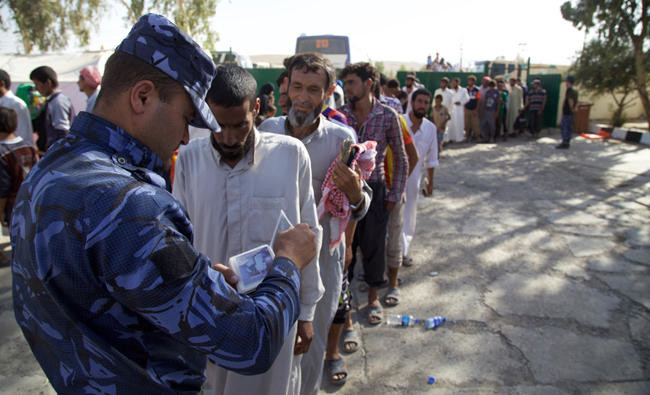
Tal Afar residents who fled are back to battle Daesh
Tal Afar residents who fled are back to battle Daesh


Latest updates


© 2026 SAUDI RESEARCH & PUBLISHING COMPANY, All Rights Reserved And subject to Terms of Use Agreement.