SANAA: A Yemeni colonel loyal to former president Ali Abdullah Saleh and two Houthi rebels have been killed in Sanaa, in an unprecedented escalation of violence between the allies with Saleh’s party warning it could push the capital into all-out war.
An anti-government alliance between Saleh and rebel leader Abdul Malik Al-Houthi has crumbled over the past week, with the two accusing each other of treason and back-stabbing.
Witnesses in Sanaa, which Saleh and Houthi jointly control, said the ex-president’s forces had spread in southern parts of the capital near the presidential offices, which Saleh still holds despite resigning in 2012.
They said the forces had deployed in Sabaeen Square and the district of Hadda.
Saleh’s General People’s Congress party said in a statement on Sunday that “remaining silent on the incident would open the door to strife that would be difficult to contain.”
Col. Khaled Al-Rida, the deputy head of foreign relations in the GPC, was killed in the clashes between supporters of Saleh and Abdul Malik Al-Houthi late Saturday, the statement said.
A source within the GPC said the clashes erupted at a Houthi rebel checkpoint in Hadda after a dispute between fighters manning the checkpoint and armed supporters of Saleh who were driving by.
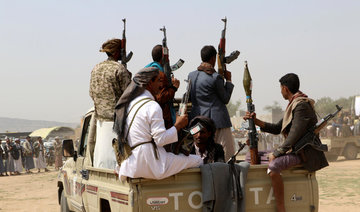
The rebel-run Saba news agency said two members of the Popular Committees, a tribal alliance largely dominated by the Houthis, were also killed.
Saleh and Houthi joined ranks in 2014 in a shock alliance that drove the internationally recognized government out of Sanaa and into the southern province of Aden.
From its inception, analysts have viewed the alliance as a tactical move by both sides, with rebels exploiting Saleh’s political power and the former president benefitting from the Houthi’s guns on the ground.
War of words
But in the past week, a war of words between Saleh and Houthi erupted with Saleh suggesting that his allies were merely “a militia,” and the rebels calling him a “back-stabber” and “traitor” who would “bear the consequences” of his insult.
The most recent clashes have added fuel to the fire, with the GPC statement accusing a “group that knows no morality or oaths” of being behind the colonel’s killing — a thinly veiled reference to the Houthis.
The Houthis reportedly suspect Saleh has been negotiating with a Saudi-led military coalition that supports the Aden-based government.
Saleh, meanwhile, is said to be displeased with the Houthis’ newfound power in the capital, where they run a number of key offices.
The Saudi-led coalition entered Yemen’s war in March 2015 in support of President Abedrabbo Mansour Hadi’s government against the Iran-backed rebels and Saleh.
The war has since pushed the country to the brink of famine, and killed more than 8,400 civilians — including in coalition air strikes.
On Sunday UN Secretary General Antonio Guterres urged warring parties in Yemen to allow humanitarian aid into the country, namely by re-opening the international airport in Sanaa and Hodeida port.
The coalition supporting the Hadi government imposed an air and sea blockade on all rebel-held territory in March 2015 and tightened it in August last year saying it was the only way to stop weapons smuggling.
Hodeida, a port on the Red Sea, is a key entry point for aid also in rebel-held territory.
The coalition on Saturday claimed responsibility for an air strike in the Yemeni capital that killed 14 civilians the previous day, which it called a “technical mistake.”
On Friday, the United Nations human rights office said air raids by the coalition had killed 42 civilians in Yemen in the past week, with multiple children among the dead.
The country also faces a deadly cholera outbreak that has claimed nearly 2,000 lives and affected more than half a million people since late April.