DUBAI: Moody’s Investors Service has upgraded Dubai Islamic Bank’s (DIB) local and foreign currency long-term issuer ratings to A3 from Baa1 changed its outlook for the bank has been changed to stable from positive.
The ratings agency also upgraded the bank’s baseline credit assessment (BCA), adjusted BCA as well as the long and short-term counterparty risk assessment.
The primary driver for the BCA upgrade is the bank’s significant improvement in its asset quality and provisioning coverage, despite challenges in the operating environment owing to low oil prices, Moody’s said.
“The upgrade also captures DIB’s improving profitability in recent years, with return on assets (ROA) improving to 2.0 percent for 2016 (stable during the first six months of 2017), up from 1.4 percent for 2013,” Moody’s said. “The improvement is driven by a substantial reduction in the bank’s provisioning charges, which absorbed 17 percent of pre-provision income in the first half of 2017, down from 36 percent in 2013.”
DIB, Dubai’s largest Shariah-compliant lender, said that its net income rose 13.8 percent in the second quarter to Dh1.1 billion compared with Dh929 million in the same period last year. Net financing income rose 18 percent to Dh1.9 billion for the quarter ending July although income from commissions, fees and foreign exchange income fell 7.7 percent over the same period
“Going forward, the rating agency expects that the bank’s net profitability may face modest pressure, due to increased funding costs, but that it will remain above the domestic average and global median.”


Moody’s upgrades Dubai Islamic Bank ratings
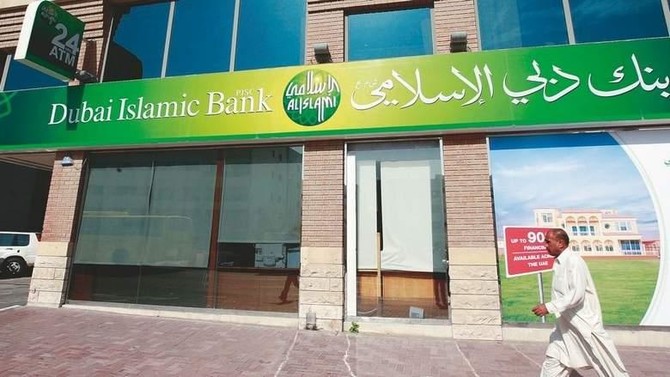
Moody’s upgrades Dubai Islamic Bank ratings

QatarEnergy announces force majeure following Iran attacks: statement
DOHA: Qatar’s state-run energy firm on Wednesday declared force majeure following attacks on two of its main facilities that halted liquefied natural gas production and as Iran pressed missile and drone attacks across the Gulf.
“Further to the announcement by QatarEnergy to stop production of liquefied natural gas and associated products, QatarEnergy has declared Force Majeure to its affected buyers,” the company said in a statement.
QatarEnergy invoked the clause, which shields it from penalties and potential breach of contract claims from clients, after stopping LNG production on Monday.
Iranian drones attacked two of the company’s main production hubs in Ras Laffan Industrial City, 80 km north of Doha and in Mesaieed 40 km south of the Qatari capital, Doha’s ministry of defense said at the time.
The Gulf state is one of the world’s top liquefied natural gas producers, alongside the US, Australia and Russia.
On Tuesday, QatarEnergy said it would halt some downstream production of some products including urea, polymers, methanol, aluminum and others.
Qatar shares the world’s largest natural gas reservoir with Iran.
QatarEnergy estimates the Gulf state’s portion of the reservoir, the North Field, holds about 10 percent of the world’s known natural gas reserves.
In recent years, Qatar has inked a series of long-term LNG deals with France’s Total, Britain’s Shell, India’s Petronet, China’s Sinopec and Italy’s Eni, among others.


