LONDON: Britain’s economy suffered weakness on all fronts in the three months to June, with shoppers pinched by the pound’s tumble, exports failing to fill the gap, and business investment frozen by Brexit uncertainty.
The Office for National Statistics confirmed on Thursday the economy grew 0.3 percent in the second quarter after 0.2 percent in the first — adding up to the slowest growth for any major advanced economy since the start of 2017.
The data showed negligible growth in household spending and flat business investment.
A separate report suggested the malaise will continue. The Confederation of British Industry said retail sales growth slowed in August at the fastest pace in more than a year.
Last year Britain surprised most economists by continuing to grow strongly during the six months after the June vote to leave the European Union.
The growth was powered by robust consumer spending, despite a fall of around 15 percent in the value of the pound after the financial markets downgraded Britain’s long-run prospects following the Brexit vote.
But Thursday’s figures showed household spending is flagging with the weakest quarterly and annual growth since late 2014. Investment and foreign trade failed to compensate, despite a weaker currency and strong global economy.
“Sterling’s depreciation is doing more harm than good,” Samuel Tombs of consultancy Pantheon Macroeconomics said.
Consumer price inflation rose to a four-year high of 2.9 percent in May off the back of the weaker pound, and real-term growth in household spending slid to a quarterly rate of just 0.1 percent in the three months to June, the ONS said.
Flat year-on-year business investment undershot economists’ expectations for a modest 0.5 percent rise, while net trade contributed nothing to quarterly growth and acted as a 0.5 percent drag on Britain’s annual performance.
“The most recent three months growth has been almost entirely reliant on spending by households and government ... which doesn’t feel like the most stable of foundations for a post-Brexit economy,” said Lee Hopley, chief economist for manufacturing trade body EEF.
Barclays said the data was “highlighting just how much businesses are holding back investment in the face of high levels of uncertainty.”
Britain started formal talks to leave the EU in June, but businesses have complained that progress appears slow in light of the fixed deadline to leave in March 2019.
EU negotiators want agreement on membership dues, existing EU immigrants’ rights and Britain’s land border with Ireland before starting more substantive talks on future trade arrangements later this year.


![]()
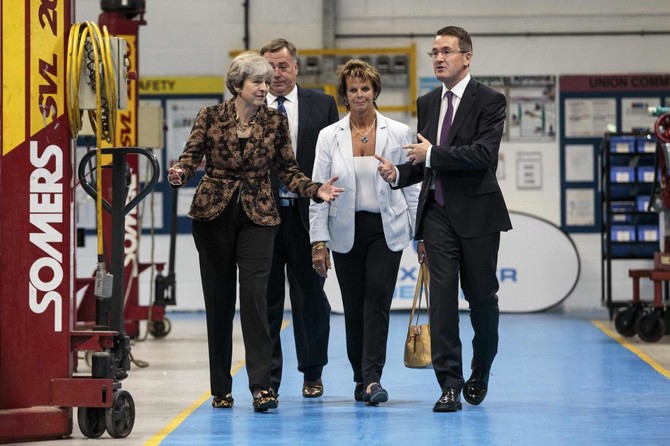
Brexit fears slow British growth, hit consumers and businesses
Brexit fears slow British growth, hit consumers and businesses
Latest updates


Recommended


© 2026 SAUDI RESEARCH & PUBLISHING COMPANY, All Rights Reserved And subject to Terms of Use Agreement.