NEW DELHI: “When I woke up this morning I was very happy and was feeling quite nice that I have won the battle and found liberation for many women.”
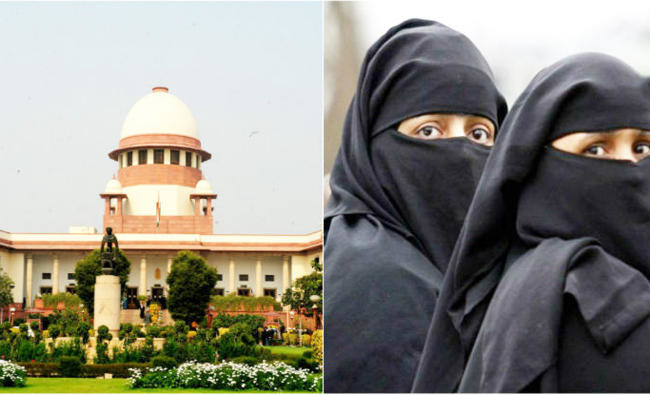
Those are the words Shayara Banu used to describe how she felt a day after winning a landmark legal battle in the Indian Supreme Court against instant divorce in Islamic law.
Talking to Arab News, Banu said: “I feel happy that I have become a catalyst for change in the life of women in Muslim community.”
The 35-year-old was the victim of an abusive marriage for 13 years, before being thrown out of her home when her husband issued divorce papers in 2015.
She appealed to the Supreme Court in a bid to challenge the instant divorce, or triple talaq as it is known. Her personal battle soon galvanized many women groups across India and they became co-petitioners in the case.
“The pain I got in the form of triple talaq, I don’t want other women to go through,” Banu said.
“I am really happy that Muslim women will feel liberated and they don’t have to live under the fear of the sword of triple talaq hanging by their neck all the time.”
Her stance is one that has received support from many other Muslim women across India.
“I think it is an important verdict which many Muslim women have been long fighting for,” says Zeba Khair, a Delhi based lawyer, told Arab News.
“It is a victory for Muslim community in India. Though it affects women more, there are a lot of Muslim men who regret after uttering talaq and then it is impossible for them to get their wife back.
“So I think it is in the general welfare of the minority community.”
Some Muslim organizations and individuals, however, look at the issue in a different way.
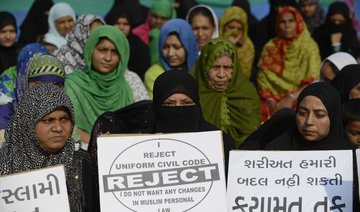
Though they welcome the judgment and condemn the practice of triple talaq, they are worried that this might open the door for the Hindu right-wing government to interfere in the Islamic law.
The All India Ulema and Mashaikh Board, a representative body of Sunni Muslims, said: “We respect the judgment and respect democracy but cannot accept interference in our religious freedom given to us by the constitution.”
That view was echoed by Zafarul Islam Khan, editor and publisher of The Milli Gazette, the first English newspaper for Indian Muslims, who said: “There should be no intervention from the government, judiciary or Parliament in the personal law of Muslims otherwise it will open the Pandora’s box and they will start interfering in everything.”
Such views were likely not helped by the reaction of the Hindu right-wing party, Bharatiya Janata Party (BJP) to the ruling.
The verdict was lauded not only by Prime Minister Narendra Modi but also several senior ministers in his government.
Modi tweeted that the verdict was “historic” and “grants equality to Muslim women and is a powerful measure for women empowerment.”
Zafaryab Jilani, a member of the All India Muslim Personal Law Board (AIMPLB) said that if you look at the verdict objectively you will find “the BJP stands defeated.”
Talking to Arab News Jilani, who was one of the lawyers representing the AIMPLB in the court, said: ”Contrary to popular perception the court says that personal law is a part of the fundamental rights and it cannot be interfered with by the government.
“The BJP is spreading lies with the help of media to divert attention from the real issues facing the nation.”
Meanwhile the hero of the hour, Banu, said the decision has given her personal strength to move on in life. She is diligently revising for upcoming MBA exams, and said: “I want to be independent and I want to get a job!”


![]()
India’s banning of instant divorce brings both liberation and worry
India’s banning of instant divorce brings both liberation and worry

Latest updates


Recommended


© 2026 SAUDI RESEARCH & PUBLISHING COMPANY, All Rights Reserved And subject to Terms of Use Agreement.