JOHANNESBURG: South Africa’s competition watchdog has launched an investigation into the high cost of Internet data, the regulator said on Friday, after a groundswell of complaints from consumers and civil society.
The Competition Commission said in a statement it had already published terms of reference for the inquiry and that it would complete its investigation by August 2018.
The regulator said it believed there were features in the market that “prevent, distort or restrict competition”, leading to excessive prices.
A 2016 World Bank report found that South Africans paid around $14.10 (SR52.87) for one gigabyte of data, the fourth highest out of 17 African countries, compared to lowest-rated Cameroon, where the same bundle cost around $2.10.
In September last year a local radio personality presented a case for lower data prices to a parliamentary committee after a popular online campaign dubbed #datamustfall.
“The inquiry has been initiated in response to a request by Economic Development Minister, Ebrahim Patel, who also has expressed concerns over high data costs,” the regulator said.
Five main firms dominate South Africa’s wireless broadband market, including MTN and Vodacom, which control about 70 percent of the market, along with partially state-owned Telkom.
Analysts say the small pool of service providers, combined with slow implementation of policy by government and insufficient infrastructure have hampered competition.


![]()
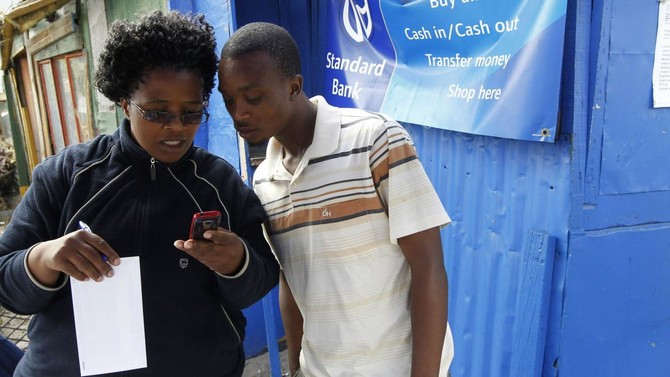
South Africa’s competition watchdog probes high data costs
South Africa’s competition watchdog probes high data costs


Latest updates


© 2026 SAUDI RESEARCH & PUBLISHING COMPANY, All Rights Reserved And subject to Terms of Use Agreement.