WASHINGTON: President Donald Trump appeared Thursday to endorse the idea of mass executions for Islamist extremists, as he alluded to a widely debunked account of summary punishment by a US general in the Philippines in the early 1900s.
It was another provocative tweet from an increasingly isolated leader who uses Twitter to take shots at perceived opponents — and even announce big policy changes.
Thursday’s tweet also suggested Trump actually believes a story that many historians say is apocryphal.
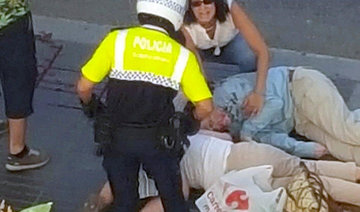
Trump first sent out a tweet offering aid to Spain after Thursday’s van attack in Barcelona that left at least 13 dead and more than 50 wounded.
About an hour later, Trump tweeted: “Study what General Pershing of the United States did to terrorists when caught. There was no more Radical Islamic Terror for 35 years!“
He was referring to General John “Black Jack” Pershing who was the US governor of largely Muslim Moro province from 1909 to 1913.
At the time, the Philippines was a US colony. And Pershing’s forces had to fight Muslim counterinsurgencies.
The debunked account — which Trump has referred to in the past — is as follows: Pershing’s forces rounded up 50 Muslim insurgents and executed 49 of them with bullets dipped in pig’s blood — considered by Muslims to be unholy.
“You heard that, right?” Trump said as a candidate during a rally in February 2016 in South Carolina, alluding to the pig blood part.
“They were having terrorism problems, just like we do,” Trump said.
As the story goes, the 50th prisoner was released to tell his fellow fighters about what the Americans had done.
“And for 25 years, there wasn’t a problem. Okay? Twenty-five years, there wasn’t a problem,” Trump said.
Historians have expressed skepticism or outright denial that this event took place.
According to the fact checking website Politifact, the late military historian Frank Vandiver said in 2003, referring to Pershing: “I never found any indication that it was true in extensive research on his Moro experiences. This kind of thing would have run completely against his character.”
Politifact quoted four historians who denied the account.
Trump endorsed waterboarding — widely held now to be a torture technique, used during the George W. Bush administration in its war on terror and halted by Barack Obama — during the presidential campaign.
Once in office, however, after US generals advised him against reverting to waterboarding, with some saying torture simply did not work as a way to extract information, Trump said he would yield to them.
And he stopped making public endorsements of the technique.

Trump again cites dubious Muslim execution story after Spain attack
’Illegal gold miners’ run residents out of South African settlement
RANDFONTEIN: On crutches and with a bullet lodged in his leg, Miami Chauke is among the few people who did not flee the gun attacks that emptied South Africa’s once-bustling settlement of Sporong, where abandoned tin shacks bake in the sun.
Hundreds of other residents of the area just west of Johannesburg fled two weeks ago, terrorized by violence, extortion and threats they blame on increasingly brazen illegal gold miners.
Taking refuge in a community hall 11 kilometers (seven miles) from their homes, the displaced people of Sporong are among several communities living in fear of the several thousand illegal miners estimated to be operating in South Africa.
“They all had guns and we were running but they kept shooting,” 32-year-old Chauke told AFP of the battle one November night that left a bullet in his left leg.
“I am still in pain. I can’t walk even for 200 meters,” he said.
His plastered leg also prevents him from getting in a car to reach the others, who include his wife and three-year-old daughter.
“We don’t have money but they still shoot at us. They just take even the little that we have,” Chauke said.
Sporong is an informal settlement about 50 kilometers from Johannesburg, South Africa’s economic capital that was built on a gold rush 140 years ago.
The illegal miners — known as “zama zamas” — are after the riches that lie in the ground beneath their humble homes, said Julian Mameng, one of the residents who opted to leave.
“The zamas zamas say our place is rich in gold, we are staying on top of money, and that is why they are killing us, using the gun to scare us away,” the 49-year-old told AFP in the community hall, where families share a cramped space.
In one incident, at least seven people were shot in a bar, he said.
- Terrorizing communities -
The clandestine artisanal miners, many from neighboring countries, have become an entrenched presence in the shantytowns that ring Johannesburg and its satellite settlements along the gold reef.
Driven by poverty and unemployment, the zama zamas — which means “those who try” in the Zulu language — descend deep into still gold-bearing shafts abandoned by mining companies or dig out new ones.
The sector has been linked to organized crime, assassinations, extortion and other illegal activities, leading the government to launch a nationwide crackdown in December 2023.
More than 30,000 people have been arrested and over 4,000 illegal firearms seized, police said last month.
In December, nine people were killed when gunmen opened fire in a tavern in the same municipality as Sporong, an attack that was reportedly linked to a running turf war over abandoned gold mine shafts.
“That place is not good,” said Maria Modikwa, 60;
She escaped with her family of six, including a 10?month?old grandchild, carrying little more than two blankets and clothes to last a few days.
“They shot at us every day, terrorized us, always demanded money, took our phones and bank cards,” she told AFP at the Randfontein hall.
Most of the people sheltering there sleep on the floor, with thin mattresses for the lucky few.
Plastic sheets black out the windows. Food, donated by well?wishers, is cooked on a single gas stove.
Police said on Thursday they would step up operations to flush out illegal miners at Sporong, including deploying two armored trucks.
Local leaders have called for the army to be sent in.
But the promises are little reassurance for Modikwa, who says she will only consider returning if an officer is posted to “protect me day and night.”
Hundreds of other residents of the area just west of Johannesburg fled two weeks ago, terrorized by violence, extortion and threats they blame on increasingly brazen illegal gold miners.
Taking refuge in a community hall 11 kilometers (seven miles) from their homes, the displaced people of Sporong are among several communities living in fear of the several thousand illegal miners estimated to be operating in South Africa.
“They all had guns and we were running but they kept shooting,” 32-year-old Chauke told AFP of the battle one November night that left a bullet in his left leg.
“I am still in pain. I can’t walk even for 200 meters,” he said.
His plastered leg also prevents him from getting in a car to reach the others, who include his wife and three-year-old daughter.
“We don’t have money but they still shoot at us. They just take even the little that we have,” Chauke said.
Sporong is an informal settlement about 50 kilometers from Johannesburg, South Africa’s economic capital that was built on a gold rush 140 years ago.
The illegal miners — known as “zama zamas” — are after the riches that lie in the ground beneath their humble homes, said Julian Mameng, one of the residents who opted to leave.
“The zamas zamas say our place is rich in gold, we are staying on top of money, and that is why they are killing us, using the gun to scare us away,” the 49-year-old told AFP in the community hall, where families share a cramped space.
In one incident, at least seven people were shot in a bar, he said.
- Terrorizing communities -
The clandestine artisanal miners, many from neighboring countries, have become an entrenched presence in the shantytowns that ring Johannesburg and its satellite settlements along the gold reef.
Driven by poverty and unemployment, the zama zamas — which means “those who try” in the Zulu language — descend deep into still gold-bearing shafts abandoned by mining companies or dig out new ones.
The sector has been linked to organized crime, assassinations, extortion and other illegal activities, leading the government to launch a nationwide crackdown in December 2023.
More than 30,000 people have been arrested and over 4,000 illegal firearms seized, police said last month.
In December, nine people were killed when gunmen opened fire in a tavern in the same municipality as Sporong, an attack that was reportedly linked to a running turf war over abandoned gold mine shafts.
“That place is not good,” said Maria Modikwa, 60;
She escaped with her family of six, including a 10?month?old grandchild, carrying little more than two blankets and clothes to last a few days.
“They shot at us every day, terrorized us, always demanded money, took our phones and bank cards,” she told AFP at the Randfontein hall.
Most of the people sheltering there sleep on the floor, with thin mattresses for the lucky few.
Plastic sheets black out the windows. Food, donated by well?wishers, is cooked on a single gas stove.
Police said on Thursday they would step up operations to flush out illegal miners at Sporong, including deploying two armored trucks.
Local leaders have called for the army to be sent in.
But the promises are little reassurance for Modikwa, who says she will only consider returning if an officer is posted to “protect me day and night.”
© 2026 SAUDI RESEARCH & PUBLISHING COMPANY, All Rights Reserved And subject to Terms of Use Agreement.