32 killed in drugs war's bloodiest day in Philippines

Policemen stand guard near the body of a man killed during what police said was a drug related vigilante killing in Pasig, Metro Manila, Philippines, in this February 1, 2017 photo. (Reuters)
Updated 16 August 2017
Follow

32 killed in drugs war's bloodiest day in Philippines

MANILA: Philippine police killed 32 people in dozens of anti-drug operations in a province north of the capital, Manila, in the single deadliest day of President Rodrigo Duterte’s unrelenting war on drugs.
About 109 petty criminals, including street-level drug peddlers were arrested and dozens of guns seized in police operations across Bulacan province from Monday night until Tuesday afternoon, said provincial police chief, Romeo Caramat.
“We have conducted ‘one-time, big-time’ operations in the past, so far, the number of casualties and deaths, this is the highest,” Caramat told a news conference.
He defended police action and said the deaths were during shootouts, and were not executions, as activists have often alleged.
“There are some sectors that will not believe us, but we are open for any investigation. All we can say is that we don’t have any control of the situation. As much as possible, we don’t want this bloody encounter.”
Thousands of people have been killed in the anti-drugs campaign, Duterte’s signature policy, since it was launched on June 30 last year, most users and small-time dealers from poor neighborhoods.
The intensity of the crackdown has alarmed the international community, and activists and human rights groups say police have been executing suspects and planting drugs and guns at crime scenes. Police and the government officials reject that.
Police also deny involvement in thousands of murders by mysterious gunmen, blaming them on gang turf wars, drug dealers silencing informants, or vigilantes targeting drug users.
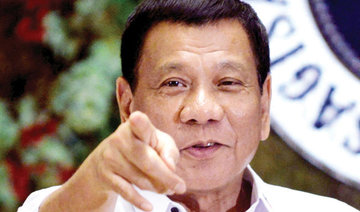
“There were 32 killed in Bulacan in a massive raid, that’s good,” Duterte said in a speech.
“Let’s kill another 32 every day. Maybe we can reduce what ails this country.”
Police conducted 49 sting drug operations in Bulacan that resulted in about 20 armed encounters, Caramat said. Ten other gunfights ensued when police tried to serve arrest warrants to suspects who fought back.
He said 93 of those held were wanted for other crimes, as well as drugs offenses.
Bulacan has been a major target in the drugs war, with some 425 people killed and 4,000 offenders arrested, according to Caramat, making it the second-biggest hot spot in the crackdown outside of the Manila area.
Political opponents of Duterte have filed a complaint with the International Criminal Court (ICC) accusing the president and top aides of crimes against humanity, arguing they failed to address allegations of widespread police abuses that have been brought to their attention.
Duterte has welcomed the ICC complaint, and said he was willing to rot in jail to protect Filipinos.
He has often complained about human rights groups criticizing and undermining his campaign and on Wednesday said he would instead investigate them, or worse.
“If they are obstructing justice, shoot them,” he said.


Epstein files reveal links to cash, women, power in Africa

Updated 6 sec ago
Follow

Epstein files reveal links to cash, women, power in Africa

  • Documents attest to Epstein’sclose ties with Karim Wade, son of former Senegalese president Abdoulaye Wade
  • They also reveal his ties to Nina Keita, niece of Ivorian president Alassane Ouattara

PARIS: Jeffrey Epstein built close ties with powerful figures in Senegal and Ivory Coast, files released by the US government last month show, detailing the late sex offender’s influence network across Africa.
Emails, scheduled meetings, investment projects, and loans reviewed by AFP attest to the disgraced New York financier’s close relationship with Karim Wade, son of former Senegalese president Abdoulaye Wade.
They also reveal his ties to Nina Keita, niece of Ivorian president Alassane Ouattara.
Wade and Epstein met in 2010 through Emirati businessman Sultan Ahmed bin Sulayem, who recently resigned as CEO of port giant DP World after mounting pressure over his close friendship with Epstein.
The pair quickly struck up a rapport.
“Thanks for coming. I think there are many things to consider... I feel confident that we will have fun,” Epstein wrote to Wade on November 15, 2010 after their first meeting in Paris.
“Have a safe trip back to your paradise Island,” Wade replied.
While Wade’s exchanges show no link to Epstein-related sex trafficking crimes, they do reveal conversations on potential business ventures in various sectors, such as finance and energy.
Nicknamed the “Minister of Heaven and Earth” for the multiple portfolios he held including international cooperation, energy, and air transport, Wade was a powerful figure in Senegal until April 2012, when his father’s bid for a third term sparked deadly riots.
Epstein saw him as “one of the most important players in africa” and invited him to meet close contacts such as Ehud Barak, then Israel’s defense minister.
He also put him in touch with Chinese businessman Desmond Shum to discuss “offshore banking.”
The US Department of Justice documents show Shum and Wade met in Beijing on May 9, 2011.
That same month, Wade planned an African tour through Senegal, Mali, and Gabon for Epstein.

‘You will not suffer’ 

Epstein and Wade’s relationship became even more apparent after the latter’s fortunes reversed when his father left office in 2012.
That autumn, Epstein proposed that his “friend” — under the Dakar authorities’ scrutiny over his assets — use his house in Florida.
“You and your family are welcome to use my house in palm beach, staff is there, pool etc. you will not suffer,” Epstein wrote.
“Txs a lot Brother for the advise,” Wade replied a few weeks later to another email, in which Epstein urged him to “stay mentally strong.”
Numerous files suggest Epstein became financially involved on Karim Wade’s behalf after his arrest in 2013 and his 2015 sentencing to six years in prison for corruption.
Karim Wade’s lawyer, Mohamed Seydou Diagne, sent two invoices in May 2014 and July 2015 of $500,000 to one of Epstein’s companies.
Contacted by AFP on Monday, Diagne said he “did not consider it useful to comment.”
Other archives suggest that Epstein covered at least $50,000 in fees for the US lobbying firm Nelson Mullins, hired by Wade’s entourage to secure his release.
Epstein regularly exchanged emails with Robert Crowe, a partner at the firm who kept him informed of their efforts in the US and Senegal.
In a June 16, 2016 email thread where Epstein and Crowe discussed whether then Senegalese president Macky Sall would pardon Wade, Crowe writes: “He has told my friends high up at State that he was going to do it. They have been putting pressure on him!“
Karim Wade was released from prison eight days later, on June 24, and went into exile in Qatar, which he credited for efforts toward his release.
Jeffrey Epstein was told by Sultan Ahmed bin Sulayem and Nina Keita.

‘A very interesting person!’

The DOJ documents show Nina Keita was close to both Epstein and Karim Wade and that she acted as a regular intermediary while Wade was in prison.
Keita also helped put Epstein in contact with her uncle, president of Ivory Coast since May 2011, and his team.
“He thought you were a very interesting person! ... they were all very happy to have you here,” she wrote on January 20, 2012, after the financier’s visit to Abidjan.
She had booked him the “ministerial suite” of the luxury Hotel Ivoire for that trip.
Ahead of the visit, Epstein had said he hoped to see “very pretty girls there, as well as interesting places.”
“You will!” Keita replied.
Emails show Keita, a former model, at least once sent photos and the phone number of a young woman to Epstein.
He then met this woman at the Ritz hotel in Paris on August 31, 2011.
“ask sadia to send pictures of her sister. i prefer under 25,” Epstein wrote to Keita after the meeting.
Now the deputy general director of Ivorian petroleum stocks company GESTOCI, Keita also appears in a February 2019 will in which Epstein requested that debts owed to him by a number of people be canceled upon his death.
AFP received no response to its requests for comment from both Keita and the Ivorian presidency, or from Karim Wade, who was contacted through his entourage.
The mere mention of a person’s name in the Epstein files does not in itself imply wrongdoing.