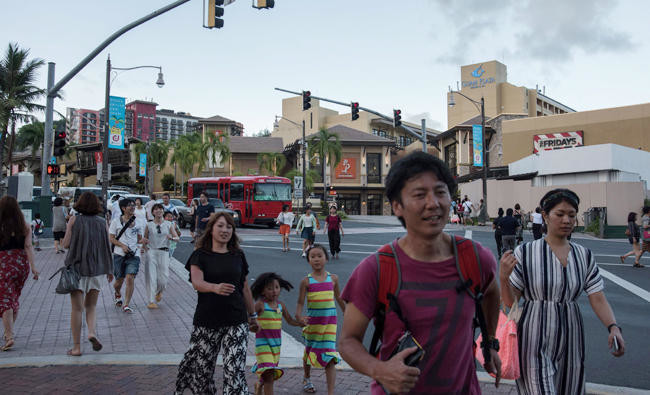
HAGATNA, Guam: Residents in Guam received a nasty jolt Tuesday after two radio stations accidentally issued emergency warnings to indicate an imminent threat or attack, at a time when the US territory is already on edge over North Korean threats to fire missiles into nearby waters.
Several concerned listeners were reported to have called police after the stations triggered the Emergency Alert Broadcast System, issuing “a civil danger” warning at 12:25 a.m. that was later confirmed to be a mistake.
North Korea had said it would finalize plans by mid-August on whether to fire missiles at Guam in response to “fire and fury” threats from US President Donald Trump.
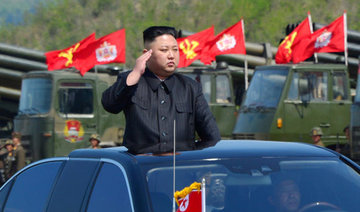
But Pyongyang’s official Korean Central News Agency (KCNA) on Tuesday reported that Kim had examined the plans, but made no move toward an immediate strike.
“Residents and visitors are reminded to remain calm,” said Guam’s Homeland Security Adviser George Charfauros.
“There is no change in threat level, we continue business as usual.”
Homeland Security confirmed in a statement that the “unauthorized test was not connected to any emergency, threat or warning” and it was working with the radio stations “to ensure the human error will not occur again.”
Kim on Tuesday hinted he would hold off on the missile strike, saying he would “watch a little more the foolish and stupid conduct of the Yankees spending a hard time of every minute of their miserable lot.”

Guam radio stations trigger emergency alert, accidentally
Bangladesh’s religio-political party open to unity govt
- Opinion polls suggest that Jamaat-e-Islami will finish a close second to the Bangladesh Nationalist Party in the first election it has contested in nearly 17 years
DHAKA: A once-banned Bangladeshi religio-political party, poised for its strongest electoral showing in February’s parliamentary vote, is open to joining a unity government and has held talks with several parties, its chief said.
Opinion polls suggest that Jamaat-e-Islami will finish a close second to the Bangladesh Nationalist Party in the first election it has contested in nearly 17 years as it marks a return to mainstream politics in the predominantly Muslim nation of 175 million.
Jamaat last held power between 2001 and 2006 as a junior coalition partner with the BNP and is open to working with it again.
“We want to see a stable nation for at least five years. If the parties come together, we’ll run the government together,” Jamaat chief Shafiqur Rahman said in an interview at his office in a residential area in Dhaka, days after the party created a buzz by securing a tie-up with a Gen-Z party.
Rahman said anti-corruption must be a shared agenda for any unity government.
The prime minister will come from the party winning the most seats in the Feb. 12 election, he added. If Jamaat wins the most seats, the party will decide whether he himself would be a candidate, Rahman said.
The party’s resurgence follows the ousting of long-time Prime Minister Sheikh Hasina in a youth-led uprising in August 2024.
Rahman said Hasina’s continued stay in India after fleeing Dhaka was a concern, as ties between the two countries have hit their lowest point in decades since her downfall.
Asked about Jamaat’s historical closeness to Pakistan, Rahman said: “We maintain relations in a balanced way with all.”
He said any government that includes Jamaat would “not feel comfortable” with President Mohammed Shahabuddin, who was elected unopposed with the Awami League’s backing in 2023.