Guam residents pray for peace amid North Korea missile threat

A group of people sit and pray under the tree for peace at Plaza de Espana, in Hagatna, Guam Sunday, Aug. 13, 2017. Residents of the U.S. Pacific island territory face a missile threat from North Korea.(AP)
Updated 13 August 2017
Follow

Guam residents pray for peace amid North Korea missile threat

HAGATNA, GUAM: The Catholic faithful in Guam led prayers for peace Sunday in the shadow of North Korean missile threat, with the western Pacific island’s archbishop appealing for “prudence” amid an escalating war of words between the US and Pyongyang.
The largely Catholic territory should pray for a “just resolution of differences, and prudence in both speech and action,” said Archbishop Michael Byrnes, echoing a flurry of international calls for US President Donald Trump to show greater rhetorical restraint.
A “prayers for peace” lunchtime rally in the capital Hagatna drew around 100 people. But despite Guam having become the center of a threatened showdown between the US and nuclear-armed North Korea, many said they were unfazed.
“I am really not scared because if it’s our time to die it is our time to die,” added Sita Manjaras, 62, a retired teacher from Tamuning.
Father Mike Crisostomo said their response to the threat was to have faith and pray.
“This goes to show to the other worlds, to the other nations and the countries, that Guam maybe small, our faith and our trust is big,” he said.
Dora Salazar, 82, who made the 14 kilometer (nine mile) journey from the village of Mangilao for the peace rally, said she was praying for the North’s leader Kim Jong-Un.
“We pray that God will touch his heart,” she said.
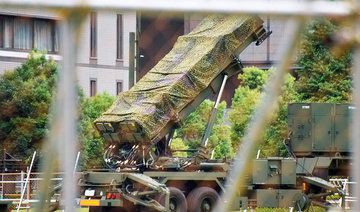
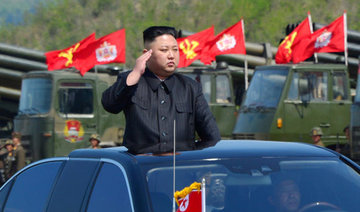
In response to Trump’s threat of “fire and fury,” North Korea has pledged to have plans ready in a matter of days to launch an “enveloping fire” of missiles toward Guam.
At the island’s main church, the Dulce Nombre de Maria Cathedral-Basilica, Father Paul Gofigan told the congregation to be prepared in case North Korea does launch its missiles.
“What would you do if you have only 14 minutes left? The thing to do is pray and reflect,” he said
“Prioritise your life. This is a wake-up call, no matter what happens.”
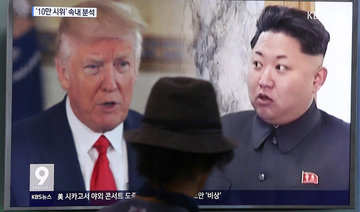
Trump has been engaged all week in verbal sparring with the North over its weapons and missile programs, declaring Friday that the US military is “locked and loaded.”
He has told Guam Governor Eddie Calvo that US military was prepared to “ensure the safety and security of the people of Guam.”
While 85 percent of Guam’s 162,000 residents are Catholic, with temperatures hovering around 31 degrees Celsius (88 Fahrenheit) many locals and tourists preferred to head to the beach rather than church.
“No one feels threatened. Should we? Definitely not,” said Australian tourist Kirstie Bridgement.
“Guam is the most protected island. We feel safer than ever.”
The island houses two large US military bases and is home to more than 6,000 US military personnel.
American tourist Bryan Sanchez said it was difficult to understand the threat “especially with the way culture is like with memes, anything is going to be turned into a joke.
“People just aren’t, I guess, as aggressive or too worried about that kind of stuff in our day and age.”
Meanwhile, two community groups opposed to the presence of the US military in Guam, Independent Guahan and Prutehi Litekyan, have organized a “People for Peace” rally in Hagatna on Monday.
“What’s happening in Guam is a global issue, because if our island is attacked, it could be the catalyst for a global catastrophe,” Kenneth Gofigan Kuper of the Independent Guahan movement said.
The rally organizers said in a statement that “Guam has been forced in the middle of other nations’ conflicts, particularly as an unincorporated territory of the United States.
“As a result, many of Guam’s people know the painful and horrific effects of war as World II survivors and as veterans.
“Thus, the members of Independent Guahan and Prutehi Litekyan, both organizations dedicated to the decolonization and demilitarization of Guam, feel it is imperative for the community to stand together in a call for peace.”


Russia slams Western peacekeeping plan for Ukraine

Updated 08 January 2026
Follow

Russia slams Western peacekeeping plan for Ukraine

  • “The new militarist declarations of the so-called Coalition of the Willing and the Kyiv regime together form a genuine ‘axis of war’,” Zakharova
  • She called the plans drafted by Kyiv’s allies “dangerous” and “destructive“

MOSCOW: Russia on Thursday slammed a plan for European peacekeepers to be deployed to Ukraine as “dangerous” and dubbed Kyiv and its allies an “axis of war,” dousing hopes the plan could be a step toward ending the almost four-year-war.
US President Donald Trump has been pushing the warring sides to strike a deal to halt the conflict, running shuttle diplomacy between Ukraine’s Volodymyr Zelensky and Russia’s Vladimir Putin in a bid to get an agreement across the line.
An initial 28-point plan which largely adhered to Moscow’s demands was criticized by Kyiv and Europe, and now Russia has slammed the attempts to beef-up protections for Ukraine should an elusive deal be reached.
Ukraine’s allies said they had agreed key security guarantees for Kyiv at a summit in Paris earlier this week, including a peacekeeping force.
But in its first comments since the summit, Moscow said the statements were far away from anything the Kremlin could accept to end its assault.
“The new militarist declarations of the so-called Coalition of the Willing and the Kyiv regime together form a genuine ‘axis of war’,” Russia’s foreign ministry spokeswoman Maria Zakharova said in a statement.
She called the plans drafted by Kyiv’s allies “dangerous” and “destructive.”
The remarks come as Russian strikes plunged hundreds of thousands in Ukraine into darkness, leaving families without heat in below-freezing temperatures — attacks that Zelensky said showed Russia was still set on war.

- ‘Legitimate military targets’ -

European leaders and US envoys announced earlier this week that post-war guarantees for Ukraine would include a US-led monitoring mechanism and a European multinational force to be deployed when the fighting stops.
But Moscow has repeatedly warned that it would not accept any NATO members sending peacekeeping troops to Ukraine.
“All such units and facilities will be considered legitimate military targets for the Russian Armed Forces,” Zakharova said Thursday, repeating a threat previously uttered by Putin.
Zelensky also said Thursday that a bilateral agreement between Kyiv and Washington for US security guarantees was “essentially ready for finalization at the highest level with the President of the United States” following talks between envoys in Paris this week.
Kyiv says legally-binding assurances that its allies would come to its defense are essential to convince Russia not to re-attack if a ceasefire is reached.
But specific details on the guarantees, the European force, and how it would engage have not been made public.
Zelensky said earlier this week he was yet to receive an “unequivocal” answer of what they would do if Russia does attack again after a deal.
Zelensky has also said that the most difficult questions in any settlement — territorial control of the eastern Donbas region and the fate of the Russian-occupied Zaporizhzhia nuclear power plant — were still unresolved.

- Russian strikes cut heating -

Ukraine was meanwhile scrambling to restore heating and water to hundreds of thousands of households after a new barrage targeted energy facilities in its Dnipropetrovsk and Zaporizhzhia regions.
“This is truly a national level emergency,” Borys Filatov, mayor of Dnipropetrovsk’s capital Dnipro, said on Telegram.
He announced power was “gradually returning to the hospitals” after the blackouts forced them to run on generators. The city authorities also extended school holidays for children.
About 600,000 households in the region remained cut off from power in Dnipropetrovsk, Ukrainian energy company DTEK said.
In a post on social media, Zelensky said the attacks “clearly don’t indicate that Moscow is reconsidering its priorities.”
In addition to the unrelenting pummelling of Dnipropetrovsk, Russia pressed on with its ground assault on the region, claiming to have taken another village there.
It is not one of the five Ukrainian regions that Moscow claims to have annexed.