Egypt’s bikini vs. burkini battle heats up

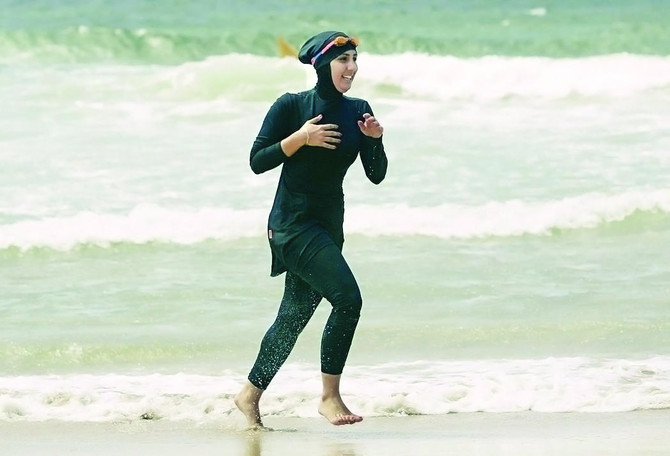
In Egypt, swimming in resorts while wearing a burkini is a controversial issue. (File photo)
Updated 16 August 2017
Follow

Egypt’s bikini vs. burkini battle heats up

CAIRO: Summertime is when the debate on whether burkinis are allowed in Egyptian resorts heats up.
In Egypt, where many women don the Islamic headscarf, swimming in privately owned resorts while wearing a full-body swimsuit is a controversial topic.
This summer, the government reversed its decision to allow women in pools and on beaches to wear burkinis, authorizing resorts to decide whether to ban the conservative swimwear.
Tourism Ministry official Ali Ghoneim expressed concern that the debate could have negative implications for the tourism industry.
“Egyptian resorts respect the culture of all its guests as long as it doesn’t harm others,” he told Arab News.
After some hotels began turning away burkini-wearing guests from pools and beaches, the ministry stepped in to allow the swimwear, saying: “Burkinis are allowed as long as they are made of the same material as bikinis.”
But in less than 24 hours it backtracked, saying it is legal for resorts to decide for themselves depending on “the type of tourists they receive,” Al-Masry Al-Youm newspaper reported.
Many hijab-wearing women have expressed anger over the reversal, saying the authorities should be protecting personal freedoms as per the law.
Those against the policy say it violates the constitution, which prohibits discrimination based on sect, gender, religion or belief.
Others believe the issue is about money, not politics. “The power to lift the burkini ban doesn’t lie with the government,” wrote one Facebook user.
“Like everything else in Egypt, it lies in money. Hotels will only lift the burkini ban if you, the customer, refuse to go to their establishment because of their discriminatory rules.”


Israel’s hostage forum releases AI-generated video of last Gaza captive

Updated 23 December 2025
Follow

Israel’s hostage forum releases AI-generated video of last Gaza captive

  • The Gaza ceasefire, which came into effect in October, remains fragile with both sides alleging violations, and mediators fearing that Israel and Hamas alike are stalling

JERUSALEM: An Israeli group representing the families of Gaza hostages released on Tuesday an AI-generated video of Ran Gvili, the last captive whose body is still being held in the Palestinian territory.
The one-minute clip, created whole cloth using artificial intelligence, purports to depict Gvili as he sits in a Gaza tunnel and appeals to US President Donald Trump to help bring his body back to Israel.
“Mr President, I’m asking you to see this through: Please bring me home. My family deserves this. I deserve the right to be buried with honor in the land I fought for,” says the AI-generated image of Gvili.
Gvili was 24 at the time of Hamas’s October 7, 2023 attack on Israel.
He was an officer in Israel’s Yasam elite police unit and was on medical leave when he learnt of the attack.
He decided to leave his home and brought his gun to counter the Hamas militants.
He was shot in the fighting at the Alumim kibbutz before he was taken to Gaza.
Israeli authorities told Gvili’s parents in January 2024 that he had not survived his injuries.
The AI clip was released by the Hostages and Missing Families Forum, the main group representing those taken captive to Gaza.
The Forum said it was published with the approval of Gvili’s family.
“Seeing and hearing Rani speak in his own voice is both moving and heartbreaking. I would give anything to hear, see and hold him again,” Gvili’s mother Talik said, quoted by the Forum.
“But all I can do now is plead that they don’t move to the next phase of the agreement before bringing Rani home — because we don’t leave heroes behind.”
The Gaza ceasefire, which came into effect in October, remains fragile with both sides alleging violations, and mediators fearing that Israel and Hamas alike are stalling.
In the first stage, Palestinian militants were expected to return all of the remaining 48 living and dead hostages held in Gaza.
Since the ceasefire came into effect on October 10, militants have released 47 hostages.
In the next stages of the truce, Israel is supposed to withdraw from its positions in Gaza, an interim authority is to govern the Palestinian territory instead of Hamas, and an international stabilization force is to be deployed.
Israeli Prime Minister Benjamin Netanyahu is expected to meet Trump in Florida later this month to discuss the second phase of the deal.