ISLAMABAD: Pakistan on Monday celebrated 70 years of independence from British India with a patriotic display including a giant flag and a show of airpower, as the military’s top brass vowed to wipe out terrorists hours before a new bomb attack killed six soldiers.
Celebrations began at the stroke of midnight with firework shows in major cities.
At the highly symbolic Wagah eastern border crossing with India, army chief General Qamar Javed Bajwa raised a massive national flag on a 400 foot (122-meter) pole as crowds chanted patriotic slogans.
Following the chest-thumping performance Bajwa said the country was making progress and promised to “go after each and every terrorist in Pakistan.”
“We have made a few mistakes in the past, but we are on the road to development under the guidance of our constitution,” he added.
Later Monday a roadside bomb in restive Balochistan province’s Harnai district killed six paramilitary soldiers and wounded two others, a spokesman for the troops said. The separatist Baluch Liberation Army claimed responsibility in a telephone call to AFP.
The attack came days after a powerful bomb targeted a military vehicle in the provincial capital Quetta late Saturday, killing 14 people including several troops.
The military later said the blast, claimed by the Daesh group, was intended to mar independence day celebrations.
Pakistan also faces fresh political turmoil after the Supreme Court last month sacked Prime Minister Nawaz Sharif following an investigation into corruption allegations against his family.
In Islamabad his newly-elected successor Shahid Khaqan Abbasi, along with top generals and foreign dignitaries, presided over a 31-gun salute and flag-raising ceremony to mark the holiday.
“The independence that we got 70 years ago was the fruit of the exemplary struggle of our ancestors,” said Abbasi in an address to the nation.
“Thousands of Muslims have made sacrifices for our future and the future of our children.”
Further south in Karachi the day began with a changing of the guard at the mausoleum of the country’s founder Mohammad Ali Jinnah, where politicians and military commanders laid floral wreaths.
The skies above the capital were later streaked with multicolored smoke as the air force hosted Pakistan’s largest air show to date.
Fighter jets criss-crossed over the leafy capital in aerobatic maneuvers as thousands packed shoulder-to-shoulder applauded from a park below. Planes from close allies Saudi Arabia and Turkey also took part.
In Lahore students cruised through the eastern city’s streets on motorbikes waving flags and screaming “Long live Pakistan!“
Up north in the Swat valley near the restive border with Afghanistan celebrations were more subdued, with events at schools canceled due to “prevailing law and order” issues.
In nearby Peshawar, the capital of Khyber Pakhtunkhwa province, Christians held special services at a church and freed doves to mark the holiday.
“Four years back my father and brother died in this church in a suicide attack, but I am still here praying for my beloved country,” schoolteacher Neelam Anwar told AFP.
In August 1947 the British Raj was dismantled with the subcontinent divided into two independent states — Hindu-majority India and Muslim-majority Pakistan.
Millions were uprooted in one of the largest mass migrations in history, with experts estimating at least one million died in the communal violence unleashed by partition.
The carnage sowed the seeds of the acrimony that led to three wars, and generations later this defining moment in the subcontinent’s history is still polarized by nationalism and rancour.
The countries still wrangle over a large part of their shared border, especially in disputed Kashmir. They even recognize their independence from British rule on separate days, with Pakistan claiming August 14 and India celebrating the following day.


![]()
![]()
![]()
![]()
![]()
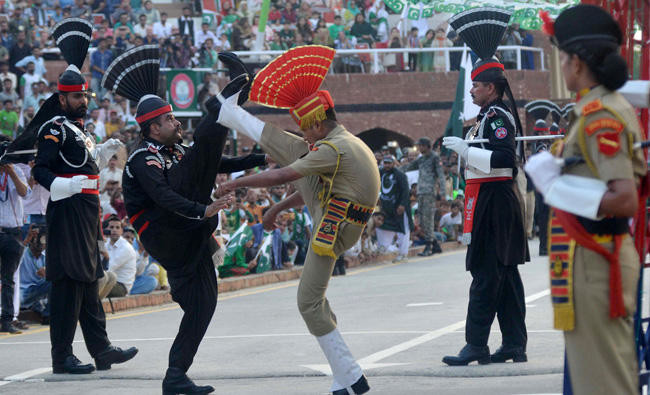

Pakistan marks 70 years of independence with fireworks, air show
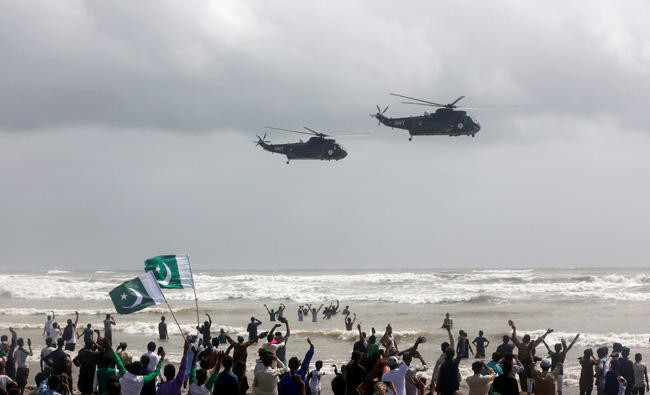

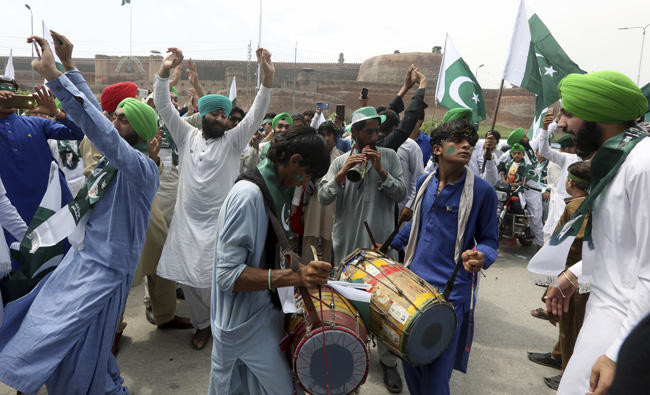
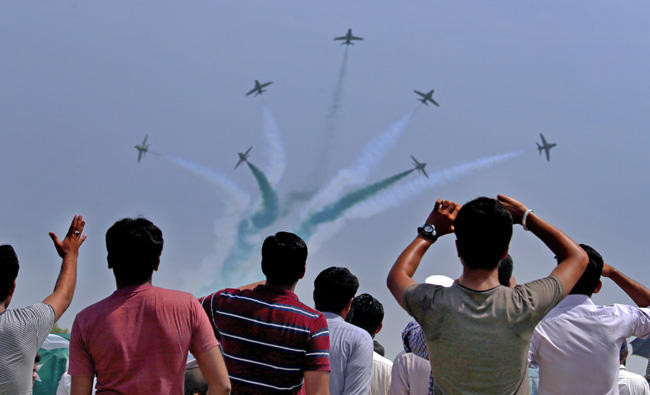
Pakistan marks 70 years of independence with fireworks, air show



Deadly militant offensive sweeps northern and eastern Burkina Faso
- Burkina Faso, ruled by a military junta since September 2022, has faced more than 10 years of raids by groups linked to Al-Qaeda and the Daesh
ABIDJAN: Al-Qaeda-affiliated JNIM has in recent days claimed to have inflicted heavy losses in Burkina Faso as a surge in deadly militant attacks sweeps across the Sahelian state.
Burkina Faso, ruled by a military junta since September 2022, has faced more than 10 years of raids by groups linked to Al-Qaeda and the Daesh, including the Group for the Support of Islam and Muslims (JNIM).
A February UN Security Council report noted that the “pace of JNIM attacks” had slowed in September as fighters were diverted to Mali to back an attempted fuel blockade.
“The group’s efforts in Mali have been the primary focus since early September last year,” said Heni Nsaibia, analyst at conflict monitor ACLED.
But attacks never fully stopped, and JNIM has launched a string of large-scale assaults in northern and eastern Burkina Faso since mid-February, killing dozens, including civilians.
“Since February 14, JNIM has claimed responsibility for 10 attacks across different regions of Burkina Faso,” said Hasret Kargin, an Africa studies researcher at intelligence firm Mintel World.
Deadly assaults
The deadliest incidents targeted Titao’s military base on February 15 in the northwest, where the group says it killed dozens of soldiers.
A separate ambush on the same day left around 50 forestry officers dead in Tandjari in the east.
Around 10 civilians were also killed in Titao, including seven Ghanaian traders.
“This latest round demonstrated a high degree of coordination, given the number of large-scale attacks that occurred between 12 and 22 February,” Nsaibia said.
“Over 130 people” — Burkinabe soldiers, civilian auxiliaries and JNIM fighters — “were killed in this series of battles.”
Kargin noted that JNIM has issued no formal statement explaining the recent uptick after several months of reduced activity.
But militant groups often strike “right before and during” the Muslim holy month of Ramadan, he said, adding current dry-season conditions had helped them on the ground.
‘Smuggling zones’
Recent attacks have gripped the country’s north and east, areas seen as financial hubs for Al-Qaeda’s Sahel branch.
“These are zones with numerous gold sites and key routes that fuel the group’s smuggling activities,” a Burkinabe security analyst said, requesting anonymity.
The north “acts as a bridge” to JNIM’s “main central command” in Mali, Kargin said, while he east — home to a vast nature reserve straddling Niger, Benin and Burkina Faso — allows the group to push into neighboring countries.
The forests, he added, both shield fighters from airstrikes and generate income through illegal timber sales and control of artisanal gold mining.
The Tandjari attack near regional capital Fada N’Gourma highlights JNIM’s growing freedom of movement after having “gained a lot of ground in recent years,” Nsaibia said.
“The question is not the frequency of attacks — they never stopped — but how these groups are able to inflict such heavy losses” when the army claims to be better equipped and better organized, said a Burkinabe political scientist.
The army, which rarely comments on attacks, said in mid-February it now controls 74 percent of national territory, with some “600 villages retaken.”
According to the UN report, JNIM recently appointed a senior leader in eastern Burkina Faso tasked with expanding into Benin, Ivory Coast, Ghana, Niger and Togo.
Burkina Faso, ruled by a military junta since September 2022, has faced more than 10 years of raids by groups linked to Al-Qaeda and the Daesh, including the Group for the Support of Islam and Muslims (JNIM).
A February UN Security Council report noted that the “pace of JNIM attacks” had slowed in September as fighters were diverted to Mali to back an attempted fuel blockade.
“The group’s efforts in Mali have been the primary focus since early September last year,” said Heni Nsaibia, analyst at conflict monitor ACLED.
But attacks never fully stopped, and JNIM has launched a string of large-scale assaults in northern and eastern Burkina Faso since mid-February, killing dozens, including civilians.
“Since February 14, JNIM has claimed responsibility for 10 attacks across different regions of Burkina Faso,” said Hasret Kargin, an Africa studies researcher at intelligence firm Mintel World.
Deadly assaults
The deadliest incidents targeted Titao’s military base on February 15 in the northwest, where the group says it killed dozens of soldiers.
A separate ambush on the same day left around 50 forestry officers dead in Tandjari in the east.
Around 10 civilians were also killed in Titao, including seven Ghanaian traders.
“This latest round demonstrated a high degree of coordination, given the number of large-scale attacks that occurred between 12 and 22 February,” Nsaibia said.
“Over 130 people” — Burkinabe soldiers, civilian auxiliaries and JNIM fighters — “were killed in this series of battles.”
Kargin noted that JNIM has issued no formal statement explaining the recent uptick after several months of reduced activity.
But militant groups often strike “right before and during” the Muslim holy month of Ramadan, he said, adding current dry-season conditions had helped them on the ground.
‘Smuggling zones’
Recent attacks have gripped the country’s north and east, areas seen as financial hubs for Al-Qaeda’s Sahel branch.
“These are zones with numerous gold sites and key routes that fuel the group’s smuggling activities,” a Burkinabe security analyst said, requesting anonymity.
The north “acts as a bridge” to JNIM’s “main central command” in Mali, Kargin said, while he east — home to a vast nature reserve straddling Niger, Benin and Burkina Faso — allows the group to push into neighboring countries.
The forests, he added, both shield fighters from airstrikes and generate income through illegal timber sales and control of artisanal gold mining.
The Tandjari attack near regional capital Fada N’Gourma highlights JNIM’s growing freedom of movement after having “gained a lot of ground in recent years,” Nsaibia said.
“The question is not the frequency of attacks — they never stopped — but how these groups are able to inflict such heavy losses” when the army claims to be better equipped and better organized, said a Burkinabe political scientist.
The army, which rarely comments on attacks, said in mid-February it now controls 74 percent of national territory, with some “600 villages retaken.”
According to the UN report, JNIM recently appointed a senior leader in eastern Burkina Faso tasked with expanding into Benin, Ivory Coast, Ghana, Niger and Togo.
Latest updates


© 2026 SAUDI RESEARCH & PUBLISHING COMPANY, All Rights Reserved And subject to Terms of Use Agreement.