MANILA: Bolstered by new UN sanctions, the United States and North Korea’s neighbors are joining in a fresh attempt to isolate Pyongyang over its nuclear and missile programs, in a global pressure campaign being cheered on by President Donald Trump.
After weeks of US frustration over China’s reluctance to take action, Trump’s strategy of relying on Beijing’s help showed early signs of paying off. The White House praised China’s move to join a unanimous UN Security Council resolution slapping new sanctions that could cut off about one-third of the North’s roughly $3 billion in annual exports.
“China and Russia voted with us. Very big financial impact!” Trump wrote on Twitter in comments echoed by the White House, where officials said the sanctions were just the start of an amped-up bid to squeeze Pyongyang diplomatically and economically.
The sanctions move played out as foreign ministers from across Asia gathered Sunday for a regional summit in the Philippines, where concerns about North Korea were already dominating the agenda.
US Secretary of State Rex Tillerson, in Manila for the summit, planned several meetings with top diplomats from China and other countries central to the debate about how to stop the North’s weapons development. As he sat down with South Korea’s envoy, Tillerson said they planned to discuss next steps to ramp up pressure following the UN sanctions.
“It was a good outcome,” Tillerson said of the Security Council vote. South Korean Foreign Minister Kang Kyung-wha went further, calling it “a very, very good outcome.”
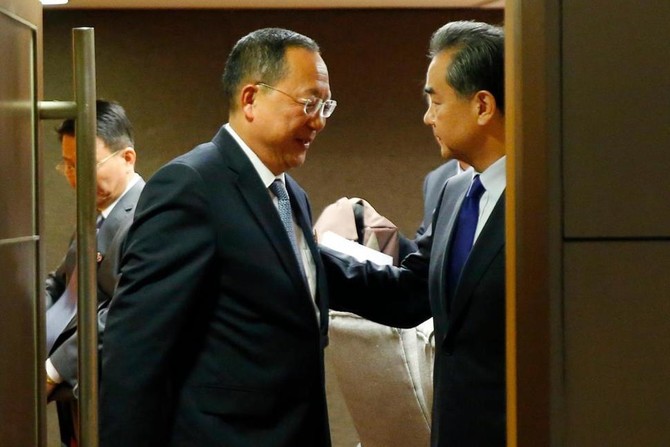
Adding another layer of drama to the diplomatic maneuvering in Manila was the presence of North Korea’s top diplomat, Ri Yong Ho, who planned his own meeting with China’s foreign minister on the summit’s sidelines. The US has been pushing to temporarily expel Pyongyang from the 27-member Association of Southeast Asian Nations Regional Forum, but diplomats gathered here have been split on that proposal.
Ri’s attendance at the summit could create an awkward tension for Tillerson, who has repeatedly emphasized the Trump administration’s willingness to sit down with North Korea for negotiations — but only on the condition it abandon its nuclear aspirations. To that end, the US has insisted it does not seek regime change in North Korea.
Tillerson had no plans to meet with Ri, and it was unclear whether they might cross paths informally during the summit, which includes a gala dinner attended by the foreign ministers. Ahead of Tillerson’s trip, the top American diplomat for Asia said the US was expecting a “general chorus of condemnation of North Korea’s provocative behavior” as well as “pretty serious diplomatic isolation directed at the North Korean foreign minister.”
Despite deeming North Korea a top security threat, the young Trump administration has struggled to find a strategy that differs significantly from what the US has tried in the past. Aside from calling for more sanctions, Trump’s approach has centered on enlisting China — the North’s biggest trading partner — and others to lessen ties to Pyongyang.
Trump’s initial optimism about China’s willingness to help gave way to public exasperation, with Trump saying Chinese President Xi Jinping had “tried” but that it “has not worked out.” Trump’s administration began floating potential plans to punish China for its trade practices in what was widely perceived as a reaction to China’s inaction on North Korea.
But in recent days, the two powers have started to paper over some of those differences. Beijing praised Tillerson for declaring the US wasn’t seeking regime change in North Korea. Trump has held off, for now, on the trade actions. And China’s vote on new UN sanctions helped clear the way for a 15-0 vote targeting exports from the North estimated to be worth more than $1 billion per year.
The US drafted the sanctions resolution and negotiated it with China following a pair of unprecedented ICBM tests by the North in July. The sanctions ban all countries from importing North Korean coal, iron, lead and seafood products, and also prohibit nations from letting in more North Korean laborers whose remittances help fund Kim Jong Un’s regime.
Chinese Foreign Minister Wang Yi on Sunday defended his country’s role in putting pressure on the North. US officials have said recently that upward of 90 percent of North Korean trade is with neighboring China.
“Who has been carrying out the UN Security Council resolutions concerning North Korea? It is China,” Wang said. “Who bore the cost? It is also China.”
Ahead of his meeting with Tillerson, Wang also called for all sides of the conflict to return to negotiations following the UN vote. China has long called for a two-way freeze in which North Korea would halt nuclear development, while the US would stop joint military exercises with South Korea that Pyongyang views as rehearsals for a future invasion.
Yi told reporters at the summit that the North Korean diplomat’s presence in Manila was a positive, enabling him to “hear the voices from other sides.” Speaking in Chinese, Yi also said that Ri, the North’s envoy, “also has the right to share his opinions.”


![]()

US, North Korean neighbors step up campaign of isolation
US, North Korean neighbors step up campaign of isolation
Venezuela to debate historic amnesty bill for political prisoners
- Venezuela could pass a landmark bill on Thursday granting amnesty to political prisoners, marking an early milestone in the transition from the rule of toppled leader Nicolas Maduro
CARACAS:Venezuela could pass a landmark bill on Thursday granting amnesty to political prisoners, marking an early milestone in the transition from the rule of toppled leader Nicolas Maduro.
The legislation, which covers charges used to lock up dissidents under Maduro and his predecessor Hugo Chavez, aims to turn the page on nearly three decades of state repression.
It was spearheaded by interim president Delcy Rodriguez, who replaced Maduro after he was captured by US forces in Caracas last month and flown to New York to face trial.
Rodriguez took Maduro’s place with the consent of US President Donald Trump, provided she does Washington’s bidding on access to Venezuelan oil and expanding democratic freedoms.
She has already started releasing political prisoners ahead of the pending amnesty. More than 400 people have been released so far, according to rights group Foro Penal, but many more are still behind bars.
Rodriguez also ordered the closure of the notorious Helicoide prison in Caracas, which has been denounced as a torture center by the opposition and activists.
Lawmakers voted last week in favor of the amnesty bill in the first of two debates.
The second debate on Thursday coincides with Youth Day in Venezuela, which is traditionally marked by protests.
Students from the Central University of Venezuela, one of the country’s largest schools and home to criticism of Chavismo, called for a rally on campus.
Venezuela’s ruling party also announced a march in the capital Caracas.
’We deserve peace’
Venezuela’s attorney general said Wednesday that the amnesty — which is meant to clear the rap sheets of hundreds of people jailed for challenging the Maduro regime — must apply to both opposition and government figures.
He urged the United States to release Maduro and his wife, both in detention in New York.
“We deserve peace, and everything should be debated through dialogue,” Attorney General Tarek William Saab told AFP in an interview.
Delcy Rodriguez’s brother Jorge Rodriguez, who presides over the National Assembly, said last week that the law’s approval would trigger the release of all political prisoners.
“Once this law is approved, they will all be released the very same day,” he told prisoners’ families outside the notorious Zona 7 detention center in Caracas.
’We are all afraid’
Venezuelan opposition leader Juan Pablo Guanipa was one of the detainees granted early release.
But he was re-arrested less than 12 hours later and put under house arrest.
Authorities accused him of violating his parole after calling for elections during a visit to Helicoide prison, where he joined a demonstration with the families of political prisoners.
Guanipa is a close ally of Nobel Peace Prize laureate and opposition leader Maria Corina Machado, who was in hiding for over a year before she fled the country to travel to Oslo to receive the award.
“We are all afraid, but we have to keep fighting so we can speak and live in peace,” Guanipa’s son told reporters outside his home in Maracaibo.
The legislation, which covers charges used to lock up dissidents under Maduro and his predecessor Hugo Chavez, aims to turn the page on nearly three decades of state repression.
It was spearheaded by interim president Delcy Rodriguez, who replaced Maduro after he was captured by US forces in Caracas last month and flown to New York to face trial.
Rodriguez took Maduro’s place with the consent of US President Donald Trump, provided she does Washington’s bidding on access to Venezuelan oil and expanding democratic freedoms.
She has already started releasing political prisoners ahead of the pending amnesty. More than 400 people have been released so far, according to rights group Foro Penal, but many more are still behind bars.
Rodriguez also ordered the closure of the notorious Helicoide prison in Caracas, which has been denounced as a torture center by the opposition and activists.
Lawmakers voted last week in favor of the amnesty bill in the first of two debates.
The second debate on Thursday coincides with Youth Day in Venezuela, which is traditionally marked by protests.
Students from the Central University of Venezuela, one of the country’s largest schools and home to criticism of Chavismo, called for a rally on campus.
Venezuela’s ruling party also announced a march in the capital Caracas.
’We deserve peace’
Venezuela’s attorney general said Wednesday that the amnesty — which is meant to clear the rap sheets of hundreds of people jailed for challenging the Maduro regime — must apply to both opposition and government figures.
He urged the United States to release Maduro and his wife, both in detention in New York.
“We deserve peace, and everything should be debated through dialogue,” Attorney General Tarek William Saab told AFP in an interview.
Delcy Rodriguez’s brother Jorge Rodriguez, who presides over the National Assembly, said last week that the law’s approval would trigger the release of all political prisoners.
“Once this law is approved, they will all be released the very same day,” he told prisoners’ families outside the notorious Zona 7 detention center in Caracas.
’We are all afraid’
Venezuelan opposition leader Juan Pablo Guanipa was one of the detainees granted early release.
But he was re-arrested less than 12 hours later and put under house arrest.
Authorities accused him of violating his parole after calling for elections during a visit to Helicoide prison, where he joined a demonstration with the families of political prisoners.
Guanipa is a close ally of Nobel Peace Prize laureate and opposition leader Maria Corina Machado, who was in hiding for over a year before she fled the country to travel to Oslo to receive the award.
“We are all afraid, but we have to keep fighting so we can speak and live in peace,” Guanipa’s son told reporters outside his home in Maracaibo.
Latest updates


Recommended


© 2026 SAUDI RESEARCH & PUBLISHING COMPANY, All Rights Reserved And subject to Terms of Use Agreement.