ANKARA: Turkish-German relations are at a low point following months of discord. Issues include Berlin granting asylum to military officers with alleged ties to the outlawed Gulen movement, Turkey jailing journalists and rights activists with German citizenship, a ban on Turkish politicians campaigning in Germany before the constitutional referendum in April, and Turkish politicians’ statements comparing current European leaders to Nazis.
In reference to the crisis, Turkey’s pro-government newspaper Yeni Söz recently published the provocative headline: “Turkey can occupy Europe within three days.”
Recent media reports reveal that Berlin has warned that Turkey is unsafe for German investors.
About 6,800 German firms operate in Turkey, and Germany is Turkey’s largest trading partner. Ethnic Turks constitute Germany’s largest minority.
“There’s no risk or threat. Although we underline this in the strongest way possible, the German government is trying to turn this into a crisis because of the forthcoming elections in September and some other reasons,” Turkish presidential spokesman Ibrahim Kalin said on July 31. “We hope they renounce this manner. We pursue a more rational… stance.”
Last week, rumors that Turkey asked Interpol for information on German companies suspected of having economic ties with Turkish companies linked to the Gulen movement further deteriorated relations. Ankara said it withdrew the request.
“The comprehensive measures initiated by Germany, bilaterally and through the EU, should not be seen as an impulsive reaction,” Ozgur Unluhisarcikli, Ankara director of the German Marshall Fund of the US, told Arab News.
Both Turkey and Germany have real concerns over the bilateral relationship that need to be addressed without further delay, he said. “In these circumstances, questions such as who will lose more, or which country needs the other more, aren’t constructive,” he added.
“If there’s political willingness on both sides, the current challenges can be overcome so a relationship based on mutual respect and trust can be rebuilt.”
Some German politicians recently urged the EU to halt pre-accession assistance to Turkey of some €4.4 billion ($5.2 billion) for the period 2014-2020.
According to media reports, Berlin also asked the European Commission to suspend talks with Ankara on customs union modernization.
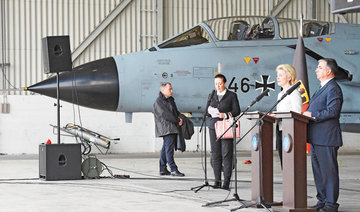
In addition, Berlin recently transferred its reconnaissance and refueling aircraft from Incirlik air base in Turkey to Jordan due to the bilateral tensions.
Dr. Magdalena Kirchner, Mercator-IPC fellow at the Istanbul Policy Center, said the crisis dates back to 2005 when German Chancellor Angela Merkel, a vocal critic of Turkey joining the EU as a full member, took office.
Skepticism over domestic political developments in Turkey has grown among the German public, especially since 2013, Kirchner added.
“The boost in cooperation and exchange in the context of the 2015 refugee crisis remained largely transactional, and did little to rebuild trust between estranged partners,” she told Arab News.
German public pressure has been building over Berlin’s inability to gain satisfactory concessions from Ankara regarding detained German citizens or MPs’ visiting rights to troops stationed in Turkey, even after consultations at the highest levels of government, she added.
In late July, Berlin formulated two demands regarding several German citizens detained and accused of political crimes in Turkey: “Release them, or at least provide unlimited consular access and swift and fair trials for them,” Kirchner explained.
German politicians’ frustration at repeatedly harsh Turkish rhetoric over the past two years has influenced bilateral relations, she added.
Unluhisarcikli said: “Germany clearly means business and won’t back up unless Turkey takes some steps on issues that concern Germany. But due to the level of economic integration between the two countries, some of those measures will also hurt German companies.”
Kirschner said it will be difficult for any German government to back down if relations with Ankara remain as they are.


![]()

Turkish-German relations: From bad to worse
Turkish-German relations: From bad to worse

Latest updates





© 2026 SAUDI RESEARCH & PUBLISHING COMPANY, All Rights Reserved And subject to Terms of Use Agreement.