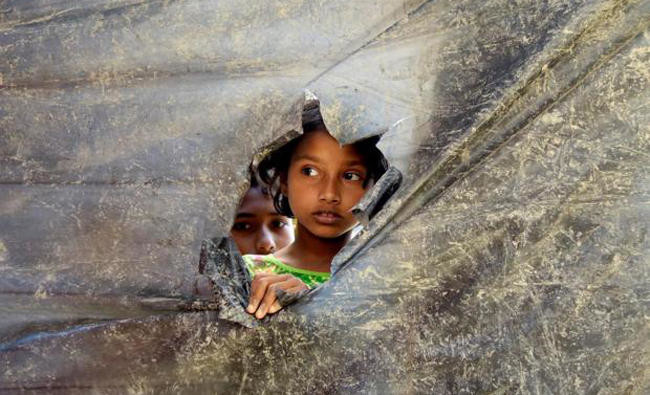
DHAKA: Myanmar must protect the rights of its Rohingya Muslim minority, the chief of the Organization of Islamic Cooperation (OIC) said on Thursday, urging the southeast Asian nation to join hands with Muslim-majority neighbors in tackling a refugee crisis.
A group known as Harakah Al-Yaqin attacked Myanmar border guard posts on Oct. 9, killing nine policemen and igniting the biggest crisis yet to face Nobel peace laureate Aung San Suu Kyi’s fledgling administration.
About 75,000 people fled to Bangladesh during the ensuing military crackdown, which was beset by allegations of rape, torture and extrajudicial killings by security forces.
Suu Kyi’s government has denied most of the allegations and is refusing access to a UN panel of experts, saying its mission will aggravate the situation on the ground in the western state of Rakhine.
“Myanmar should sit with Bangladesh, Indonesia and Malaysia to find a roadmap for the solution of the crisis,” said Yousef bin Ahmad Al-Othaimeen of the OIC, which represents 57 states and acts as the collective voice of the Muslim world.
“We call on the Myanmar government to ensure human rights for the Rohingyas,” Othaimeen told reporters during a four-day visit to the Bangladeshi capital.
“Myanmar can’t deny the human rights of Rohingyas. We also call on the Myanmar government to ensure citizenship for the Rohingyas.”
Othaimeen is also expected to visit Rakhine Muslims in the Kutupalong camp and surrounding areas in the southern resort town of Cox’s Bazar on Friday, Bangladesh Foreign Ministry officials said.
Thousands of Rohingyas live in Bangladesh without being officially recognized as refugees, but police rarely file immigration charges against them. Still, their presence is a source of tension between the two countries.
Many in Myanmar see the Rohingyas as illegal immigrants from Bangladesh, although about 1.1 million of them live in Rakhine state and say their roots go back generations.

Protect rights of Rohingya minority, OIC tells Myanmar
Induction stoves fly off shelves in India as gas shortage fears spark panic buying
CHENNAI: Indian households are rushing to buy electric induction stoves, draining stocks online and in stores, amid fears of a potential cooking gas shortage tied to the Middle East conflict.
India, the world’s second-largest importer of liquefied petroleum gas (LPG), has invoked emergency powers to boost supplies for households even as availability tightens for commercial users including canteens, hostels and restaurants.
Meanwhile, consumers are buying electric cooking appliances as a precaution, with some households worried about refill delays and higher prices.
Checks by Reuters on Thursday showed several induction stove models were unavailable on Amazon, Walmart-backed Flipkart, Eternal’s Blinkit and Zepto, while some offline chains said fresh supplies were still days away.
Induction stove sales on Amazon India have jumped more than 30-fold, while rice cookers and electric pressure cookers are up fourfold, a company spokesperson said.
Kitchen appliances maker TTK Prestige said demand for induction stoves had surged far beyond supply.
“There is a threefold surge (in demand),” CEO Venkatesh Vijayaraghavan told Reuters.
The company has raised its production capacity to 100 percent from about 70 percent before the start of the war, and increased staffing by roughly 15 percent. It also plans to raise prices of induction stoves in the June quarter to offset any higher costs.
Induction stoves accounted for about a tenth of TTK’s 25.30 billion rupees ($274.52 million) standalone revenue in 2024–25.
Online shopping platforms also showed models from Butterfly , Havells India and Bajaj Electricals marked as “currently unavailable.”
Google Trends showed search interest for induction stoves hit a record high on March 12, while some restaurant chains, including Wow Momo and California Burrito, said they were exploring induction stoves as a contingency plan.
Anand Rathi analyst Manish Valecha said large kitchen appliance makers with domestic assembly and strong distribution, including TTK Prestige, Butterfly and Stove Kraft, are best placed to benefit from the surge in induction cooktop demand. But reliance on imported components could pose supply risks if the spike persists, he added.
TTK Prestige will switch from sea shipments to airlifting components sourced from China and Southeast Asia, absorbing higher costs to ensure supplies if disruptions persist, Vijayaraghavan said.
The Middle East conflict has disrupted shipping through the Strait of Hormuz and the Gulf, raising costs and tightening oil and gas supplies from the Middle East.
On Thursday, the Suezmax tanker Shenlong reached Mumbai with Saudi crude, becoming the first crude carrier to arrive in India from the Middle East since the war between Iran and the United States and Israel erupted in late February, LSEG data showed.
India, the world’s second-largest importer of liquefied petroleum gas (LPG), has invoked emergency powers to boost supplies for households even as availability tightens for commercial users including canteens, hostels and restaurants.
Meanwhile, consumers are buying electric cooking appliances as a precaution, with some households worried about refill delays and higher prices.
Checks by Reuters on Thursday showed several induction stove models were unavailable on Amazon, Walmart-backed Flipkart, Eternal’s Blinkit and Zepto, while some offline chains said fresh supplies were still days away.
Induction stove sales on Amazon India have jumped more than 30-fold, while rice cookers and electric pressure cookers are up fourfold, a company spokesperson said.
Kitchen appliances maker TTK Prestige said demand for induction stoves had surged far beyond supply.
“There is a threefold surge (in demand),” CEO Venkatesh Vijayaraghavan told Reuters.
The company has raised its production capacity to 100 percent from about 70 percent before the start of the war, and increased staffing by roughly 15 percent. It also plans to raise prices of induction stoves in the June quarter to offset any higher costs.
Induction stoves accounted for about a tenth of TTK’s 25.30 billion rupees ($274.52 million) standalone revenue in 2024–25.
Online shopping platforms also showed models from Butterfly , Havells India and Bajaj Electricals marked as “currently unavailable.”
Google Trends showed search interest for induction stoves hit a record high on March 12, while some restaurant chains, including Wow Momo and California Burrito, said they were exploring induction stoves as a contingency plan.
Anand Rathi analyst Manish Valecha said large kitchen appliance makers with domestic assembly and strong distribution, including TTK Prestige, Butterfly and Stove Kraft, are best placed to benefit from the surge in induction cooktop demand. But reliance on imported components could pose supply risks if the spike persists, he added.
TTK Prestige will switch from sea shipments to airlifting components sourced from China and Southeast Asia, absorbing higher costs to ensure supplies if disruptions persist, Vijayaraghavan said.
The Middle East conflict has disrupted shipping through the Strait of Hormuz and the Gulf, raising costs and tightening oil and gas supplies from the Middle East.
On Thursday, the Suezmax tanker Shenlong reached Mumbai with Saudi crude, becoming the first crude carrier to arrive in India from the Middle East since the war between Iran and the United States and Israel erupted in late February, LSEG data showed.
© 2026 SAUDI RESEARCH & PUBLISHING COMPANY, All Rights Reserved And subject to Terms of Use Agreement.