INDIA: A pair of ambushes by Indian government forces and Kashmiri rebels early Thursday killed two soldiers and two militants in the disputed Himalayan region.
Militants ambushed soldiers in southern Shopian area as troops raided a village on a tip that rebels were hiding there, said S.P. Vaid, the police director-general. Another soldier was critically wounded in the attack. One of the slain soldiers was an Indian army major, Vaid said.
He said that two Kashmiri rebels were killed separately as they walked into an ambush laid by government forces in southern Kulgam area. Both rebels belonged to the largest Kashmiri rebel group, Hizbul Mujahideen.
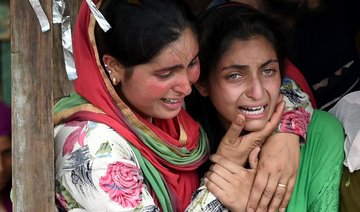
Thousands of Kashmiris tuned up at the funeral of one of the slain rebels, chanting slogans in favor of Pakistan and rebels and also demanding an end of Indian rule over the region.
At least two militants appeared at the funeral in Tantraypora village and fired dozens of rounds in honor of their fallen comrades.
Authorities enforced a security lockdown in Kulgam and blocked mobile Internet in anticipation of anti-Indian protests.
Meanwhile, hundreds of villagers threw rocks at a raiding party of police and soldiers in Shopian area Wednesday night and helped at least two rebels to escape the security dragnet, police and witnesses said.
In recent years, Kashmiris, mainly youths, have displayed open solidarity with anti-India rebels and sought to protect them by engaging troops in street clashes during military operations against the militants. The anti-India protests and clashes have persisted despite the Indian army chief warning recently that “tough action” would be taken against stone throwers during counterinsurgency operations.
Nuclear-armed rivals India and Pakistan each administer part of Kashmir, but both claim the Himalayan territory in its entirety. Rebel groups have been fighting since 1989 for the Indian-administered portion to become independent or merge with Pakistan. Nearly 70,000 people have been killed in the uprising and the ensuing Indian military crackdown.
Anti-India sentiment runs deep in Kashmir’s mostly Muslim population and most people support the rebels’ cause against Indian rule.
India accuses Pakistan of arming and training the rebels, which Pakistan denies.
Rebel groups have largely been suppressed by Indian forces in recent years and public opposition to Indian rule is now principally expressed through street protests.


![]()

Ambushes by Indian troops, Kashmir rebels kill 4 combatants
Ambushes by Indian troops, Kashmir rebels kill 4 combatants


Latest updates


© 2026 SAUDI RESEARCH & PUBLISHING COMPANY, All Rights Reserved And subject to Terms of Use Agreement.