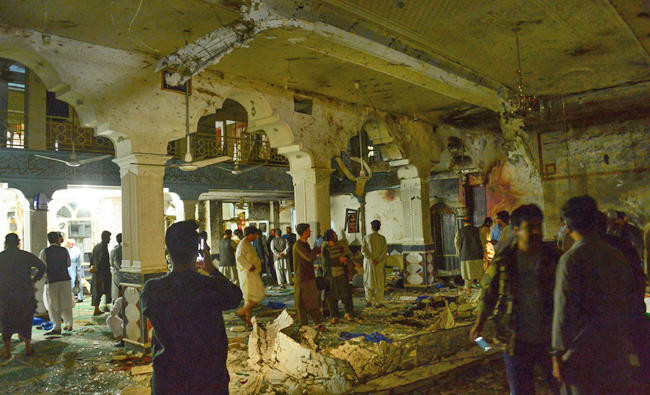
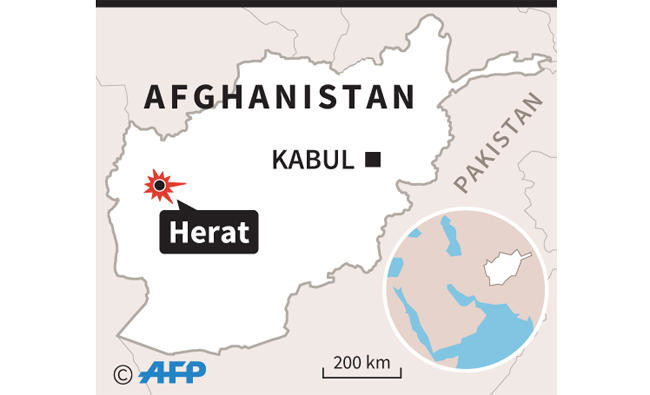
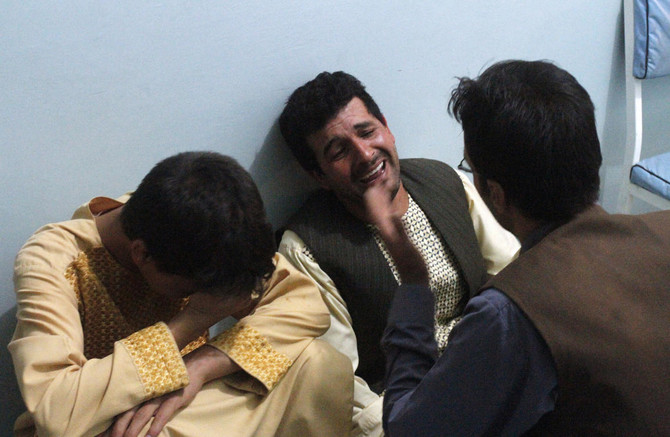
KABUL, Afghanistan: A suicide bomber stormed into the largest Shiite Muslim mosque in Afghanistan’s Herat province Tuesday night opening fire on worshippers before blowing himself up, killing at least 29 and wounding dozens more, said the provincial governor’s spokesman Jalani Farhad.
However Mehdi Hadid, a lawmaker from Herat, who went to the site soon after the explosion told The Associated Press that the scene was one of horrific carnage. He estimated at least 100 dead and wounded were scattered throughout the mosque. The attack took place in the middle of evening prayers when the mosque was packed with about 300 worshippers.
At Herat Main Hospital, Dr. Mohammed Rafique Shehrzai, confirmed 20 bodies were brought to the hospital in Herat city, the capital of western Herat province Tuesday night, soon after the blast shattered the late evening.
Hadid said he saw several pieces of a body that was being identified as the assailant. Although it’s not clear if there was a second attacker, witnesses in the area reported hearing a second explosion about 10 minutes after the initial bomber detonated his explosives.
Located just 50 meters (150 feet) away was an Afghan National Police station, but Hadid said the police were too frightened to take action and stood outside the mosque while the attack happened.
Residents were furious the police did not prevent the second explosion, although it is still not clear what caused it.
Dozens of local residents, who are mostly Shiites, attacked the police station pelting it with stones and setting it on fire, said Farhad.
Shiites are a minority in Afghanistan and have been threatened by the affiliate of the Daesh group that operates in the country’s east. Herat borders Iran whose capital Tehran was attacked by the so-called Islamic State in June. Herat has previously been the scene of several smaller attacks on Shiites.
No one immediately claimed responsibility for Tuesday’s attack on Herat’s Jawadia Mosque. However, after its attack on Monday on the Iraq Embassy in the Afghan capital Kabul IS warned Shiites in Afghanistan that they are targets.
Hadid said he rushed to the mosque after hearing about the explosion. He was told the attacker first fired on the private guards outside the mosque before entering. When inside, he fired on the praying worshippers until his rifle jammed then he blew himself up.

Suicide bomber kills 29 worshippers in Afghan mosque
More than 100 dead in torrential rain and floods across southern Africa
- South Africa has reported at least 19 deaths in two of its northern provinces following heavy rains
- Tourists and staff members were evacuated this week by helicopter from flooded camps
JOHANNESBURG: Torrential rains and flooding have killed more than 100 people in South Africa, Mozambique and Zimbabwe, and authorities warned Friday that more severe weather was expected across several countries in southern Africa.
South Africa has reported at least 19 deaths in two of its northern provinces following heavy rains that began last month and led to severe flooding.
Tourists and staff members were evacuated this week by helicopter from flooded camps to other areas in the renowned Kruger National Park, which is closed to visitors while parts of it are inaccessible because of washed out roads and bridges, South Africa’s national parks agency said.
In neighboring Mozambique, the Institute for Disaster Management and Risk Reduction said 103 people had died in an unusually severe rainy season since late last year. Those deaths were from various causes including electrocution from lightning strikes, drowning in floods, infrastructure collapse caused by the severe weather and cholera, the institute said.
The worst flooding in Mozambique has been in the central and southern regions, where more than 200,000 people have been affected, thousands of homes have been damaged, while tens of thousands face evacuation, the World Food Program said.
Zimbabwe’s disaster management agency said that 70 people have died and more than 1,000 homes have been destroyed in heavy rains since the beginning of the year, while infrastructure including schools, roads and bridges collapsed.
Flooding has also hit the island nation of Madagascar off the coast of Africa as well as Malawi and Zambia. Authorities in Madagascar said 11 people died in floods since late November.
The United States’ Famine Early Warning System said flooding was reported or expected in at least seven southern African nations, possibly due to the presence of the La Nina weather phenomenon that can bring heavy rains to parts of southeastern Africa.
South African President Cyril Ramaphosa visited flood-stricken areas in the northern Limpopo province on Thursday and said that region had received around 400 millimeters (more than 15 inches) of rain in less than a week. He said that in one district he visited “there are 36 houses that have just been wiped away from the face of the Earth. Everything is gone ... the roofs, the walls, the fences, everything.”
The flooding occurred in the Limpopo and Mpumalanaga provinces in the north, and the South African Weather Service issued a red-level 10 alert for parts of the country for Friday, warning of more heavy rain and flooding that poses a threat to lives and could cause widespread infrastructure damage.
The huge Kruger wildlife park, which covers some 22,000 square kilometers (7,722 square miles) across the Limpopo and Mpumalanga provinces, has been impacted by severe flooding and around 600 tourists and staff members have been evacuated from camps to high-lying areas in the park, Kruger National Park spokesperson Reynold Thakhuli said.
He couldn’t immediately say how many people there were in the park, which has been closed to visitors after several rivers burst their banks and flooded camps, restaurants and other areas. The parks agency said precautions were being taken and no deaths or injuries had been reported at Kruger.
The South African army sent helicopters to rescue other people trapped on the roofs of their houses or in trees in northern parts of the country, it said. An army helicopter also rescued border post officers and police officers stranded at a flooded checkpoint on the South Africa-Zimbabwe border.
Southern Africa has experienced a series of extreme weather events in recent years, including devastating cyclones and a scorching drought that caused a food crisis in parts of a region that often suffers food shortages.
The World Food Program said more than 70,000 hectares (about 173,000 acres) of crops in Mozambique, including staples such as rice and corn, have been waterlogged in the current flooding, worsening food insecurity for thousands of small-scale farmers who rely on their harvests for food.