ISLAMABAD: A spokesman for Pakistan Prime Minister Nawaz Sharif says the premier has stepped down despite having reservations about the court order that disqualified him from serving.
In a brief statement, Sharif’s office said Sharif relinquished his charge as prime minister after learning that the Supreme Court disqualified him because of corruption allegations.
The statement claims that justice has not been done with Sharif, but the prime minister stepped down to show his respect for the judiciary and rule of law.
Pakistan’s Supreme Court in a unanimous decision has asked the country’s anti-corruption body to file corruption charges against Prime Minister Nawaz Sharif, his two sons and daughter for concealing their assets.
The request to the National Accountability Bureau comes after a five-judge panel ruled Sharif “disqualified” to continue as prime minister and removing him from parliament.
Sharif may not appeal the court’s rulings. There was no immediate comment from Sharif’s office.
Pakistan’s Supreme Court has disqualified Prime Minister Nawaz Sharif from serving because of allegations of corruption.
Friday’s decision by a five-judge panel of the court was not surprising as many legal experts and opposition leaders were expecting punitive measures against Sharif and his family.
It is not the first time the judiciary has ordered dismissal of the elected prime minister. In 2012, the court convicted the then-Premier Yusuf Raza Gilani in a contempt case, forcing him to step down.
The current case against Sharif and his family dates back to 2016, when documents leaked from a Panama-based law firm indicated that Sharif’s sons owned several offshore companies.
Sharif’s son Hussain Nawaz at the time acknowledged owning offshore companies but insisted they used legal money to set up businesses abroad.


![]()
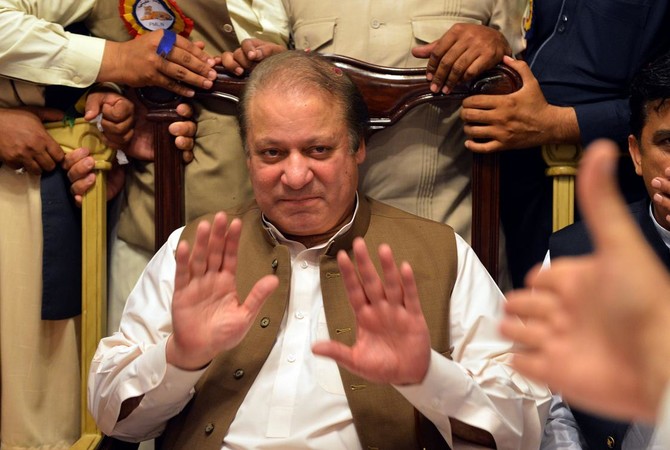
Sharif formally steps down as Pakistan’s PM
Sharif formally steps down as Pakistan’s PM

Latest updates


© 2026 SAUDI RESEARCH & PUBLISHING COMPANY, All Rights Reserved And subject to Terms of Use Agreement.