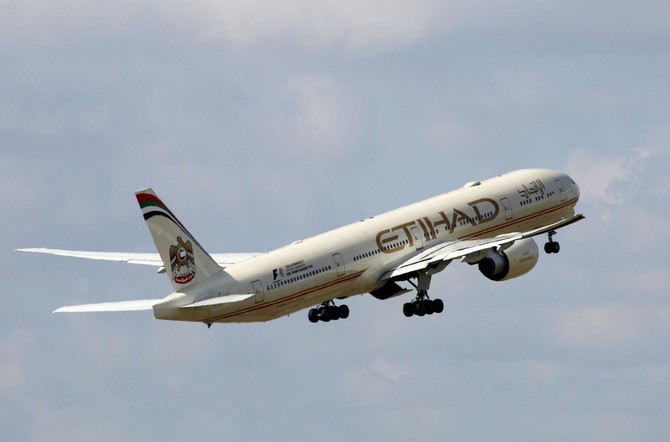
LONDON: Etihad Airways reported a net loss of $1.87 billion last year despite carrying record passenger numbers as losses from some of its equity alliance partners hit home.
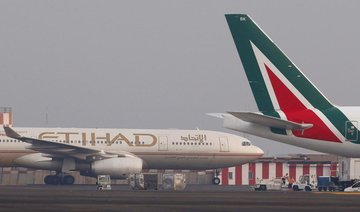
The Abu Dhabi-based carrier said it took total impairments of $1.9 billion — including an $808 million charge on exposures to equity partners, mainly related to Alitalia and Airberlin. Fuel hedging costs also weighed on its underlying performance, the airline said.
“This year is just as challenging for the global aviation industry and the ever-evolving competitive environment is likely to impact overall performance in 2017,” warned Ray Gammell, interim group chief executive officer of Etihad Aviation Group.
Etihad and other regional carriers have struggled to overcome downward pressure on fares caused by overcapacity in the global aviation industry while terror attacks in Europe have also curbed passenger demand.
Unlike regional rivals Emirates and Qatar Airways, Etihad chose to scale up its operations through a strategy of taking stakes in often struggling regional carriers. The carrier described such deals as “equity alliances” and they came to define the tenure of former chief executive James Hogan.
But the airline is now reviewing that strategy after being forced to absorb huge losses from its investments in carriers such as Alitalia and Airberlin.
Will Horton, senior analyst at Australian aviation consultancy CAPA, said that while the accounts seemed more candid than usual, they did not necessarily reflect the financial performance of the partner airlines.
“It has been a criticism for a while that Etihad does not disclose its net position including profits/losses from investments,” he told Arab News.
Etihad last week sold its minority stake in Darwin Airline, representing the first divestment since launching a strategic review last year. That sale coincided with the departure of James Hogan from the airline he ran for more than a decade.
Like its regional rivals, the Abu Dhabi carrier has cut jobs over the last year which helped it to reduce overall costs by about 4 percent.
The competitive pressures facing the airline are reflected in its passenger revenue, which was flat on a year earlier at $4.9 billion despite passenger numbers rising to a record 18.5 million.
Total impairments included a $1.06 billion charge on aircraft, reflecting lower market values and the early phase out of certain aircraft types, it said.
Peter Baumgartner, the former Swissair executive who is now the chief executive of Etihad Airways, said that yields were especially under pressure in business class as more corporate customers flew staff economy.
Alitalia was one of a number of struggling airlines targeted by Etihad and this week the Abu Dhabi carrier emerged as one of about 10 potential investors in the struggling carrier.
However analysts were skeptical about any real intention to acquire the company and suggested the move was probably motivated by protecting its existing interests in the airline.
Because offers have been invited on a non-binding basis, potential investors have an opportunity to inspect the group’s financials without being obliged to make a legally binding offer.
The government of Italy in May pledged to provide a bridging loan to keep Alitalia flying for around six months. Interested parties have until October to make binding offers. But if no buyer comes forward the airline risks being wound up with the loss of about 20,000 jobs.