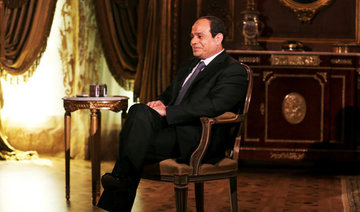
CAIRO: Egyptian President Abdel Fattah El-Sisi inaugurated the Mohammed Najib military base on Saturday in Al-Hammam area west of Alexandria.
The inauguration was attended by a Saudi delegation headed by Makkah Gov. Prince Khaled Al-Faisal as well as delegations from other Arab countries.
In a speech during the ceremony, El-Sisi said: “The presence of Arab brothers at the inauguration of the Mohammed Najib military base highlights the unity of the Arabs and the common destiny of Arab countries and their peoples, as well as their constructive cooperation to face the challenges of the Arab nation.”
He warned countries interfering in Egyptian internal affairs: “You will not be able to undermine Egypt or our brothers in the region. We will not let anyone interfere in our affairs, and similarly, we will not interfere in others’ affairs… Each country should enjoy its own privacy despite shared religion, culture and region.”
El-Sisi said: “We all stand here today to tell the whole world that we are working together to build and not destroy, cooperate and not conspire, maintain peace and not spread strife and conflict between nations and peoples.”
He added that Egypt is engaged in two major battles: Counterterrorism and achieving economic and social development.
El-Sisi said terrorism is a complex phenomenon that has many aspects, the most important of which is perhaps the role of countries and parties sponsoring and financing it.
“It is impossible to forgive those who finance terrorism with billions of dollars, leading to the killing of our citizens, while boasting about the rights of brothers and neighbors,” he said, adding that Egypt will keep promoting peace and will never submit to threats of terrorism.
The Saudi delegation included Interior Minister Prince Abdul Aziz bin Saud bin Naif; Dr. Essam bin Saad bin Said, minister of state, Cabinet member and acting minister of civil service; and Ambassador to Egypt Ahmed bin Abdul Aziz Qattan.
El-Sisi also attended the ceremony of new graduates from various faculties and military institutes, and inspected, with Arab delegations, troops taking part in the parade.
Participants attended an aerial show of Rafale aircraft, followed by a presentation of two separate F-16 models.


![]()

Saudi delegation attends inauguration of Egypt military base
Saudi delegation attends inauguration of Egypt military base

Latest updates


Recommended


© 2026 SAUDI RESEARCH & PUBLISHING COMPANY, All Rights Reserved And subject to Terms of Use Agreement.