DUBAI: Middle East stock markets fell on Tuesday as a tumble by real estate developer DAMAC caused Dubai to break a seven-session rising streak and weak corporate earnings helped to pull down Egypt’s bourse.
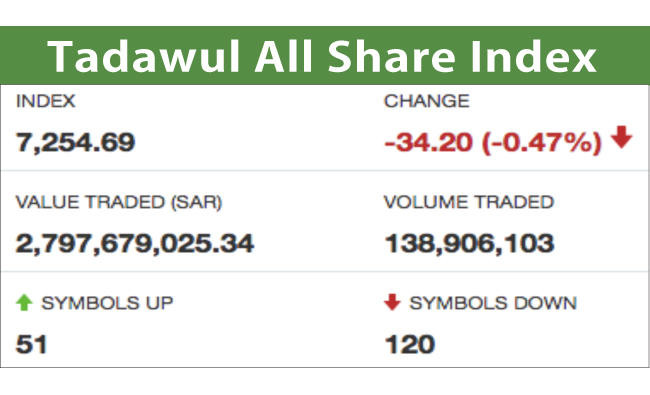
The Tadawul All Share Index (TASI) slipped 0.5 percent. Saudi Kayan rose in early trade but closed 2.1 percent lower after reporting its second-quarter net profit climbed to SR242 million ($64.5 million) from SR97.3 million a year ago; analysts had on average predicted SR212 million.
Qassim Cement fell 0.4 percent after it reported a quarterly profit of SR53.2 million versus SR113.9 million; analysts had on average expected SR66 million.
But National Company for Glass Industries jumped its 10 percent daily limit after reporting a 224 percent leap in quarterly net profit, although operating profit actually fell sharply.
Jouf Cement gained 4.8 percent after shareholders approved a 10 percent capital increase via an issue of bonus shares, to be paid for with the company’s retained earnings.
The Egyptian blue chip index, which had closed at a record high on Monday, sank 1.7 percent in rising turnover — a negative technical sign. The broader EGX100 dropped 1.6 percent.
Ezz Steel plunged 10 percent after it reported a quarterly consolidated net loss after tax and minority interests of 521 million Egyptian pounds ($29.2 million), versus a loss of 137 million pounds a year ago.
The company said it had suffered from a very low rate of capacity utilization because of a working capital shortage after the devaluation of the Egyptian pound; it expects to cover the working capital gap gradually in coming quarters.
Arabian Food Industries slid 5.6 percent after reporting a second-quarter net profit of 12 million pounds, below some analysts’ estimates.
Large-cap Orascom Telecom Media slipped 4.2 percent as its subsidiary Beltone Financial lost 3.6 percent.
In Dubai, the index dropped 0.7 percent to 3,578 points after rising for seven straight sessions through Monday, but it held technical support at 3,573 points, the April peak. DAMAC, which had led the rally, fell back 9 percent in heavy profit-taking.
Qatar’s index slipped 0.5 percent as Masraf Al-Rayan, the second-largest bank by market value, dropped 1.4 percent.
It reported flat quarterly net profit, in line with analysts’ forecasts, suggesting the impact of Qatar’s diplomatic crisis has so far been minor. Customer deposits were 61.21 billion riyals ($16.8 billion) at the end of June, up 5.9 percent from a year earlier but down 3 percent from the previous quarter.
Al-Khalij Commercial Bank, which reported flat first-half earnings, slipped 1.8 percent and Ahli Bank, which reported a 3 percent rise in net profit for the first half, closed flat.


![]()
Middle East stock markets slip
Middle East stock markets slip
Latest updates


Recommended


© 2026 SAUDI RESEARCH & PUBLISHING COMPANY, All Rights Reserved And subject to Terms of Use Agreement.