LONDON: Qatar’s preparations for the 2022 FIFA World Cup risk being ripped apart, as a boycott of the country hits construction projects and casts a cloud of uncertainty over the event for big-name sponsors.
Lawyers have warned that construction delays could produce a rash of litigation as contractors, clients and suppliers seek to dodge liability for cost and time overruns.
But the boycott of the country by Saudi Arabia, the UAE, Egypt and Bahrain represents just the latest hurdle for an event that has been dogged by controversy ever since Qatar won the bid to host it seven years ago.
The implications of the boycott are far-reaching, both diplomatically and for Qatar’s many projects under construction ahead of the 2022 World Cup.
More than half of Qatar’s raw materials for construction arrive by road, but the only road in is through Saudi Arabia, which is now closed.
This means supplies needed for eight stadiums and other associated infrastructure must come through the bottleneck of the recently completed Hamad Port.
“There’s concern that this may adversely impact the delivery of the 2022 World Cup facilities, not just stadiums but other elements needed to successfully host the event, including roads, utilities and hotels,” said Andrew MacCuish, a Dubai-based partner at Kennedys, the international law firm.
“It was always seen as a tight timetable, and it has just got tighter. At some point, there will be an inspection by FIFA, and if it determines that it’s not on track, there’s a risk that the 2022 World Cup will be moved elsewhere.”
Qatar plans to build eight world-class football venues, create 60,000 new hotel rooms and finish a metro system for Doha, at a combined cost of more than $150 billion, as it prepares to host the world’s biggest single-event sporting competition.
But to do that, it relies on an army of expatriate construction professionals who may be less willing to consider a move to the tiny state.
“First there’s the human factor, which means Qatar ceases to be as attractive a place as it may have been perceived in the past,” said MacCuish.
“People, especially those with families, will be looking at the impact on their lifestyles, for example, the ease of travel in and out of Qatar, which has become a bit more difficult. Professionals thinking about moving there, or indeed remaining, will be looking at these issues, as well as the quality of the work available under the boycott.”
But delivering billions of dollars’ worth of the physical infrastructure needed to host the event is only part of the challenge now facing Doha.
One of the biggest financial clouds hanging over the tournament relates to sponsorship and how potential sponsors perceive the current crisis and future risk.
“What the blockade may do is deter potential sponsors, which have been slow in coming forward for the 2018 World Cup in Russia and 2022,” said Steve Menary, a UK-based football author.
“Those sponsors that have emerged are predominantly from Russia or China, which wants to host the tournament sooner or later. China is heavily exposed economically in the region through its Belt and Road economic corridor, and even though Chinese spending on football is ballooning, taking out sponsorships for a Qatari World Cup being boycotted by China’s partners in the region is hard to imagine right now.
“There have been no more announcements on sponsors from FIFA since Vivo signed up in May, which was a month before the boycott started.”
Even before the current crisis, the 2022 World Cup had been marred by allegations of corruption.
The 434-page Garcia Report, which looked into the 2018 and 2022 bidding processes, carried no concrete evidence of bribes to secure Qatar’s hosting rights, but author Michael Garcia raised his concerns over ties between its government and the World Cup bidding committee.
The 2022 World Cup may be five years away, but the next 12 months will be critical for Qatar in ensuring projects remain on track and sponsors are kept reassured.


![]()
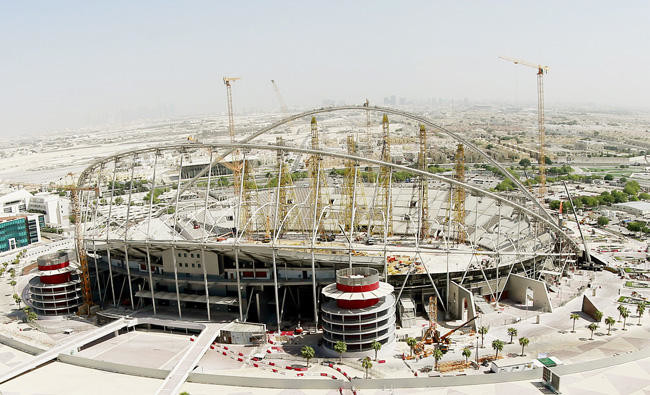
Qatar World Cup faces threat of construction delays, sponsorship worries
Qatar World Cup faces threat of construction delays, sponsorship worries
Latest updates


© 2026 SAUDI RESEARCH & PUBLISHING COMPANY, All Rights Reserved And subject to Terms of Use Agreement.