LONDON: Optimism about the business environment among Britain’s financial services firms declined in the second quarter of this year, according to a survey published on Tuesday.
The latest quarterly survey of 94 financial services firms by business lobby CBI and consultancy PwC found sentiment about Britain’s overall business climate deteriorating, with banks and life insurers especially pessimistic.
The report adds to a string of lackluster data showing the British economy weakening.
Optimism in the financial services sector — Britain’s biggest source of tax revenue — has now declined in five out of the last six quarters.
“While business activity is holding up strongly, optimism took another dive, which likely reflected a mix of Brexit uncertainty and concerns that financial market conditions could tighten,” said Rain Newton-Smith, CBI chief economist.
Britain will have to negotiate new trading terms with the EU and it is unlikely banks will retain access to sell their services and serve clients across the economic bloc.
The largest global banks in London plan to move thousands of jobs to the continent in the next two years.
Firms expect to cut back on most forms of capital spending, the survey showed.
Rising prices
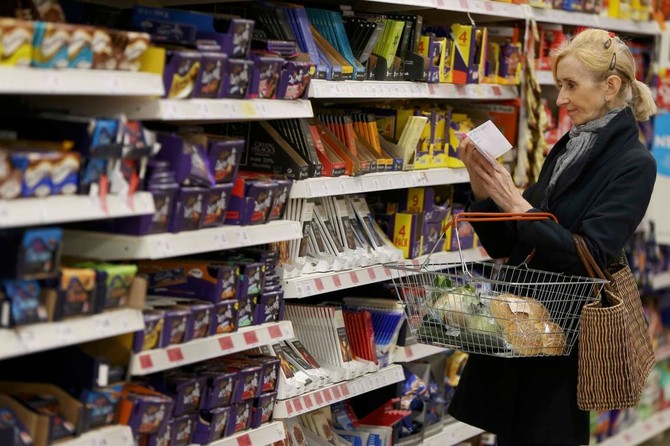
British households spent more money on food and other essentials last month but held back on less urgent purchases as they faced rising prices, two sets of industry figures showed on Tuesday.
The data is likely to add to concerns that consumer demand has slowed further after a weak first quarter, as the effect of the fall in the pound after last year’s vote to leave the EU increasingly makes itself felt.
Payments company Barclaycard said year-on-year consumer spending growth slowed to a 15-month low of 2.5 percent in June from 2.8 percent in May, as spending on household goods and entertainment slowed.
The British Retail Consortium (BRC) said its measure of retail spending growth rose to 2 percent last month from 0.2 percent in May, above its average of 1.4 percent in the past six months.
But BRC Chief Executive Helen Dickinson said the pick-up reflected a temporary boost from warmer weather lifting clothing sales, as well as the higher cost of food.
“Rising food prices are responsible for the main component of growth and have prompted more cautious spending towards discretionary non-food items,” she said.
On a like-for-like basis, which strips out changes in store size, the BRC said sales increased by 1.4 percent year-on-year after a 0.4 percent drop in May.
Bank of England (BoE) Gov. Mark Carney has said that the extent to which consumer spending slows — and whether stronger exports and investment can compensate for this — will be important in determining if the BoE starts to raise rates.
Three policymakers voted last month for a rate rise, and both Carney and his chief economist Andy Haldane have said they could vote for a rate rise later this year.
But weakening business surveys over the past week have made many economists doubt the BoE will press ahead with its first rate rise in a decade at a time when the shape of Britain’s Brexit deal is highly uncertain.


![]()
British banks’ optimism slumps on Brexit uncertainty
British banks’ optimism slumps on Brexit uncertainty
Latest updates



Recommended


© 2026 SAUDI RESEARCH & PUBLISHING COMPANY, All Rights Reserved And subject to Terms of Use Agreement.