LONDON: Events in the Gulf have accelerated dramatically over the past month, bringing with it global attention given the region’s strategic position in terms of energy and financial resources. One country that has a big stake in the Gulf is China, which is watching developments very closely.
According to some Chinese experts, the Gulf crisis may have taken Beijing by surprise. China has called for a peaceful resolution of the crisis through dialogue, but has kept a low profile and made until now a few cautious comments and moves.
Beijing cannot ignore what is happening. The Gulf is China’s largest supplier of oil and second-largest provider of natural gas. The region is also the eighth-largest export market for China. The Gulf Cooperation Council (GCC) markets account for 46 percent of China’s total exports to the Middle East, according to official Chinese data.
Saudi Arabia is China’s top trade partner in the Middle East, while the UAE is the largest market in the region for Chinese goods. China is Saudi Arabia’s third-largest oil customer after Japan and the US, while Qatar is China’s second-largest supplier of liquefied natural gas (LNG) after Australia.
Song Niu, associate professor of the Middle East Studies Institute at the Shanghai International Studies University (SISU), told Arab News: “The current Qatar crisis has seriously affected the overall stability of the Gulf. The GCC countries are one of the top priorities for China’s Middle East diplomacy, since they’re significant partners in the Belt and Road Initiative.”
Beijing has not yet sided with any party in the crisis, but Song said: “Saudi Arabia is the largest and most powerful actor in the GCC, and has close contacts with China in political, economic, military and religious areas. Qatar is a small country, and its status in China’s Middle East diplomacy is hard to compare with Saudi Arabia.”
Qian Xuming, a research fellow at the Middle East Studies Institute at SISU, told Arab News: “The Gulf crisis will have no substantive impact on China as Beijing has good relations with all sides.” But Beijing “should communicate with both sides, help find a peaceful solution to the crisis and reduce the negative impact on the Belt and Road Initiative.”
Energy is at the heart of Gulf-China relations. Degang Sun of SISU’s Middle East Studies Institute told Arab News that Beijing “has been quite surprised by the Gulf crisis. Since 50 percent of its imported oil comes from the region, China is a major stakeholder.
“Besides, China wants a stable and peaceful Gulf so it can implement its Belt and Road Initiative. With substantial investment in infrastructure in the area, Beijing strongly advocates that the dispute should be settled by peaceful means as soon as possible.”
Chinese analysts expect that energy imports from the Gulf will not be affected, but Qian said: “Some contracted construction projects will be affected, including a new port, a medical services area, a section of railway and eight venues. The price of some materials will rise due to closure of the land crossings.”
Importantly, a former Chinese ambassador who previously worked in a GCC country told Arab News that the crisis has negatively affected the Gulf’s image among China’s political decision-makers. “After the region was seen as an oasis of stability in the troubled Middle East, the rapid deterioration of the situation took the Chinese leadership by surprise,” he said, adding that Beijing may seek to diversify its energy imports.


![]()
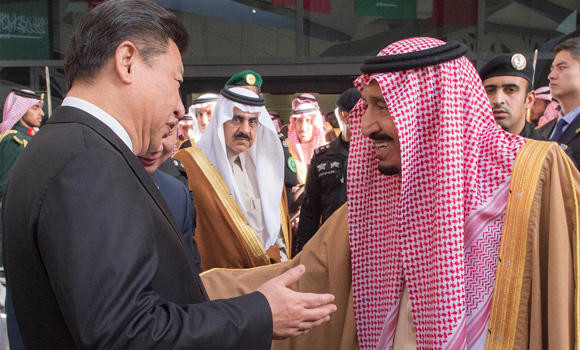
China and the Gulf crisis — the stakes are high
China and the Gulf crisis — the stakes are high


Latest updates


© 2026 SAUDI RESEARCH & PUBLISHING COMPANY, All Rights Reserved And subject to Terms of Use Agreement.