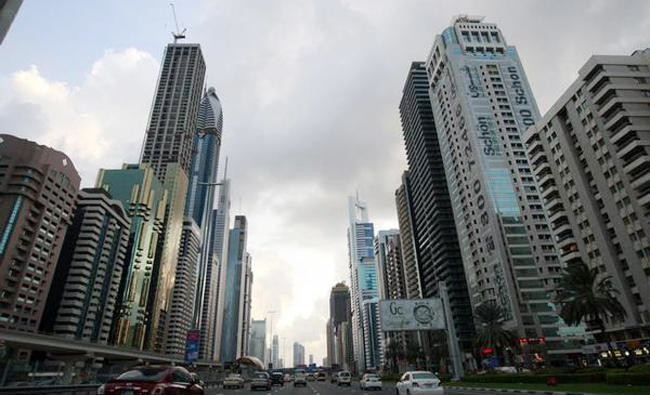
DUBAI: Dubai property prices have capped a third year of decline as the market awaits a long-anticipated Expo rebound amid expatriate job losses. It means the current property bear market has lasted almost as long as the post-financial crisis rout, where prices fell by as much as half.
Dubai property prices peaked in September 2008, according to the Cluttons mid-range apartment index. The market was then in decline for about 43 months until March 2012, when it rose steadily until June 2014. Since then, prices have remained in the doldrums despite big developers doing a brisk trade in off-plan sales as buyers turn toward stage payment plans because of the large deposits now required for traditional mortgages.
Brokers hope that rising demand caused by the release of big construction orders ahead of Expo 2020 could jolt the market out of its three-year malaise. “Expo will undoubtedly have an impact,” said Faisal Durrani, head of research at Cluttons. “This year we are expecting something like 11 billion dirhams ($3 billion) worth of contracts linked to the Expo to be awarded.”
Research shows there is a lag of six to 12 months for the award of such contracts to translate into higher demand for commercial or residential property. “So we are expecting the market to show greater stability later this year in more locations, assuming all things stay equal and there are no more global economic shocks — which is a big ‘if,’” he said.
While there is no official data measuring the number of expatriate workers leaving and arriving in the emirate, removal companies said there has been a pickup in activity this summer — a traditionally busy time for the sector. “We have seen more oil- and gas-related inquiries for clients leaving the region,” said a spokesperson for Hong Kong-headquartered Crown Worldwide Group.
On a vast tract of empty land close to Dubai’s Palm Jumeirah, lorries towing 20-foot shipping containers from Maersk and Evergreen wait to load up with the furniture and belongings of expatriates. “Many people are leaving,” said a driver from the Pakistani city of Lahore who owns his own removals van. “When people are leaving it is good for us, and when they are coming also.”
The property industry in Dubai and the wider region remains hostage in part to macroeconomic forces greater than the push and pull of housing supply and demand, such as the strong dollar to which the dirham is pegged, making homes expensive for overseas investors.
A weak oil price has also hurt investor sentiment, while a political standoff between Qatar and some of its neighbors could be a further brake on the long-anticipated Expo-fueled rebound. Several major corporations including Emirates, Etihad and the Abu Dhabi National Oil Co. have shed thousands of jobs over the last year as the slowing economy has forced them to cut costs and trim benefits.
Despite efforts by the Organization of the Petroleum Exporting Countries (OPEC) and non-OPEC oil exporters to limit production, the price of crude has failed to rally as much as hoped, as shale oil production in North America keeps the market well supplied.
The current property trough coincides with the extended period of oil weakness that began in the summer of 2014. That has had a dramatic impact on regional economies, which have been forced to slash subsidies and embark on aggressive economic reform programs, in turn hurting property prices as banks pull back on lending and investor confidence weakens.
But as Dubai looks to Expo 2020, some analysts are hopeful that prices will be supported by demand from construction industry professionals and rising visitor numbers. Other changes simplifying visit visas could also boost confidence. Simon Townsend, head of strategic advisory valuation at CBRE in Dubai, believes the Expo may have a bigger impact on the global perception of the city than property values per se.
“Expo is going to help from a global PR perspective,” he said. “It will change the way Dubai is viewed, and in a good way — not just all about high-end tourism and footballers on the beach. There are other positive things happening like changes to visa rules especially for Asian visitors, which are really making a difference.”


![]()
Dubai property doldrums challenge post-crisis rout
Dubai property doldrums challenge post-crisis rout
Latest updates


© 2026 SAUDI RESEARCH & PUBLISHING COMPANY, All Rights Reserved And subject to Terms of Use Agreement.