Rare footage shows Korean "comfort women" from World War Two

1 / 3
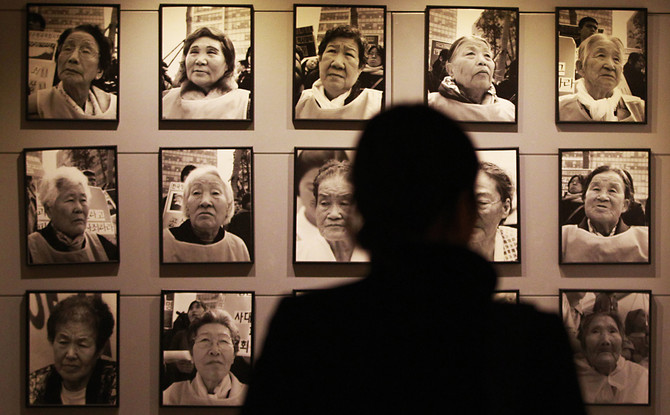
Portraits of late former comfort women who were forced to serve for the Japanese troops as a sexual slave during the second world war. (AP)
2 / 3
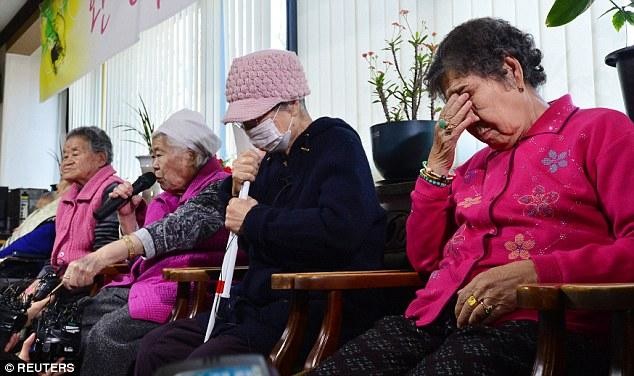
Tears: Former South Korean 'comfort woman' Lee Ok-sun (second from left) speaks as the others react during a news conference at a shelter for Japan's former sex slaves, following the ground-breaking agreement. (REUTERS)
3 / 3
Memory: Former 'comfort woman' Lee Ok-sun watches a news report on the result of a meeting between South Korea and Japan at the 'House of Sharing,' a special shelter for former 'comfort women', in Gwangju, South Korea. Some of the survivors are furious that they still haven't been offered compensation. (REUTERS)
Updated 06 July 2017
Follow

Rare footage shows Korean "comfort women" from World War Two

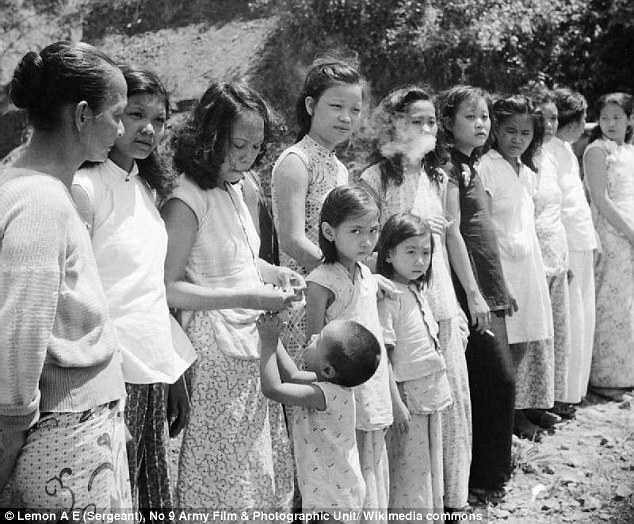
SEOUL: The Seoul government has released rare video footage of Korean women forced to work in Japanese military brothels during World War Two, the first time moving images have been shown of the "comfort women".
A government-funded research team from Seoul National University found the footage, which was filmed in 1944 by an American soldier, in the United States National Archives after a two-year hunt.
"South Korea has not had its own data on comfort women and (has) been relying on Japanese and American data," said Kang Sung-hyun, an academic on the team.
"It is crucial for South Korea to have our own data for the issue of comfort women," he said.
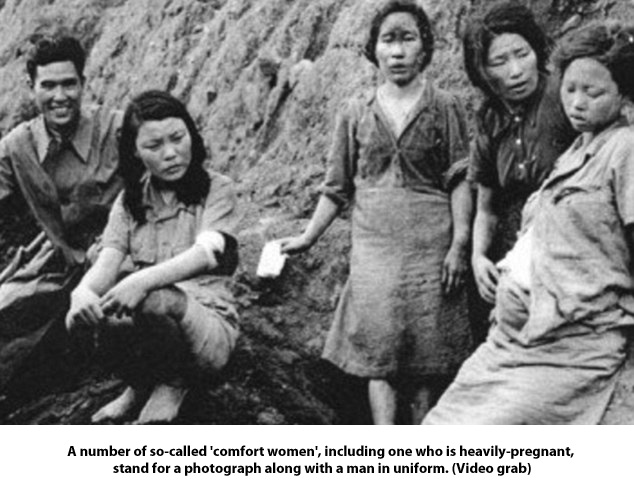
The 18-second black-and-white clip shows seven women lined up outside a brick house, being questioned by Chinese soldiers. The women were found by U.S.-China allied forces in China's Yunnan province, the research team said in a statement.
The women were registered by U.S. soldiers, the research team said. Two of the women in the video had already appeared in previously released photos of "comfort women".
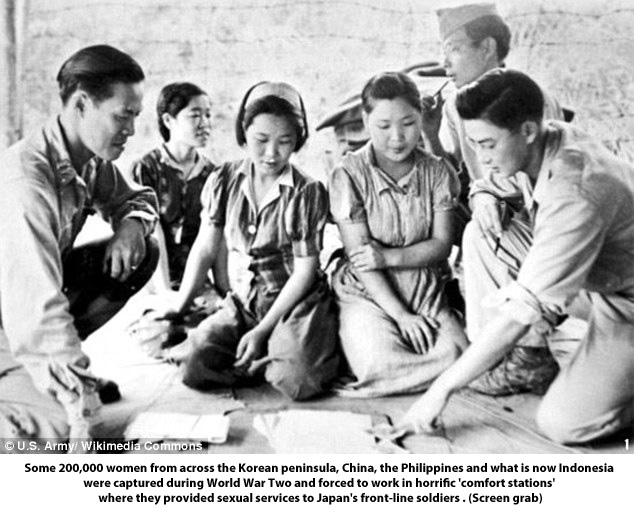
The term is used to describe girls and women from South Korea, China, the Philippines and elsewhere, who were forced into prostitution in Japanese wartime military brothels.
South Korean activists estimate that there may have been as many as 200,000 Korean victims.
Japan and South Korea agreed to resolve the issue "finally and irreversibly" in 2015 if all conditions were met. Japan made an apology and promised one billion yen ($8.84 million) for a fund to help victims.
However, the issue continues to strain relations between the two countries.
Japan wants South Korea to remove a statue near the Japanese consulate in Busan city commemorating Korean comfort women, as well as another near the Japanese embassy in Seoul, saying that the presence of the statues violates the 2015 agreement.
South Korean President Moon Jae-in suggested during his campaign for a May 9 election that most South Koreans did not accept the 2015 deal negotiated by his conservative predecessor Park Geun-hye and Japanese PM Shinzo Abe, and that he could try to renegotiate it.
Since the election, he has not directly addressed whether he will seek to renegotiate the pact. The issue is likely to be discussed when he meets Abe on Friday on the sidelines of the Group of 20 summit in Hamburg, Germany. ($1 = 113.1500 yen)


Review: ‘Sorry, Baby’ by Eva Victor

Eva Victor appears in Sorry, Baby by Eva Victor, an official selection of the 2025 Sundance Film Festival. (Supplied)
Updated 27 December 2025
Follow

Review: ‘Sorry, Baby’ by Eva Victor

  • Victor makes a deliberate narrative choice; we never witness the violence of what happens to her character

There is a bravery in “Sorry, Baby” that comes not from what the film shows, but from what it withholds. 

Written, directed by, and starring Eva Victor, it is one of the most talked-about indie films of the year, winning the Waldo Salt Screenwriting Award at Sundance and gathering momentum with nominations, including nods at the Golden Globes and Gotham Awards. 

The film is both incisive and tender in its exploration of trauma, friendship, and the long, winding road toward healing. It follows Agnes, a young professor of literature trying to pick up the pieces after a disturbing incident in grad school. 

Victor makes a deliberate narrative choice; we never witness the violence of what happens to her character. The story centers on Agnes’ perspective in her own words, even as she struggles to name it at various points in the film. 

There is a generosity to Victor’s storytelling and a refusal to reduce the narrative to trauma alone. Instead we witness the breadth of human experience, from heartbreak and loneliness to joy and the sustaining power of friendship. These themes are supported by dialogue and camerawork that incorporates silences and stillness as much as the power of words and movement. 

The film captures the messy, beautiful ways people care for one another. Supporting performances — particularly by “Mickey 17” actor Naomi Ackie who plays the best friend Lydia — and encounters with strangers and a kitten, reinforce the story’s celebration of solidarity and community. 

“Sorry, Baby” reminds us that human resilience is rarely entirely solitary; it is nurtured through acts of care, intimacy and tenderness.

A pivotal scene between Agnes and her friend’s newborn inspires the film’s title. A single, reassuring line gently speaks a pure and simple truth: “I know you’re scared … but you’re OK.” 

It is a reminder that in the end, no matter how dark life gets, it goes on, and so does the human capacity to love.